How to Style a Bookshelf in Your Living Room Like an Interior Designer
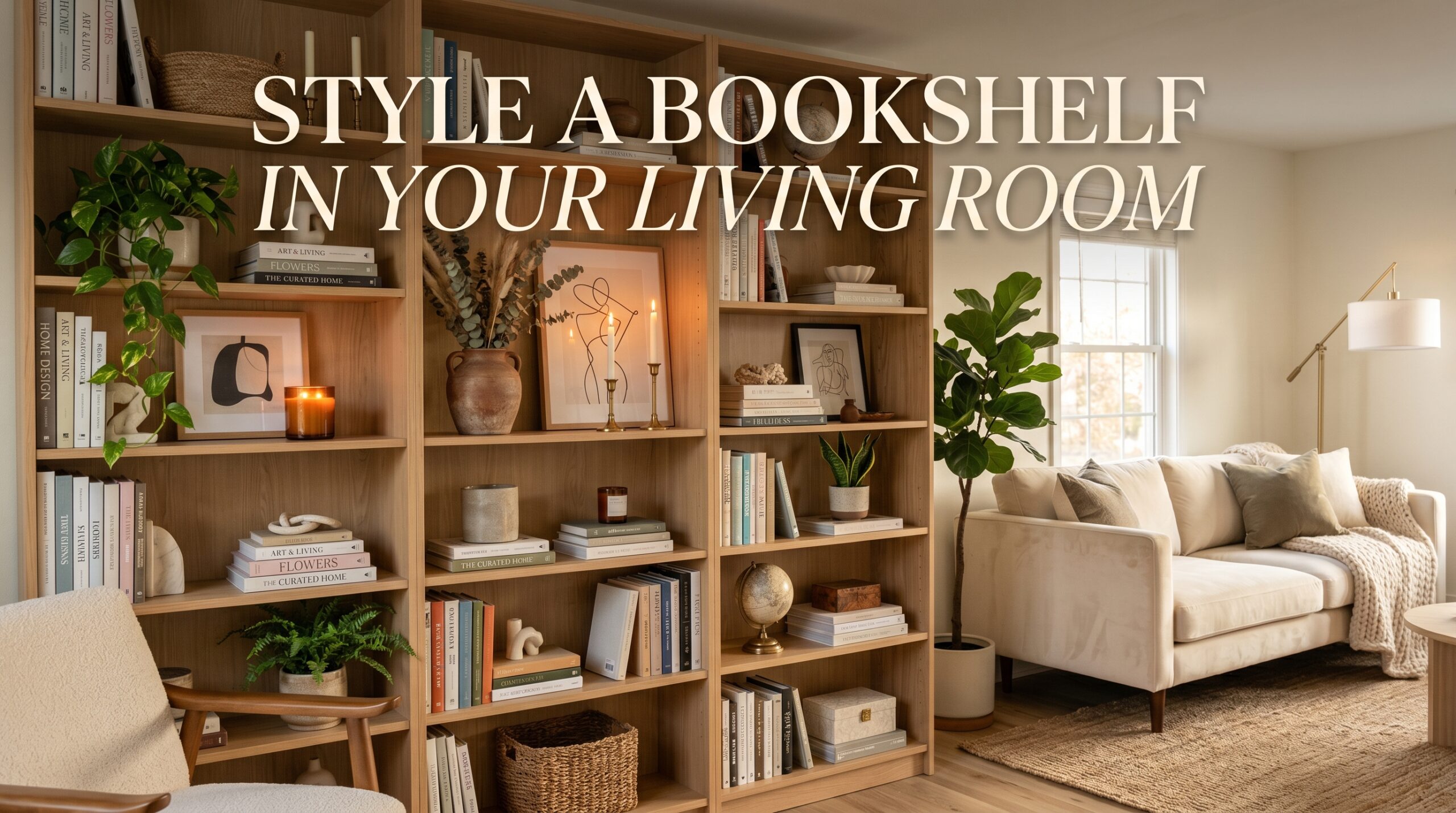
Your bookshelf has incredible potential to become a stunning focal point that transforms your entire living room aesthetic. Whether you’re decorating a small apartment or a sprawling family room, learning how to style a bookshelf like an interior designer elevates your space from ordinary to extraordinary. This art form combines books, decorative objects, and intentional spacing to create visual interest, balance, and personality. From color coordination to the rule of thirds, professional designers use proven techniques that anyone can master. Discover the best bookshelf styling ideas, inspiration, and expert tips to create a gorgeous, magazine-worthy display that reflects your unique style and design sensibility.
What Is Bookshelf Styling And Why It Matters For Your Living Room
Bookshelf styling represents the art of arranging books and decorative objects on shelves to create visually appealing, balanced displays that enhance your entire living room aesthetic. Unlike simply stacking books, professional styling considers color, height, texture, spacing, and the interplay between functional storage and decorative elements. A well-styled bookshelf serves as a conversation starter, reveals your personality and interests, and demonstrates intentional design choices that elevate your space. Interior designers treat bookshelves as opportunities to showcase collections, incorporate color, and create focal points that anchor room design. Your bookshelf styling communicates sophistication, creativity, and attention to detail that influences how guests perceive your entire home’s design aesthetic.
Why Bookshelf Styling Is Essential For Interior Design
Your bookshelf represents real estate in your living room that deserves thoughtful attention and professional-level styling consideration. A beautifully styled bookshelf can transform an empty wall into a stunning focal point that ties your room’s design together. Well-organized bookshelves make your entire living room appear more curated, intentional, and professionally designed. The styling process encourages you to edit collections, recognize gaps in your décor, and make strategic purchases that enhance your overall design scheme. Investing time in bookshelf styling delivers returns through improved aesthetics and a more polished, put-together living room that you’re proud to showcase. This accessible design project requires no professional help or expensive renovations, making it an ideal starting point for developing your interior design confidence and skills.
Understanding Bookshelf Styling Principles
The Rule of Thirds
Interior designers apply the rule of thirds to bookshelf styling, dividing each shelf into three sections and varying how they’re filled to create balanced, visually interesting displays. Rather than filling entire shelves uniformly, breaking sections with negative space, books standing vertically, and decorative objects creates rhythm. The rule of thirds prevents monotony and guides the eye naturally across the shelf, creating visual flow and interest. This principle applies to both individual shelves and the overall bookshelf composition from top to bottom. Implementing the rule of thirds transforms shelves from cluttered storage into intentional, designer-curated displays that feel purposeful and thoughtfully arranged.
Color Coordination And Tonal Balance
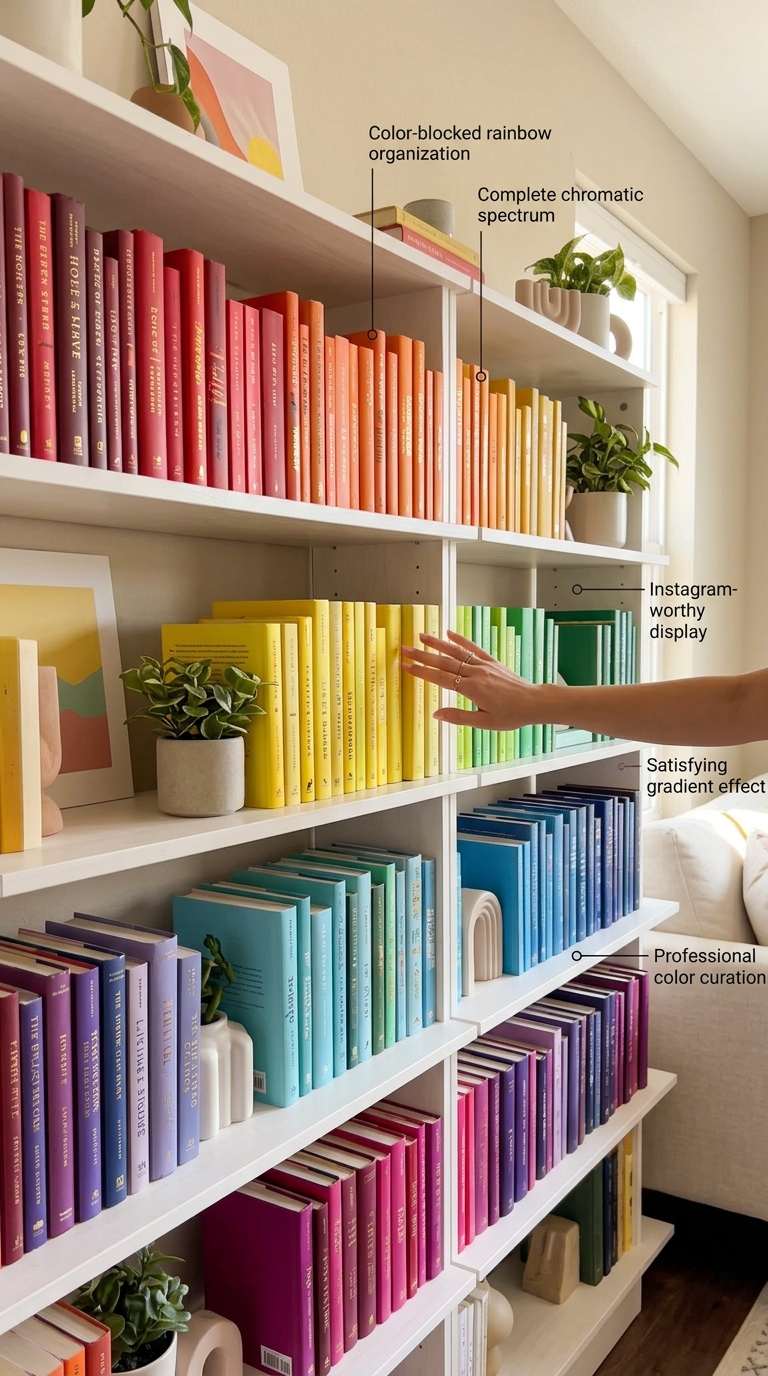
Professional designers use color coordination to create cohesive bookshelf displays that feel intentional rather than accidental. Organizing books by color creates stunning visual impact and makes shelves feel curated and intentional. You can embrace full rainbow organization, focus on a specific color palette, or create balance with warm and cool tones distributed throughout. Mixing colored books with neutral tones prevents monochromatic monotony while maintaining visual coherence. Color coordination extends to decorative objects—selecting pieces that complement your book colors creates a unified, professionally-designed aesthetic that’s incredibly Instagram-worthy and visually satisfying.
Also Read: Farmhouse Living Room Ideas That Feel Cozy, Warm, and Timeless
Height Variation And Visual Interest
Varying heights of books, decorative objects, and negative space prevents shelves from appearing flat and monotonous. Standing books vertically, laying some horizontally, and creating sections of negative space creates dimension and visual interest. Placing taller objects beside shorter ones, stacking books at different heights, and incorporating objects of varying proportions keeps the eye engaged. Height variation prevents the bookshelf from becoming a boring grid and instead creates dynamic, interesting compositions. This principle ensures that your bookshelf remains interesting to look at and photograph, maintaining visual appeal even after extended viewing.
Negative Space And Breathing Room
Interior designers deliberately incorporate negative space—areas without objects—to prevent overcrowding and maintain visual balance. Empty space between objects is just as important as the objects themselves, creating breathing room and preventing claustrophobic appearance. Negative space allows the eye to rest and makes surrounding objects more prominent and impactful. Resisting the urge to fill every available inch creates a more sophisticated, less cluttered aesthetic that communicates intentional design. Generous negative space makes your bookshelf appear more organized, curated, and professionally designed than densely packed alternatives.
15 Bookshelf Styling Ideas And Inspirations
Idea 1: Color-Blocked Rainbow Organization
Organize books by color from left to right in rainbow order—reds, oranges, yellows, greens, blues, purples—creating a stunning, Instagram-worthy gradient effect. Intersperse decorative objects of complementary colors throughout for balance. This approach transforms bookshelves into colorful focal points that spark joy and visual interest. The rainbow organization system works beautifully with fiction collections and creates that coveted, carefully-curated library aesthetic. This styling idea works for both modern and eclectic living room designs.
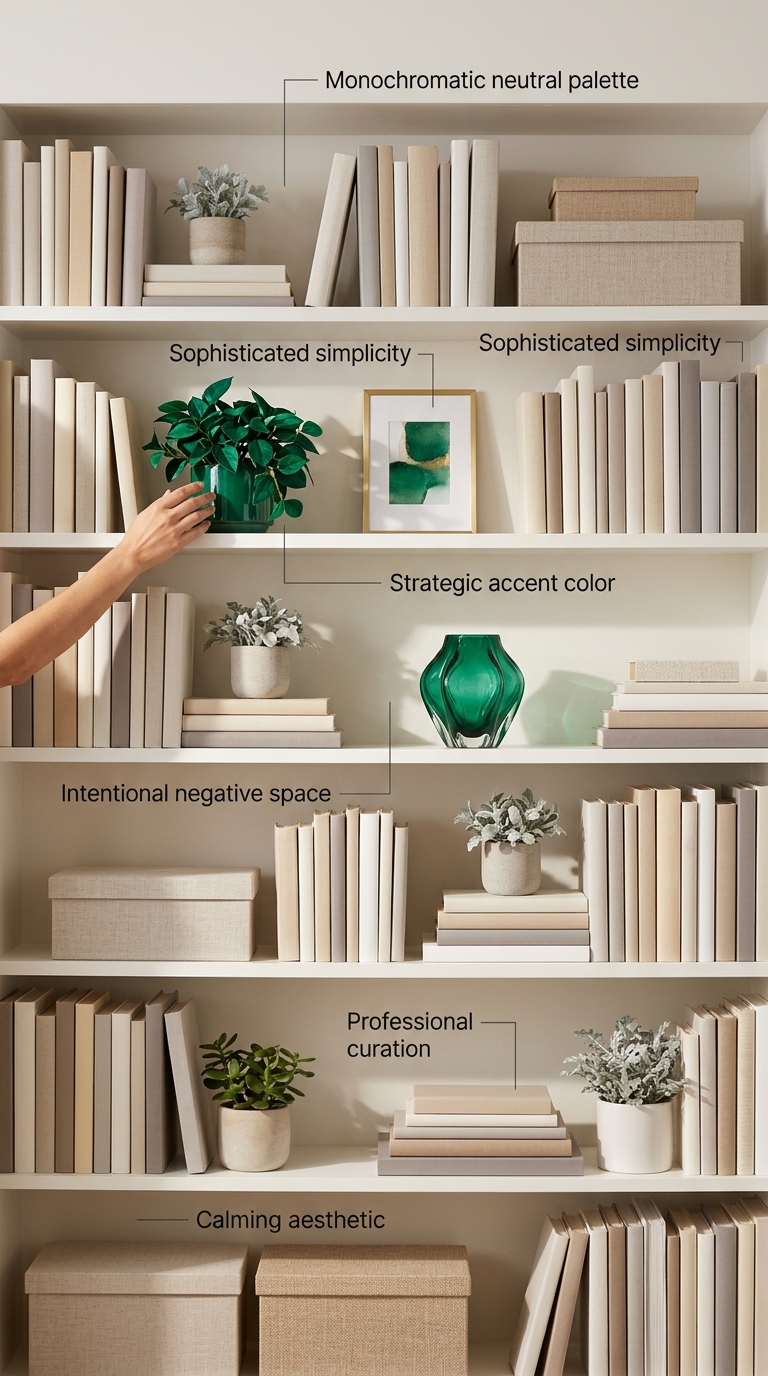
Idea 2: Monochromatic Neutrals With Pops Of Color
Create a sophisticated, minimalist aesthetic using primarily neutral-colored books and decor, with intentional pops of one accent color throughout. This approach feels elevated and intentional, creating a calm, curated aesthetic. The accent color draws the eye and creates visual interest without overwhelming the display. Neutral bookshelves work beautifully with any living room style and provide flexibility for seasonal or periodic styling updates. This approach appeals to those preferring sophisticated simplicity and intentional design.
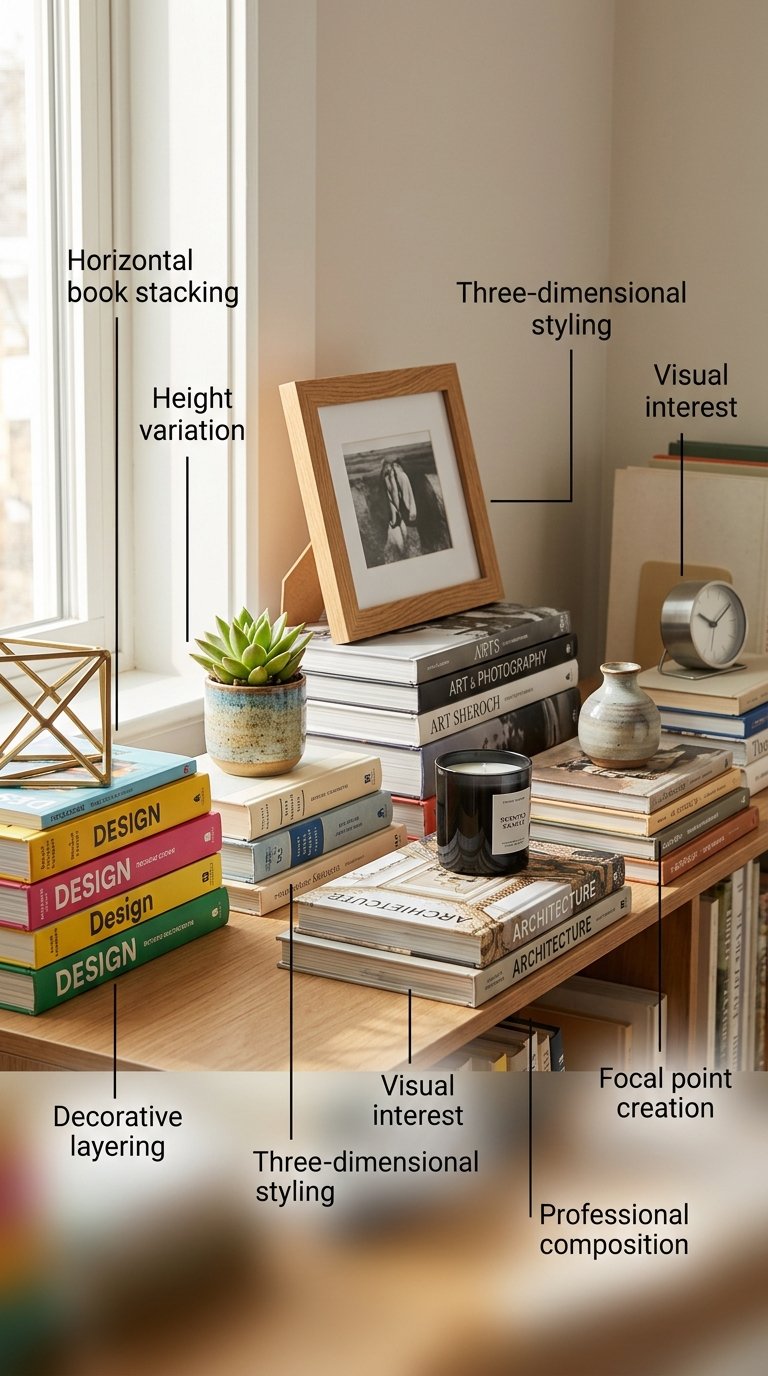
Idea 3: Books Stacked Horizontally With Decorative Styling
Create visual interest by laying books horizontally in stacks and topping stacks with decorative objects like sculptures, photo frames, or small plants. This horizontal arrangement breaks up vertical monotony and creates opportunities for creative layering. The decorative objects on top become focal points that draw the eye and add personality. This styling method works beautifully for creating height variation and incorporating three-dimensional elements into your display. The horizontal orientation feels relaxed and approachable while remaining visually interesting.
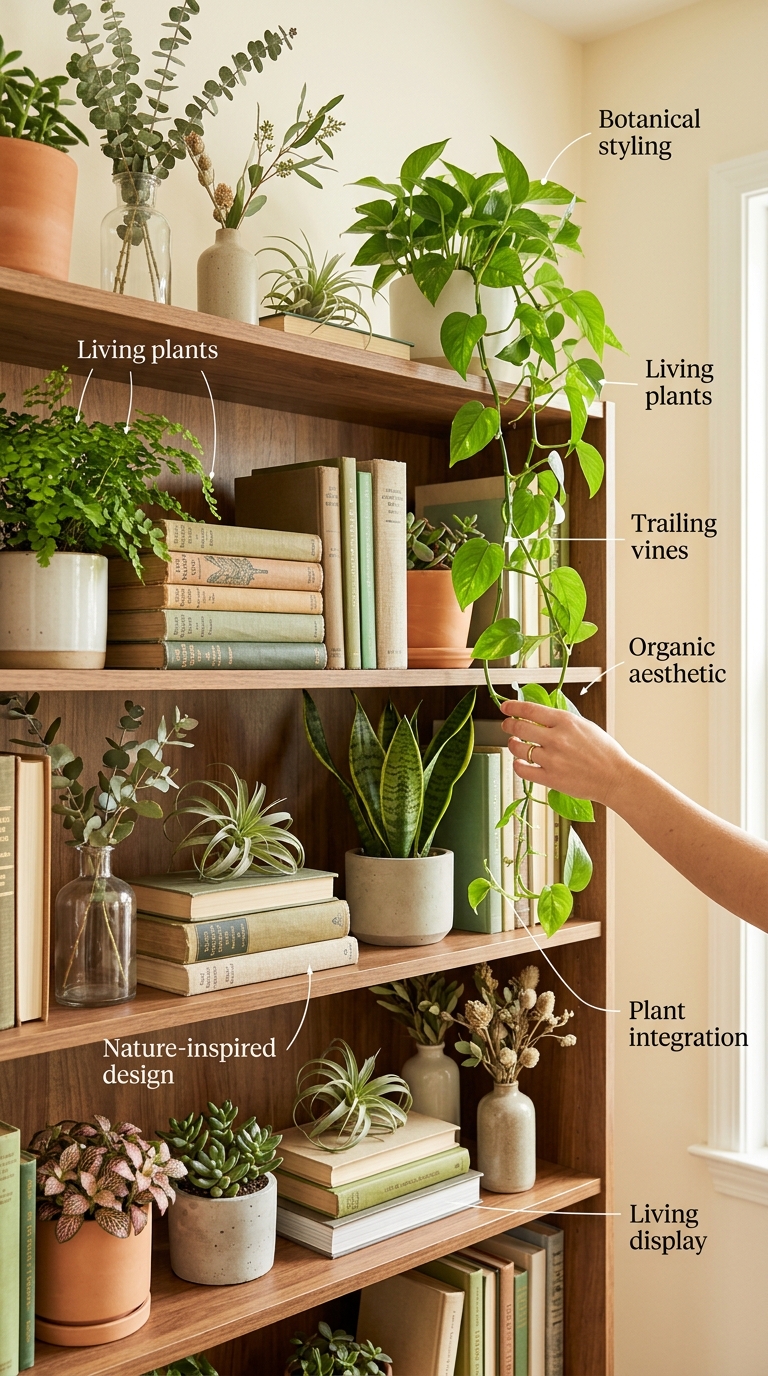
Idea 4: Botanical Elements And Living Plants
Incorporate potted plants, trailing vines, and botanical elements throughout your bookshelf for fresh, natural aesthetic that brings life into your living room. Small potted plants, air plants, or fresh branches add organic texture and softness. Green botanical elements complement any color scheme and create a connection to nature. Plants on shelves add literal life and improve air quality while creating stunning visual interest. This styling idea works beautifully for creating a relaxed, lived-in aesthetic that feels warm and welcoming.
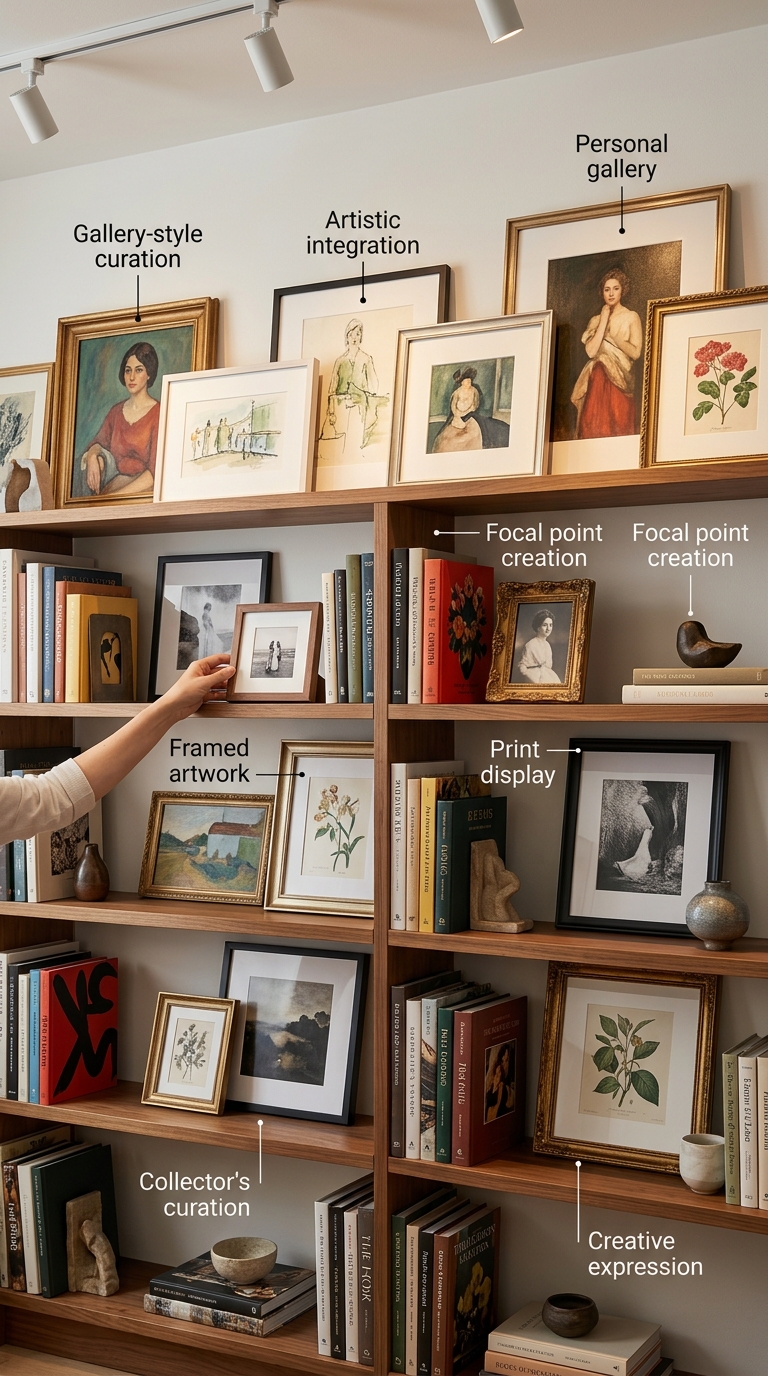
Idea 5: Artistic And Gallery-Style Curation
Treat your bookshelf like an art gallery, combining books with artwork, prints, and framed pieces arranged thoughtfully throughout. Lean framed prints against books, stand small paintings on shelves, and incorporate artistic elements that reflect your taste. This approach transforms shelves into personal galleries celebrating your interests and aesthetic preferences. The artistic curation creates sophisticated ambiance and communicates your creative sensibilities. This styling idea appeals to art enthusiasts and those seeking to showcase personal collections meaningfully.
Idea 6: Vintage And Antique Book Collections
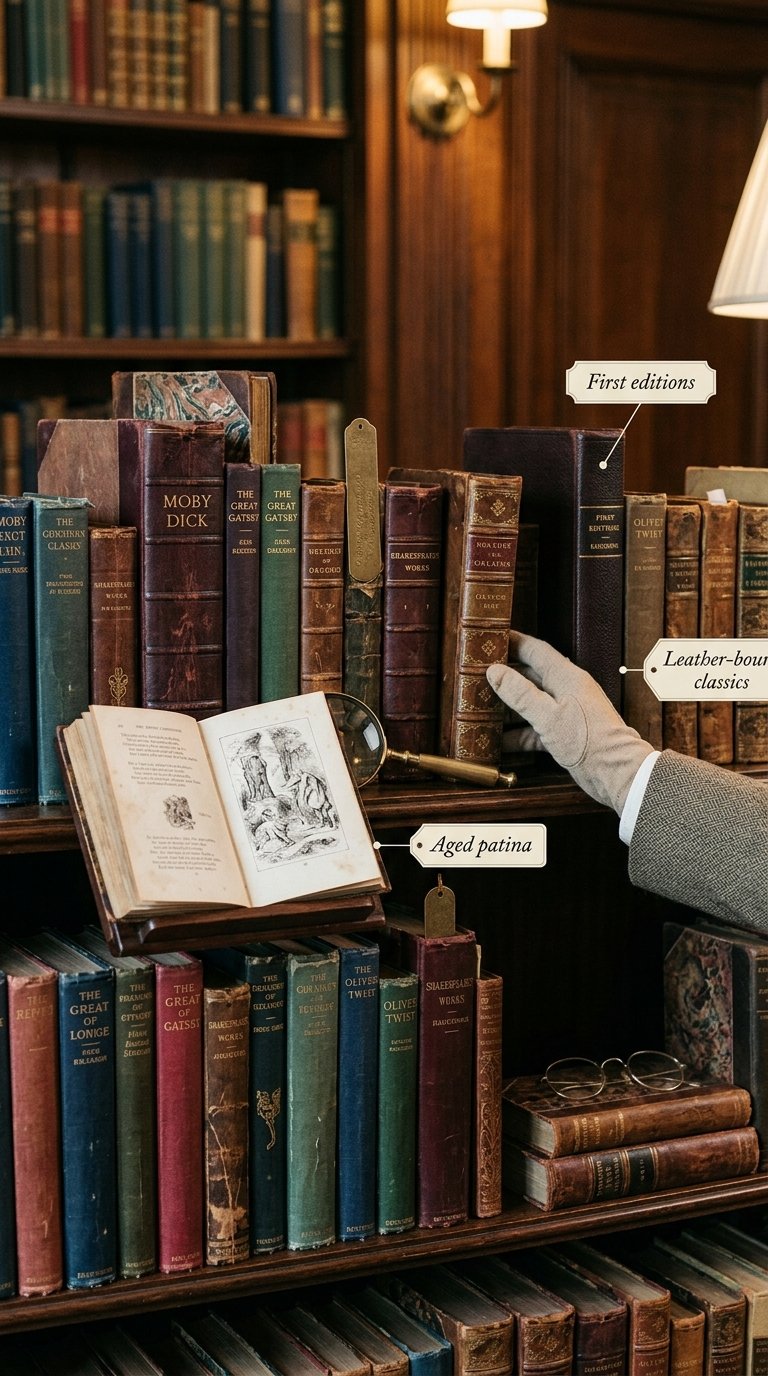
Showcase beautiful vintage books, antique editions, and leather-bound classics as statement pieces arranged thoughtfully for visual impact. Antique books with gorgeous spines create luxurious, literary aesthetic that feels sophisticated and cultured. Grouping vintage books together creates visual cohesion while highlighting their individual beauty. The patina and character of antique books add authenticity and personality to your display. This styling approach works beautifully for traditional, eclectic, or library-inspired living room designs.
Idea 7: Minimalist Negative Space Approach
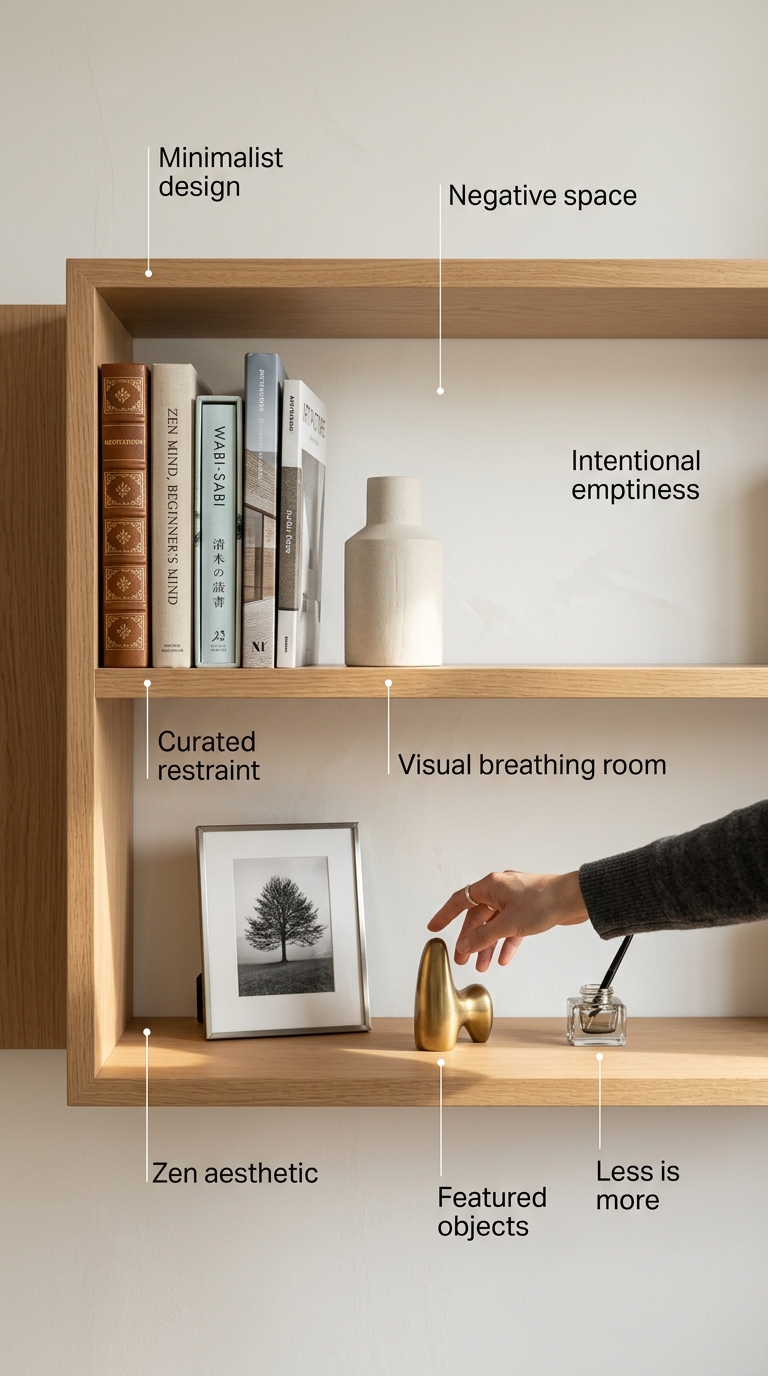
Embrace minimalism by styling shelves with significant empty space, featuring only essential books and carefully selected decorative objects. This sparse approach creates elegant, uncluttered aesthetic that feels intentional and sophisticated. Negative space becomes the design element, with each object receiving dedicated attention. The minimalist approach works beautifully for modern and Scandinavian-inspired living rooms. This styling idea appeals to those preferring calm, curated spaces over maximalist abundance.
Idea 8: Mirrors And Reflective Surfaces
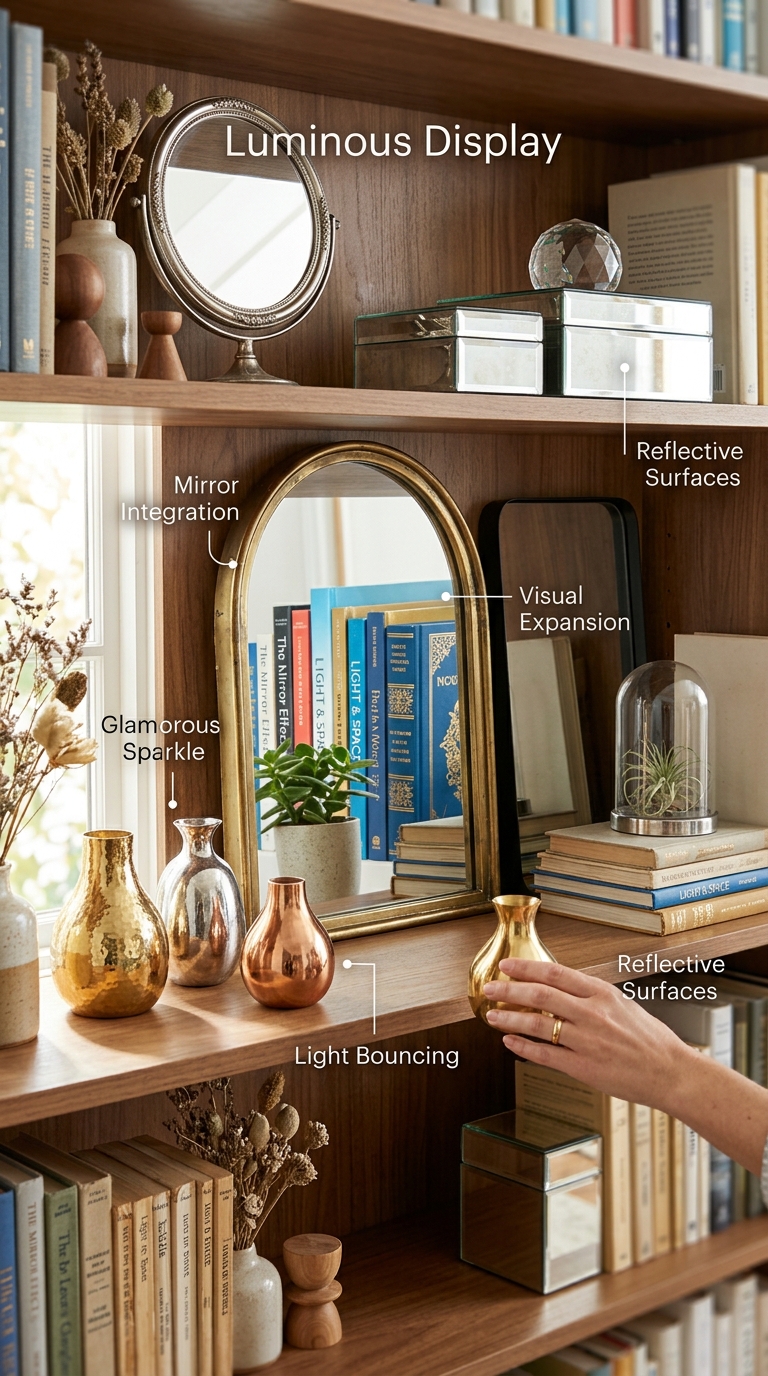
Incorporate mirrors, reflective vases, and metallic accents throughout your bookshelf to bounce light and create visual expansion. Mirrors open up shelves visually, reflect light, and add glamour and sophistication. Reflective surfaces create sparkle and dimension that photographs beautifully. This styling technique works especially well for smaller spaces needing visual expansion. The reflective elements add luxury and sophistication to your bookshelf display.
Idea 9: Textural Layering With Mixed Materials
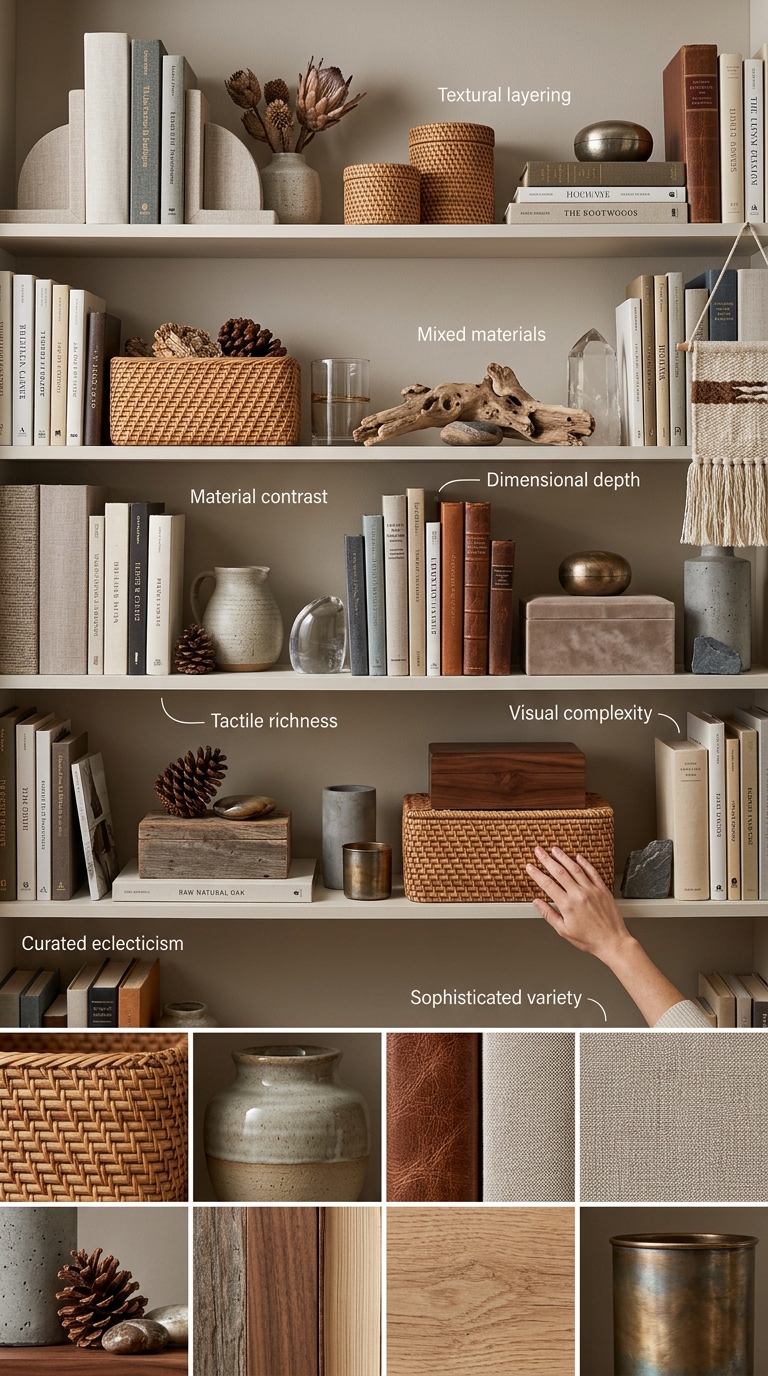
Combine books with decorative boxes, woven baskets, ceramics, and objects of varying textures to create depth and visual richness. Mixing smooth, rough, woven, and metallic textures creates tactile interest and visual complexity. Textural variety prevents monotony and makes shelves engaging to look at and touch. This layering approach works beautifully for eclectic, bohemian, or maximalist living room styles. The material diversity creates sophisticated, well-curated aesthetic.
Idea 10: Personal Collections And Meaningful Objects
Showcase personal collections—vintage cameras, travel souvenirs, family heirlooms—alongside books to tell your story and create personalized displays. Meaningful objects spark conversation and reveal your personality and interests. Displaying collections creates emotional connection and transforms shelves into deeply personal spaces. This styling approach works beautifully for creating warm, welcoming living rooms that reflect who you are. The personal touches make your bookshelf uniquely yours and impossible to replicate.
Idea 11: Decorative Boxes And Baskets For Storage
Incorporate beautiful decorative boxes and woven baskets on shelves for functional storage that adds visual interest and organizational appeal. Storage solutions disguised as decorative elements keep clutter hidden while maintaining aesthetic appeal. Baskets add texture and warmth while serving practical purposes. This styling approach works beautifully for creating organized, clutter-free shelves that appear intentionally designed. The hidden storage maintains clean lines and prevents visual overwhelm.
Idea 12: Book Spine Art And Visual Patterns
Create intentional visual patterns using book spines, arranging books to create geometric patterns, stripes, or deliberate color sequences. This approach celebrates book design and creates visual interest through spine arrangement. The pattern emerges from strategic book placement, creating stunning visual impact. This styling idea works beautifully for those with substantial book collections and appreciation for design detail. The visual patterns transform shelves into art installations.
Idea 13: Seasonal And Rotating Displays
Style shelves seasonally, incorporating seasonal colors, themes, and decorative elements that refresh your display throughout the year. Seasonal styling keeps your living room feeling fresh and current without major renovations. Rotating decorative elements allows you to enjoy different pieces and prevents visual fatigue. This approach works beautifully for those enjoying creative flexibility and periodic design updates. The seasonal approach keeps your bookshelf engaging and prevents it from becoming stale.
Idea 14: Statement Lighting And Functional Displays
Add small lighting fixtures, string lights, or desk lamps to bookshelf sections for ambient lighting and functional display enhancement. Lighting draws attention to specific sections and creates evening ambiance. Functional lighting transforms shelves from purely decorative to practical and atmospheric. This styling idea works beautifully for creating cozy living room environments. The lighting adds sophistication and creates Instagram-worthy displays.
Idea 15: Open Shelving Paired With Closed Storage
Combine open bookshelves with closed cabinetry or cabinets below for mixed storage that balances display opportunity with hidden storage. This approach provides visual breathing room while maintaining substantial storage capacity. The mixed approach works beautifully for creating organized, curated living rooms. The combination prevents the overwhelm of exclusively open shelving while maintaining beautiful displayed collections.
Expert Bookshelf Styling Tips And Best Practices
Master The 60-30-10 Design Rule
Apply the 60-30-10 rule to your bookshelf: 60% books, 30% decorative objects, and 10% negative space creates balanced, professionally-designed displays. This proportion prevents overcrowding while maintaining visual interest and functionality. The rule provides mathematical guidance for those struggling with styling instincts. This principle applies whether using colorful books or neutral tones. Following the rule creates surprisingly balanced, visually pleasing results that feel intentionally designed.
Group Objects In Odd Numbers
Arrange decorative objects in groups of three or five rather than pairs or even numbers for more visually interesting, naturally arranged appearance. Odd groupings create better visual balance and feel more intentional than symmetrical arrangements. This principle applies to books, plants, and decorative elements throughout your display. Odd groupings create asymmetrical balance that feels sophisticated and designer-approved. This simple rule dramatically improves the visual appeal of your bookshelf styling.
Create Focal Points And Anchor Pieces
Identify one or two anchor pieces per shelf—perhaps a beautiful plant, artwork, or significant object—and arrange surrounding items around these focal points. Anchor pieces draw the eye and organize visual composition around intentional focal points. Focal points prevent shelves from appearing scattered or purposeless. Creating focal points guides viewers’ eyes naturally and creates visual hierarchy. This approach transforms random arrangements into thoughtfully composed displays.
Layer Books Vertically And Horizontally
Combine vertical stacking with horizontal layering to create height variation, visual interest, and texture throughout your display. Horizontal books topped with decorative objects create natural platforms for layering. The mixed orientation prevents monotonous vertical stacking and creates dynamic compositions. This layering technique works beautifully for creating sophisticated, magazine-worthy displays. The varied orientation keeps shelves visually interesting and prevents flat, boring arrangements.
Incorporate Artwork And Framed Prints
Display framed artwork, prints, or photographs leaning against books or standing on shelves to add artistic dimension and personal expression. Artwork breaks up book-heavy sections and introduces visual interest beyond written spines. Framed pieces create focal points and add sophistication to displays. This approach works beautifully for incorporating art collections and personal photographs meaningfully. The artwork adds color, personality, and visual sophistication to bookshelf displays.
Leave Intentional Empty Shelf Space
Reserve at least one completely empty shelf to create visual breathing room and prevent the bookshelf from feeling overwhelmed or cluttered. The empty shelf becomes an intentional design choice rather than appearing neglected. Empty space provides visual rest and makes surrounding objects more impactful. This principle applies whether styling one shelf or an entire unit. Deliberate emptiness communicates sophistication and intentional design choices.
Vary Book Spine Colors Intentionally
If not using full color organization, distribute colored book spines throughout the display rather than clustering similar colors together. Intentional color distribution prevents visual heaviness and creates balanced color flow. Strategic color placement guides the eye around the entire bookshelf composition. This approach works beautifully for maintaining interest while avoiding monochromatic sections. Thoughtful color variation creates professional, designer-curated aesthetic.
Incorporate Lighting For Ambiance
Add small accent lights, LED strips, or decorative lighting fixtures to highlight specific sections and create evening ambiance. Lighting draws attention to beautiful pieces and transforms shelves into atmospheric focal points. Functional and decorative lighting adds sophistication and creates Instagram-worthy displays. This approach works beautifully for creating cozy, inviting living room environments. The lighting adds another design dimension beyond daytime aesthetics.
Also Read: Modern Living Room Ideas for a Sleek and Stylish American Home
Common Bookshelf Styling Mistakes To Avoid
Overcrowding And Lack Of Negative Space
The biggest mistake involves cramming too many objects onto every available inch, eliminating negative space and creating cluttered, overwhelming appearance. Overcrowded shelves feel chaotic and fail to showcase individual pieces effectively. Excessive objects prevent the eye from resting and diminish the impact of meaningful items. Remember that empty space is design, not wasted opportunity. Resist the urge to fill every gap and embrace strategic emptiness.
Ignoring Color Balance And Harmony
Failing to consider how colors work together creates visually jarring displays that lack cohesion and intentional design. Randomly placed colored books without strategic distribution feels accidental rather than curated. Poor color balance overwhelms viewers and prevents the eye from finding visual rest points. Consider warm and cool tone distribution throughout your display. Thoughtful color planning transforms chaotic-looking shelves into intentionally designed focal points.
Uniform Book Placement And Height
Arranging all books vertically in identical heights creates boring, monotonous displays lacking visual interest and dimension. Uniform height feels institutional rather than design-forward or curated. The lack of variation prevents viewers from finding visual focal points. Break uniformity through horizontal layering, varying object heights, and strategic spacing. Height variation transforms monotonous shelves into dynamic, interesting displays.
Neglecting The Rule Of Thirds
Failing to apply the rule of thirds creates shelves that feel unbalanced and lack visual rhythm. Uniform filling without strategic division creates overwhelm and prevents the eye from moving naturally. The rule of thirds provides structure and guides visual interest throughout your display. Apply this principle to individual shelves and your overall bookshelf composition. This principle transforms random arrangements into professionally-designed displays.
Ignoring Proportional Balance
Mixing oversized objects with tiny ones without considering visual balance creates awkward, poorly proportioned displays. Large objects require supporting elements and appropriate spacing to avoid dominating shelves. Proportional imbalance creates visual discomfort even if viewers can’t identify the specific problem. Consider how object sizes relate to each other and available space. Thoughtful proportion creates harmonious, balanced displays that feel sophisticated.
Failing To Update And Rotate Displays
Leaving shelves unchanged for extended periods creates stale, unengaging displays that feel frozen rather than living. Static shelves blend into background rather than remaining interesting focal points. Periodic updates keep your display fresh and allow you to enjoy different collections. Seasonal or monthly updates provide opportunities for creative expression and styling practice. Regular updates maintain viewer interest and prevent visual fatigue.
Mixing Design Styles Chaotically
Combining ultra-modern objects with traditional books and vintage pieces without intentional curation feels confused and lacks aesthetic coherence. Unintentional style mixing communicates poor planning rather than eclectic sophistication. Intentional eclecticism requires thoughtful curation and unifying elements. Consider how different styles work together and what visual elements connect them. Purposeful style mixing creates sophisticated, curated aesthetic rather than appearing accidental.
Bookshelf Styling By Living Room Design Style
Modern Minimalist Bookshelf Styling
Embrace clean lines, negative space, and a limited color palette featuring primarily neutral tones with minimal decorative objects. This approach prioritizes functionality and intentional emptiness over abundance. Modern shelves feature organized books interspersed with carefully selected objects that serve as focal points. Keep decorative elements geometric and simple without ornate or fussy details. This styling creates calm, sophisticated living rooms that feel intentionally designed and uncluttered.
Traditional And Classic Bookshelf Styling
Showcase leather-bound classics, decorative objects with timeless appeal, and traditional décor elements arranged symmetrically and formally. This approach celebrates literary heritage and classical design principles. Decorative boxes, antique objects, and fine art complement traditional book collections beautifully. Symmetrical arrangement and careful balance create formal, sophisticated aesthetic. This styling appeals to those appreciating literary culture and classic design.
Bohemian And Eclectic Bookshelf Styling
Mix diverse objects, vibrant colors, global influences, and personal collections for maximalist, expressive displays celebrating individuality. This approach embraces abundant color, mixed textures, and meaningful personal items. Vintage finds, travel souvenirs, and artistic pieces combine to create richly personal displays. Eclectic styling allows creative expression and celebrates diverse interests without rigid organization. This approach appeals to creative, adventurous individuals celebrating unique personalities.
Scandinavian And Nordic Bookshelf Styling
Feature neutral-colored books, natural materials, minimalist décor, and functional storage solutions reflecting Scandinavian design principles. This approach prioritizes functionality and natural materials alongside visual simplicity. Light woods, natural textiles, and understated objects create calm, cozy aesthetic. Negative space remains important despite the warm, inviting quality. This styling creates peaceful, contemplative living rooms aligned with Scandinavian wellness values.
Contemporary Transitional Bookshelf Styling
Blend modern and traditional elements, contemporary art with classic books, and varied textures for sophisticated, adaptable displays. This approach captures the best of multiple styles without committing exclusively to one aesthetic. Contemporary styling allows flexibility and evolution as tastes and collections change. Mixed-style curations feel approachable and livable rather than museum-like. This approach works beautifully for evolving personal style and eclectic taste appreciation.
FAQs
How do I organize books on a bookshelf—by color, size, or genre?
Professional stylists use multiple organization methods: color coordination for visual impact, genre organization for functionality, and height variation for design interest. Choose the method that prioritizes your priorities.
What ratio of books to decorative objects should I use?
The 60-30-10 rule provides guidance: 60% books, 30% decorative objects, and 10% negative space creates balanced, professionally-designed displays that remain functional.
Can I style a bookshelf if I don’t have many books?
Absolutely! Use decorative boxes, plants, artwork, and objects as primary display elements with strategically placed books. This approach creates beautiful displays with fewer books.
How often should I update my bookshelf styling?
Update seasonally or quarterly to keep displays fresh and engaging. Regular updates provide creative opportunities and prevent shelves from becoming stale focal points.
What decorative objects work best for bookshelf styling?
Plants, artwork, decorative boxes, sculptures, mirrors, candles, and personal collections all work beautifully. Choose objects reflecting your personality and complementing your design style.
How do I make a small bookshelf look bigger?
Incorporate mirrors and reflective surfaces to create visual expansion, use lighter colors, leave significant negative space, and vary heights to create dimension and prevent visual heaviness.
Should my bookshelf match my other living room furniture?
Your bookshelf should coordinate with your overall design scheme without necessarily matching exactly. Color palette harmony and style coherence matter more than identical matching.
Can I display both books and collectibles on the same shelf?
Yes! Mixing books with collections creates personalized displays. Arrange thoughtfully using grouping and spacing principles to create balanced, curated compositions.
Conclusion
Styling a bookshelf like an interior designer transforms this simple storage solution into a stunning focal point that elevates your entire living room. By mastering color coordination, the rule of thirds, height variation, and negative space, anyone can create magazine-worthy displays. Remember that beautiful bookshelf styling reflects your personality, celebrates your interests, and demonstrates intentional design choices. Start with these principles and let your creativity guide you toward displays that feel authentically yours and gorgeously inspiring.