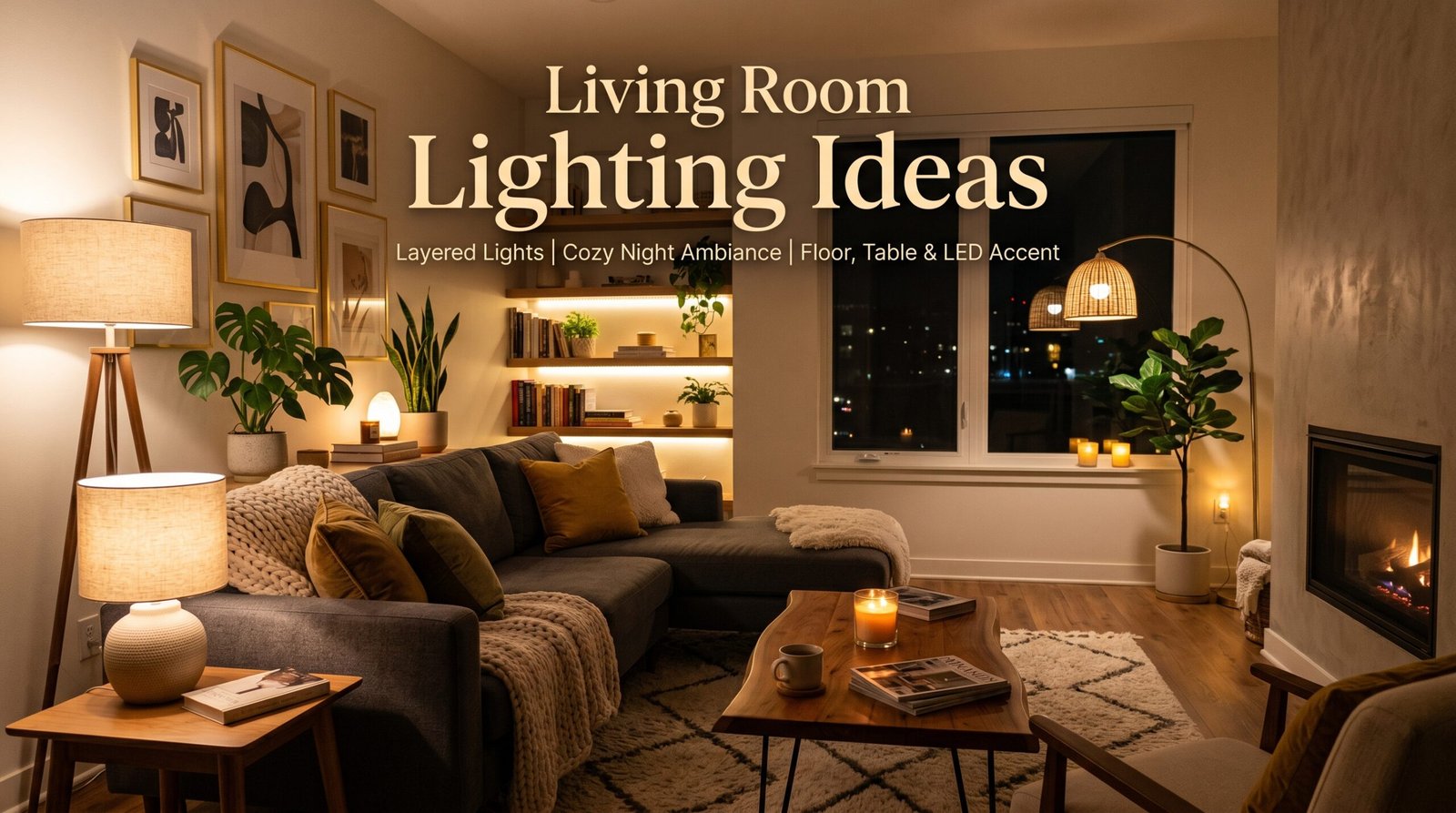
Living Room Lighting Ideas to Set the Perfect Mood Every Night
You’ve probably been there: you walk into your living room, flip the switch, and BAM you’re blinded by a harsh, overhead glare that makes the space feel cold and sterile. It’s the quickest way to kill a cozy vibe. Living room lighting ideas aren’t just about seeing where you’re going; they are about creating an atmosphere that invites you to relax, entertain, and unwind.
Whether you have a sprawling suburban home with high ceilings or a snug apartment living room, the right light can transform your space from “functional” to “magazine-worthy.” In this guide, we are going to dive deep into the three layers of lighting, the best fixtures for American homes, and the exact bulb temperatures you need. By the end, you’ll know exactly how to refresh your living space so it feels warm and inviting every single night.
Why This Topic Matters
In American homes, the living room is the command center. It’s where we binge-watch, help kids with homework, and host holiday parties. However, most builders cut corners by installing just one recessed can or a basic flush mount. According to a recent Architectural Digest survey, 74% of homeowners say lighting is the #1 element that changes how they use a room, yet only 20% actually upgrade it during a home makeover.
Proper lighting isn’t just interior design fluff; it affects your mental health and how you experience your home. Bad lighting causes eye strain and headaches, while good lighting elevates your mood and makes your furniture look expensive. Mastering living room lighting ideas is the cheapest, highest-impact way to upgrade your living space without a renovation.
1. The Golden Rule: The Three Layers of Light
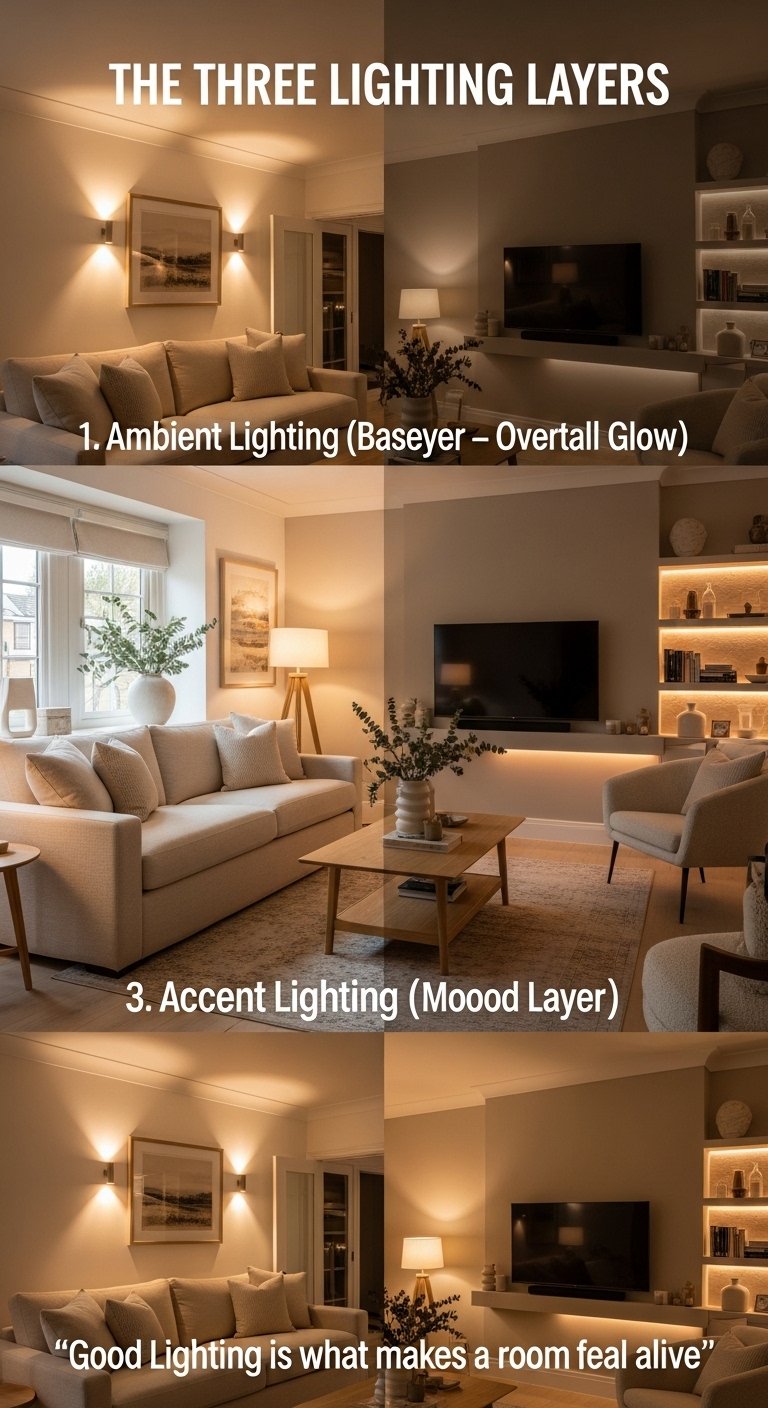
If you take only one thing from this article, let it be this: Never rely on a single light source. To get that cozy, aesthetic look, you need three distinct layers that work together.
- Ambient Lighting: This is your general, overall light (recessed cans, chandeliers). It sets the base brightness.
- Task Lighting: This helps you do specific jobs (reading lamps, under-cabinet lights).
- Accent Lighting: This adds drama and style (wall sconces, picture lights, LED strips).
How to Apply It: In a standard 12×12 room, start with 4-6 recessed cans for ambient light. Add a floor lamp next to the reading chair for task lighting. Finally, use a table lamp on the console or sconces by the fireplace for accent lighting.
Product Suggestion:
- Budget: Hyperikon LED recessed lights (pack of 6) from Amazon for under $50.
- Premium: A brass or matte black chandelier from Rejuvenation or Schoolhouse Electric.
How-To Tip: Install a dimmer switch on your main ambient light. It’s the single best upgrade for mood control.
Pro Designer Secret: If you only have one layer (ambient), add a floor lamp in the darkest corner. It instantly adds depth and makes the room feel larger.
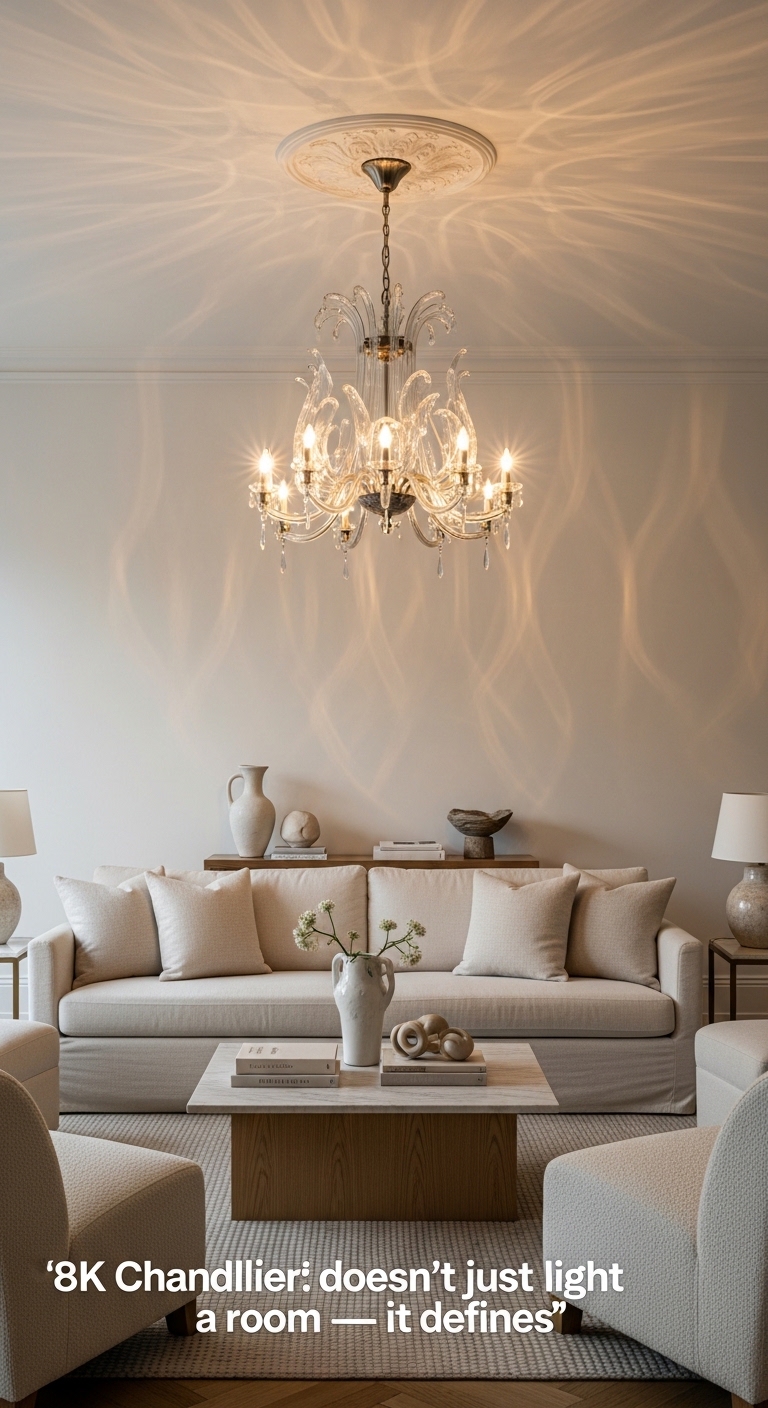
2. Statement Chandeliers: The Jewelry of the Room
In American homes with open floor plans or high ceilings, a chandelier isn’t just a light; it’s a sculpture. It anchors the furniture and adds personality.
Size Matters: The diameter of your chandelier should be roughly the width of your table (if over a dining table) or the width of your sofa minus 12 inches (if in the living area). For a 9-foot ceiling, hang it at least 7 feet off the ground so people don’t bump their heads.
Style Guide:
- Farmhouse/Coastal: Look for rattan, bead, or driftwood finishes.
- Modern/Mid-Century: Choose brass, chrome, or geometric shapes.
- Traditional: Crystal or wrought iron never fails.
Product Suggestion:
- Budget: The IKEA “Kris” or “Sinnerlig” chandeliers offer high-end looks for under $150.
- Premium: Visual Comfort or Hudson Valley Lighting for heirloom-quality pieces that last decades.
How-To Tip: If you have a low ceiling (8 feet), skip the hanging chandelier and opt for a “flush mount” or “semi-flush” fixture that hugs the ceiling.
Pro Designer Secret: Don’t be afraid to go slightly oversized. A chandelier that is too small looks lost, while a large one makes a bold, confident statement.
3. Floor Lamps: The Versatile Workhorses
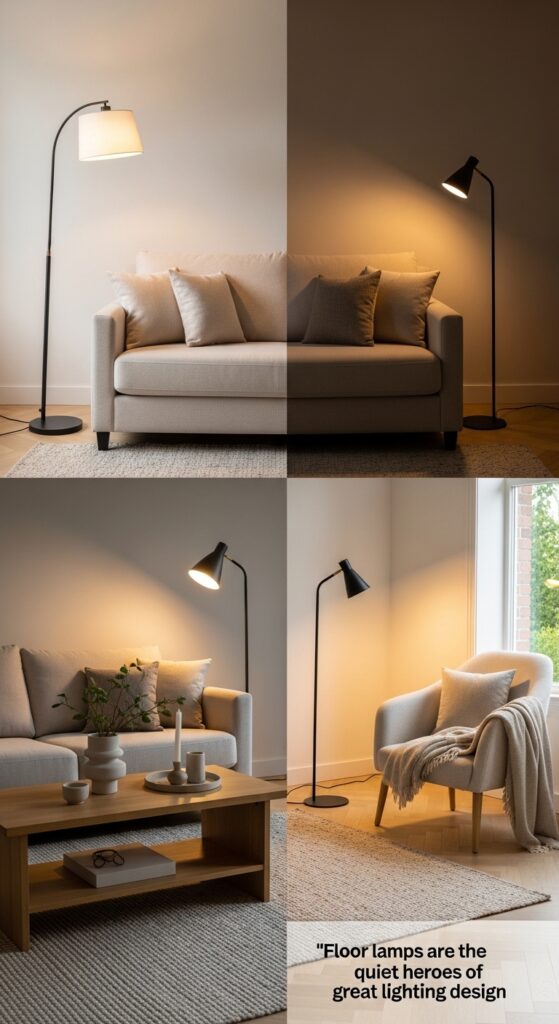
Floor lamps are the MVP of home styling. They fill dark corners, define zones, and provide reading light without taking up table space.
The Arc Lamp: This is the favorite for a reason. The arm curves over the sofa, providing light without a table behind it. It’s perfect for apartment living where space is tight.
The Tripod Lamp: Adds a boho, organic feel with its three wooden legs.
The Pharmacy Lamp: A classic, adjustable metal lamp perfect for task lighting next to a desk or reading chair.
Product Suggestion:
- Budget: The Target “Threshold” arc lamp or a simple tripod from Walmart.
- Premium: The Flos “Arco” lamp (the original marble base version) or a ceramic base from West Elm.
How-To Tip: Place the base of the lamp behind a side table or the arm of the sofa to hide the “mechanism” and make it look like it’s floating.
Pro Designer Secret: Use a floor lamp to “fake” a window. Place it in a dark corner with a bright bulb (800+ lumens) to trick the eye into thinking there’s natural light there.
4. Table Lamps: Adding Texture and Warmth
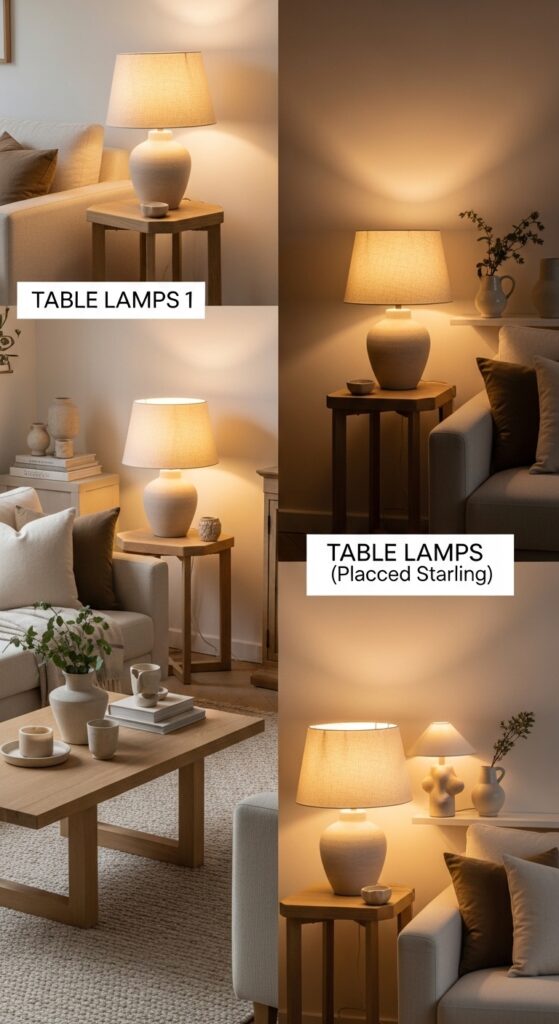
Table lamps sit at eye level, so they are crucial for creating that cozy “glow.” They break up the vertical space and add texture through their shades and bases.
Material Mix: If your room has a lot of wood and leather, try a ceramic or glass base to add contrast. If your room is modern and sleek, a velvet or linen shade softens the look.
The Shade Rule: The shade should cover the bulb completely to prevent glare. The bottom of the shade should be at eye level when you are seated.
Also Read: Open Concept Living Room Ideas for a Bright and Airy Home
Product Suggestion:
- Budget: Thrift stores are gold mines for vintage ceramic bases. Pair them with a new shade from Home Depot.
- Premium: A hand-thrown pottery base from Etsy or a marble base from CB2.
How-To Tip: Use two identical lamps on either side of a sofa or fireplace for symmetry. It creates a hotel-luxe vibe instantly.
Pro Designer Secret: Put your lamp on a stack of books or a tray to raise it up if the table is too low. The base of the lamp should not be hidden by the sofa arm.
5. Sconces: The Space-Saving Heroes
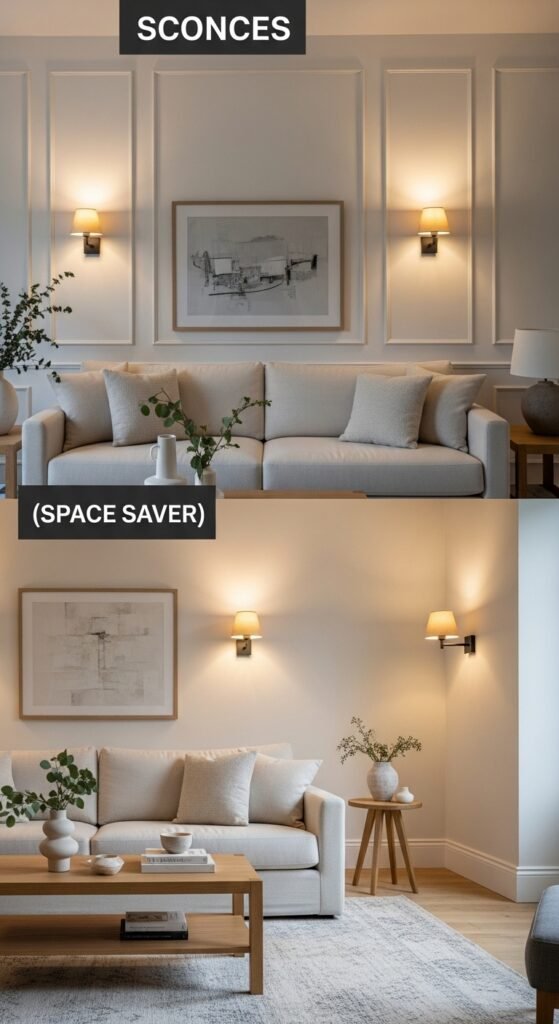
Wall sconces are perfect for American homes where floor space is at a premium. They free up tables and add architectural interest to blank walls.
Placement: Sconces work best flanking a fireplace, mirror, or piece of art. They should be mounted roughly 60 inches from the floor (eye level).
Style: Swing-arm sconces are great for reading in bed or on a sofa. Lantern-style sconces add a farmhouse or coastal vibe.
Product Suggestion:
- Budget: Amazon has hundreds of matte black or brushed nickel swing-arm sconces for under $40.
- Premium: Circa Lighting or Kelly Wearstler designs for a sculptural, art-gallery look.
How-To Tip: If installing sconces next to a mirror, center them on the mirror, not the wall. This frames the reflection beautifully.
Pro Designer Secret: Use sconces to highlight texture. Shine a light up or down a brick wall or a wood panel to create dramatic shadows.
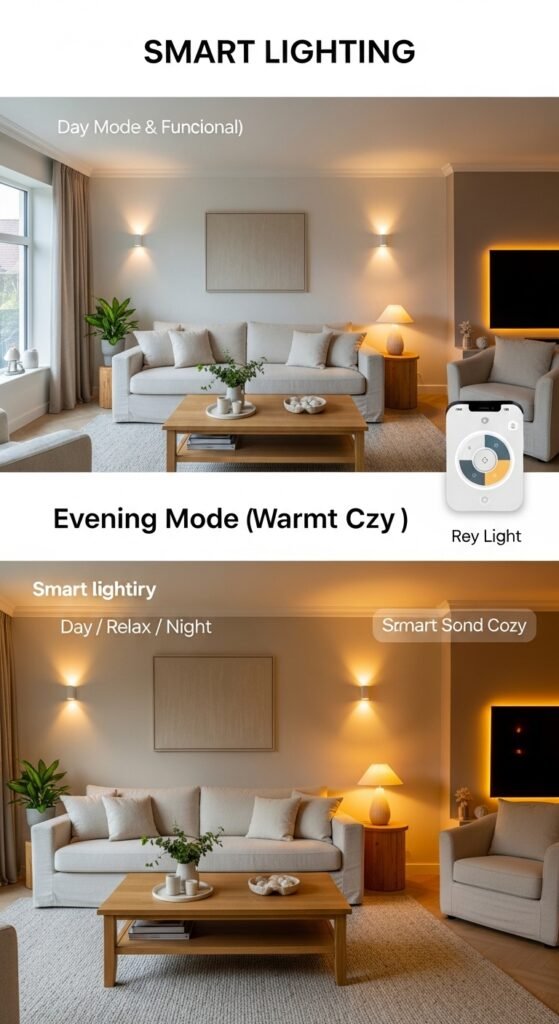
6. Smart Lighting: Convenience Meets Ambiance
We are in 2025, and your lights should work as hard as you do. Smart lighting isn’t just about voice control; it’s about scheduling and color changing.
Smart Bulbs: Brands like Philips Hue or LIFX allow you to change the color temperature from cool white (for focusing) to warm white (for relaxing) via an app.
Smart Switches: Lutron Caseta switches let you dim the lights from your phone or a remote control without replacing the bulb.
Product Suggestion:
- Budget: Wyze or Kasa smart bulbs (color changing) from Best Buy or Amazon.
- Premium: Lutron Caseta wireless dimmer kit (installation required, but seamless).
How-To Tip: Set a “Sunset Routine” in your app. Have your living room lights slowly dim to 30% brightness over 30 minutes after dinner to signal to your brain it’s time to wind down.
Pro Designer Secret: Use smart bulbs to sync your lights with movies or music. It creates an immersive experience that costs almost nothing.
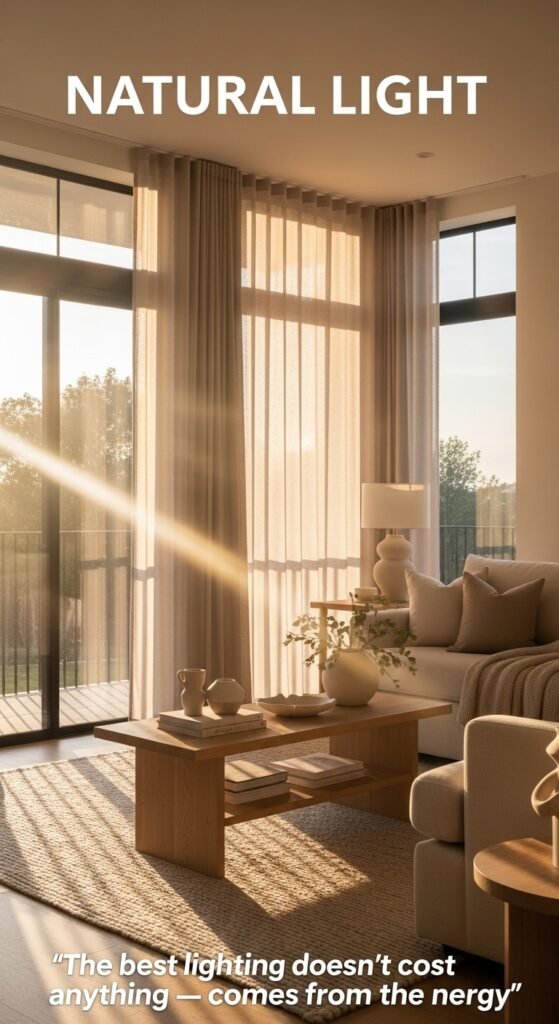
7. Natural Light: The Best (and Free) Lighting
Don’t forget the sun! Natural materials and sheer fabrics help maximize the free light available in your home.
Window Treatments: Avoid heavy blackout curtains in the living room unless it’s a media room. Opt for linen or sheer cotton that filters light while maintaining privacy.
Mirrors: Hang a large mirror opposite a window. It bounces light around the room and makes the living space feel twice as big.
Product Suggestion:
- Budget: IKEA “Ritva” sheer curtains ($20).
- Premium: Custom drapery from The Shade Store using a light-filtering fabric.
How-To Tip: Keep windows clean! It sounds obvious, but dirty glass can reduce natural light by 20%. Clean them inside and out twice a year.
Pro Designer Secret: Use light-colored furniture. A greige or warm white sofa reflects light, while a dark charcoal sofa absorbs it.
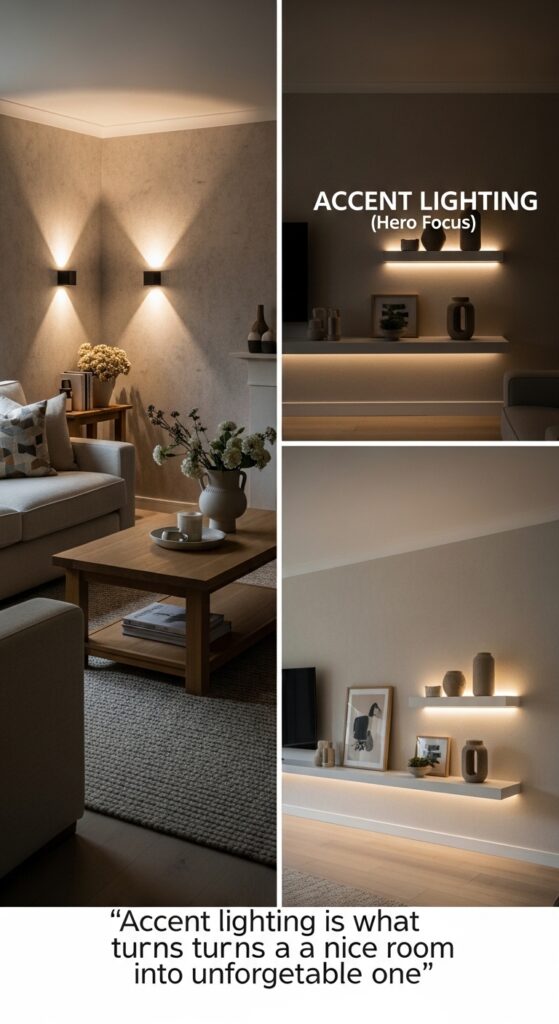
8. Accent Lighting: The “X-Factor”
This is the layer that makes guests say, “Wow, where did you get that?” It’s the hidden lights that add depth.
LED Strips: Place them behind a TV or under floating shelves for a modern, floating effect.
Picture Lights: A small picture light over a large canvas makes it a focal point.
Toe-Kick Lighting: Under-cabinet lights in the living room bar area add a soft, cinematic glow.
Product Suggestion:
- Budget: Govee or Daybetter LED strips (color changing) from Amazon.
- Premium: Hard-wired LED tape light hidden in crown molding (requires an electrician).
How-To Tip: Use warm white (2700K) for accent lighting. Cool white looks clinical and harsh in living spaces.
Pro Designer Secret: Light your plants! Place a small uplight in a potted floor plant (like a Fiddle Leaf Fig) to cast interesting shadows on the ceiling.
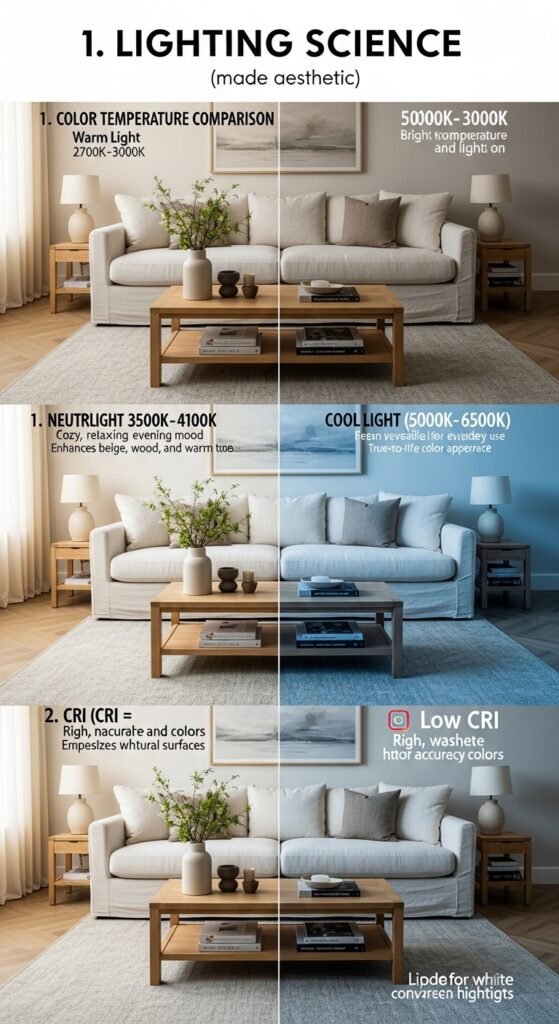
9. Bulb Temperature and CRI: The Technical Stuff
You can have the most expensive chandelier, but if you use the wrong bulb, it will look terrible.
Color Temperature (Kelvin):
- 2700K (Soft White): The gold standard for living rooms. It’s warm and inviting.
- 3000K (Bright White): Good for kitchens or reading, but can feel sterile in a lounge.
- 5000K (Daylight): Never use this in a living room. It looks like an office.
CRI (Color Rendering Index): This measures how accurately a bulb shows colors. Aim for a CRI of 90+. A low CRI makes your red rug look brown and your skin look sallow.
Product Suggestion:
- Budget: GE “Relax” LED bulbs (2700K, CRI 90+).
- Premium: Soraa or Cree high-CRI LEDs (expensive, but colors pop incredibly).
How-To Tip: Check the “Lumens” (brightness), not Watts. For a living room, aim for 1,500–3,000 lumens total for general lighting.
Pro Designer Secret: Mix temperatures slightly. Use 2700K for lamps and 3000K for task lighting to create a subtle, layered contrast.
Common Mistakes to Avoid
Even with a plan, it’s easy to mess up lighting. Here are 5 mistakes Americans make:
- The “UFO” Chandelier: Putting a massive, multi-tiered fixture in a room with an 8-foot ceiling. Fix: Measure your ceiling height. If it’s under 9 feet, stick to flush mounts.
- Glare from TV: Placing a bright lamp directly across from the TV. Fix: Use floor lamps behind the seating or dimmable sconces.
- Wrong Bulb Shade: Using a “frosted” bulb that looks like a giant cotton ball. Fix: Use “clear” or “filament” style LEDs for a vintage look, or frosted only if the shade is open.
- Ignoring the Dark Corners: Leaving the corner by the door pitch black. Fix: Always add a lamp in the darkest corner to balance the room.
- Mismatched Finishes: Having a brushed nickel lamp, a gold chandelier, and black sconces. Fix: Stick to one metal finish (or two, like brass and black) for cohesion.
Also Read: How to Pick the Perfect Living Room Rug Size Style and Color
Budget Breakdown Section
Lighting a living room can be cheap or expensive depending on how deep you go. Here is a realistic breakdown for a standard room:
| Tier | Budget | What You Get | Where to Shop |
|---|---|---|---|
| Budget | Under $100 | 2 Floor Lamps (Amazon), Smart Bulbs (Wyze), Dimmer Switch. | Amazon, Walmart, Home Depot. |
| Mid-Range | $100 – $400 | Statement Chandelier, Table Lamp, LED Strips, Recessed Lights. | Target, IKEA, Wayfair, HomeGoods. |
| High-End | $400+ | Designer Sconces, Custom Drapes, Hard-wired Landscape Lighting, Smart Home System. | Rejuvenation, West Elm, Pottery Barn, Local Electrician. |
Note: Prices exclude installation costs for hard-wired fixtures.
Seasonal / Trend Tips
Living room lighting ideas change with the seasons to match our biological needs.
- Spring/Summer: Maximize natural light. Remove heavy drapes. Use cooler bulbs (3000K) in workspaces to feel energized.
- Fall/Winter: This is “hygge” season. Switch to 2700K bulbs everywhere. Add candles (the original light source!) and warm amber glows.
2025 Trends:
- Biophilic Lighting: Fixtures that look like organic shapes (leaves, stones) or mimic the color of sunlight through trees.
- Architectural Lighting: Hidden coves and slots in walls that wash light down, creating a “sunset” effect indoors.
- Vintage Revival: “Edison” style bulbs with visible filaments are back in a big way, often in Japandi or Boho settings.
Upcoming Trend: “Circadian Lighting” systems that automatically change color temperature throughout the day to match the sun, improving sleep and focus.
FAQ Section
1. What is the best lighting for a small living room?
Focus on vertical space. Use floor lamps and wall sconces to free up floor space. A large mirror opposite a window will reflect light and make the room feel bigger. Avoid bulky chandeliers; a flush mount or semi-flush mount is better. Keep the color temperature warm (2700K) to make the small space feel cozy rather than cramped.
2.3-Way switch vs. Dimmer switch: which is better for living rooms?
A dimmer switch is infinitely better. A 3-way switch just gives you High/Medium/Low settings, but a dimmer allows for infinite gradations. You can set the mood perfectly for a movie (10% brightness) or a party (100% brightness). It’s a cheap upgrade ($15) that elevates the whole room.
3. How high should a floor lamp be next to a sofa?
The bottom of the lamp shade should be at eye level when you are seated on the sofa (roughly 36–42 inches from the floor). The lamp should be tall enough that the light source is above your head when sitting to prevent glare. If the lamp is too short, it will look like a toy next to the furniture.
4. Can I mix metal finishes in living room lighting?
Yes, but be careful. The “Rule of Three” applies: stick to a maximum of two different metals. A classic combo is brass (warm) and matte black (modern). Or chrome and nickel. If you mix too many (gold, silver, copper, bronze), it looks messy. Try to have one dominant finish (70%) and one accent finish (30%).
5. What is the ideal color temperature for a living room?
2700K (Soft White) is the industry standard for relaxation. It mimics the warm glow of incandescent bulbs and candlelight. If your room has a lot of gray decor or is modern, you can go up to 3000K, but avoid anything higher (3500K+) as it feels too clinical and “office-like” for a lounge.
6. How do I light a room with no overhead fixture?
This is common in older American homes or apartment living. Use a combination of floor lamps and table lamps to create “virtual” overhead light. Place a floor lamp in each corner and a table lamp on the console. Use an arc lamp that reaches over the seating area. You can also install a plug-in pendant light that hangs from a ceiling hook (no wiring needed).
Conclusion
Living room lighting ideas are the secret weapon of professional interior design. By layering ambient, task, and accent lighting, choosing the right bulb temperature, and selecting fixtures that fit your style, you can completely transform your living space. You don’t need to spend a fortune; sometimes, just swapping a bulb or adding a floor lamp is enough to refresh the vibe.
Start small today—go to the hardware store and buy a dimmer switch or a warm LED bulb. Notice how it changes the way your family gathers in the evening. You have the power to create a sanctuary that is both functional and beautiful.
If you found these home styling tips helpful, please save this pin to your Pinterest board and share it with a friend who is redecorating. Here’s to bright nights and cozy evenings!