Summer Travel Outfits That Are Stylish And Comfortable
Summer Travel Outfits in the summer presents a unique fashion paradox. You want to look effortlessly chic for those spontaneous Instagram moments at a sun-drenched piazza or a rooftop bar, but you also need to survive the reality of navigating scorching asphalt, sitting on a cramped plane with aggressive air conditioning, and walking 20,000 steps through a foreign city. The solution isn’t found in merely choosing between style and comfort; it’s found in the intersection of intentional fabric technology, modular layering, and a cohesive color palette.
This is not just a list of clothes to buy. This is a complete strategic blueprint for building a summer travel wardrobe that regulates your body temperature, resists wrinkles, fits in a carry-on, and makes you look like you’ve stepped out of a quiet luxury editorial—even after an eight-hour travel day. If you read this guide, you will not need another source to master the art of summer travel dressing.
What Defines a Perfect Summer Travel Outfit?
Before selecting individual items, it’s crucial to define the criteria that separate a regular summer outfit from a high-performance travel outfit. A successful combination must satisfy three distinct psychological and physical needs: thermal comfort, psychological confidence, and logistical flexibility.
The core objective is thermoregulation. Summer travel involves constant shifts in microclimates. You transition from a sweltering subway platform to an overcooled museum interior. Therefore, the outfit must work as a system, not just a single layer. This means prioritizing moisture-wicking properties (the fabric’s ability to pull sweat away from the skin) and breathability (the fabric’s ability to let air pass through).
Also Read: Pool Party Outfits For Women
Beyond the physical sensation, the outfit must fulfill a psychological contract. In a new environment where you are often disoriented, your clothing acts as armor. Wrinkled, sheer, or ill-fitting garments create a feeling of chaos, while structured yet fluid pieces create a sense of composed control. This psychological comfort is what makes you feel like a traveler rather than a tourist.
Finally, the outfit must adhere to logistical constraints. It needs to be architecturally sound: it must layer without bulk, resist creasing when compressed in a weekender bag, and serve multiple purposes. A pair of trousers that can’t be worn on a hike, a dinner date, and the plane ride home is a liability, not an asset.
The Science of Summer Fabrics (The Non-Negotiable Foundation)
Styling is an illusion if the fabric is wrong. The chemical structure of your clothing determines 90% of your comfort level. Understanding this is the single most important step in curating your travel wardrobe. We can break fabrics down into three categories: the natural champions, the engineered innovators, and the enemies to avoid.
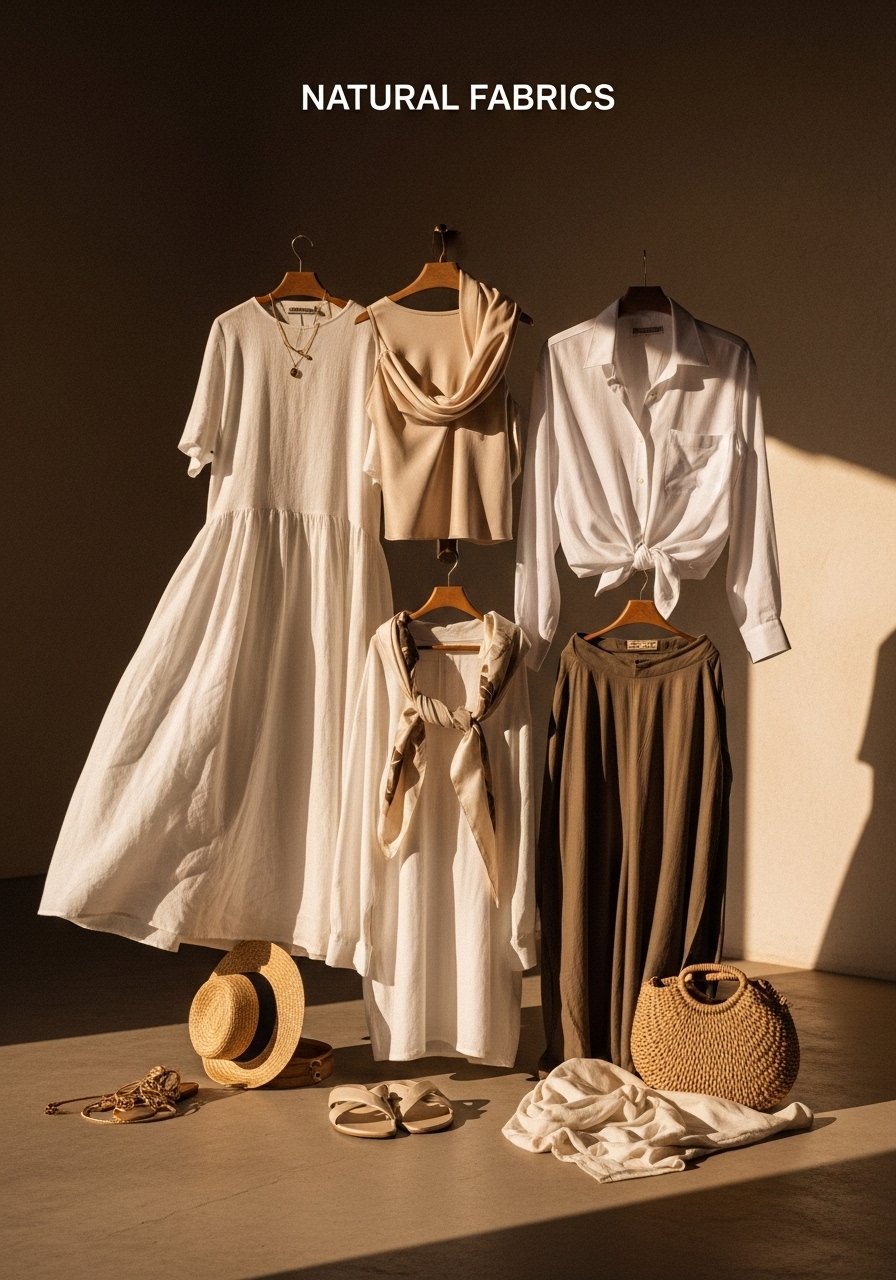
The Natural Champions
- Merino Wool: The reigning king of travel fabrics. The misconception that wool is “hot” is debunked by the diameter of Merino fibers. Unlike the scratchy, thick wool of winter sweaters, lightweight Merino (measured in low gsm, or grams per square meter) actively creates a cooling effect as it absorbs and evaporates moisture vapor. Crucially, the fiber has a scaly surface that naturally resists odor-causing bacteria, meaning a Merino t-shirt can be worn for days without smelling. For summer, look for 150–180gsm weight.
- Linen: Linen is a hyper-efficient conductor of heat. Its hollow flax fibers allow body heat to escape instantly. However, pure linen’s Achilles’ heel is its structural memory; it wrinkles upon contact. This is not always a travel-ruining trait. A deliberately rumpled, premium Irish or Belgian linen shirt communicates a specific Mediterranean insouciance. The key is intentionality: wear it oversized and accept the wrinkles as a textural feature, not a flaw.
- Tencel/Lyocell: Derived from sustainably harvested eucalyptus wood pulp, Tencel is a technological miracle disguised as a natural fabric. It possesses a nanofibril structure that wicks moisture more efficiently than cotton and is smoother to the touch than silk. It drapes beautifully, resists wrinkles better than cotton, and inhibits bacterial growth naturally.
The Engineered Blends
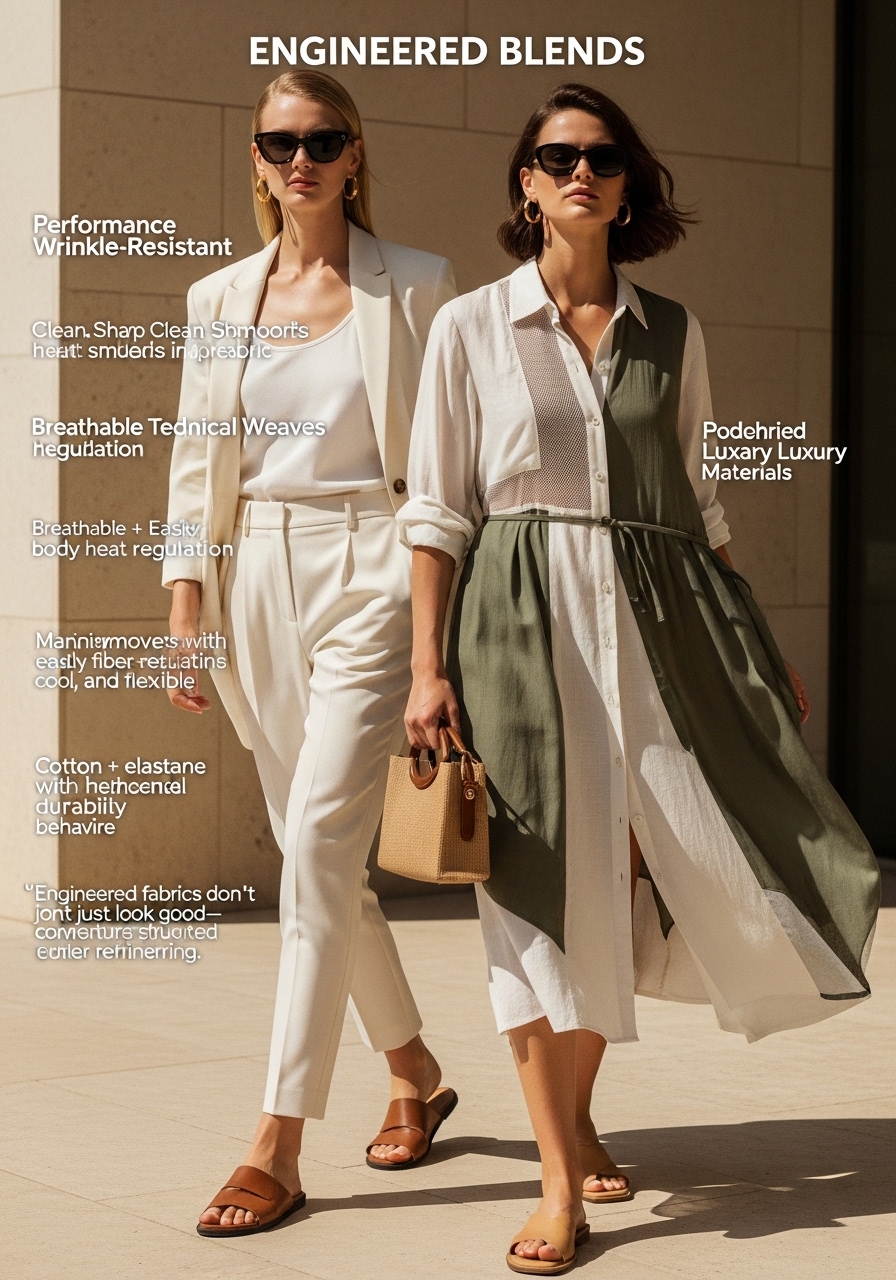
Pure natural fibers often lack the stretch or durability required for active transit. This is where strategic engineering comes in. A blend of 70% Linen and 30% Cotton softens the “crunchy” texture of linen while retaining breathability. A 95% Tencel with 5% Elastane blend offers the fluidity of a slip dress with the forgiveness to sit cross-legged on an airport carpet. A “Cotton-Nylon” blend (often found in Japanese travel brands) combines the hand-feel of cotton with the rip-stop durability and quick-drying capabilities of nylon. Avoid all-polyester fast fashion, but embrace high-end synthetics engineered for function.
The Enemies to Avoid
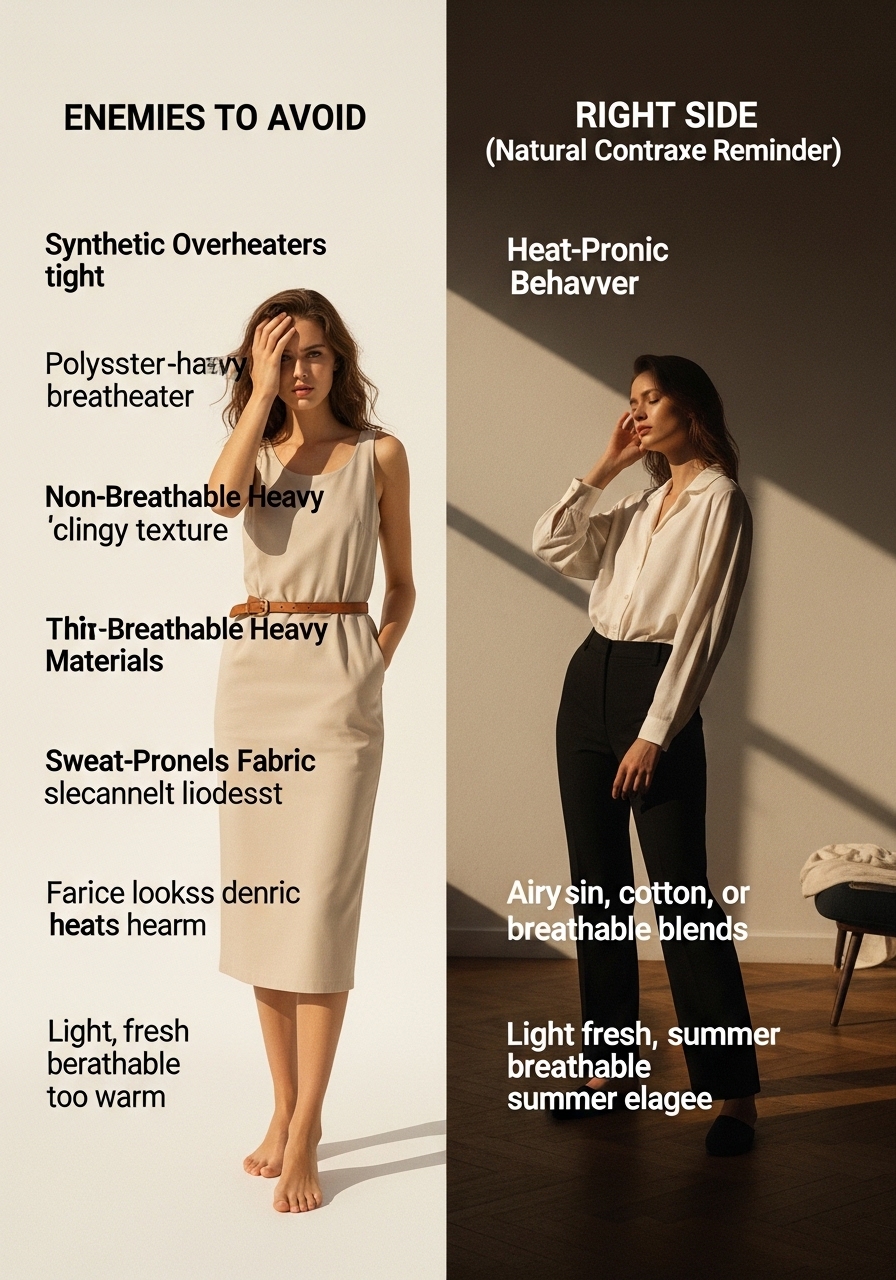
- 100% Rigid Denim: Heavy, retains heat, and takes an eternity to dry if caught in a tropical downpour. It is a logistical nightmare for a capsule wardrobe.
- Rayon/Viscose (Low Grade): This is a trap. While it looks flowy and breathable on the rack, low-grade viscose loses all structural integrity when wet (including sweat). It pills rapidly with friction from backpack straps and holds onto sweat, causing visible and embarrassing damp patches.
- Silk (Pure, Unblended): Visually stunning, functionally disastrous for active travel. Silk shows water spots instantly, is delicate to abrasion damage from seatbelts, and requires specialist dry-cleaning if truly soiled.
Core Summer Travel Outfit Archetypes (The How-To)
Versatile Summer Travel Outfit Archetypes For Every Journey
Moving from concept to execution, here are the modular uniform formulas that solve specific travel scenarios. These are not just trends; they are engineered archetypes.
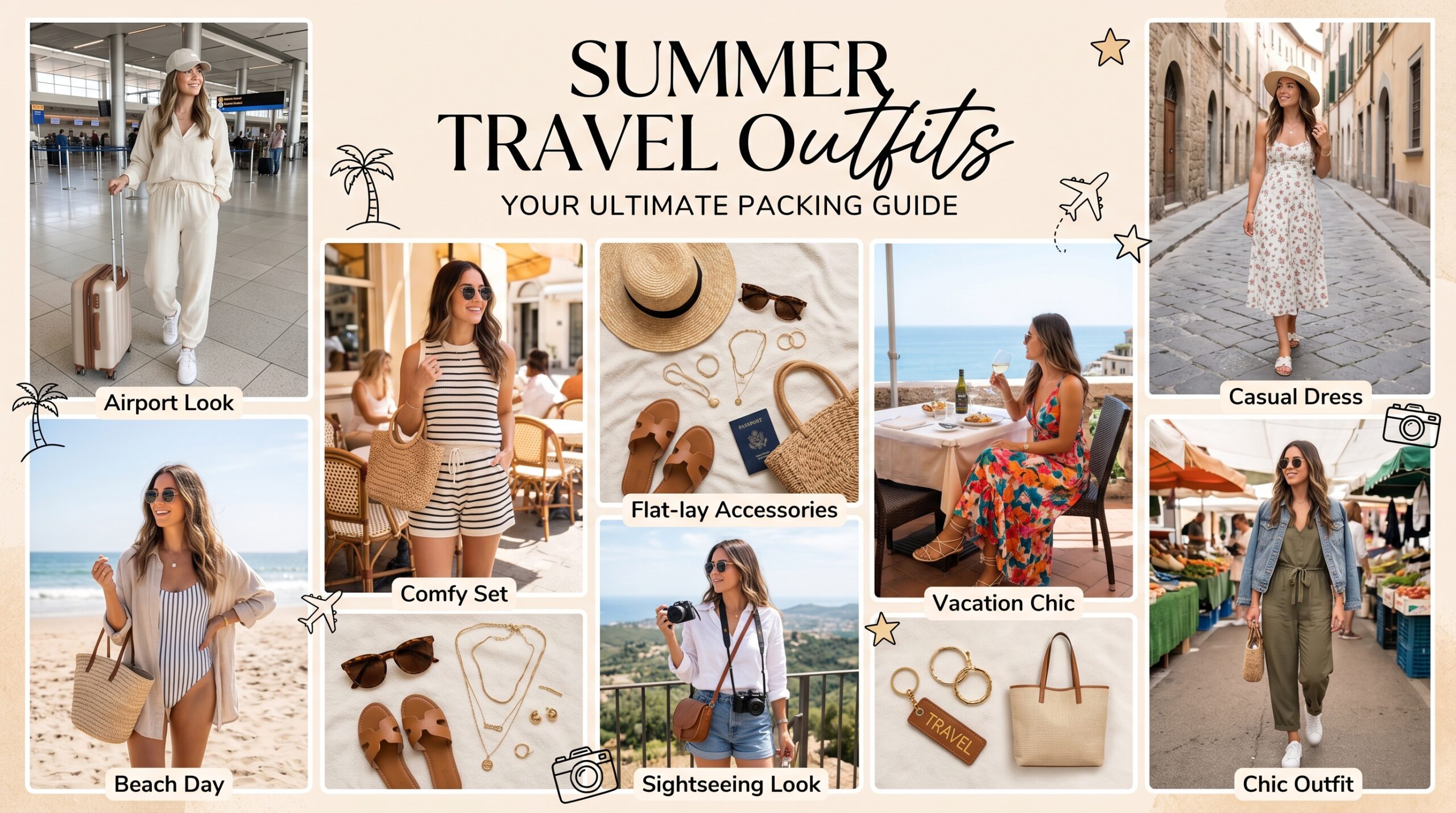
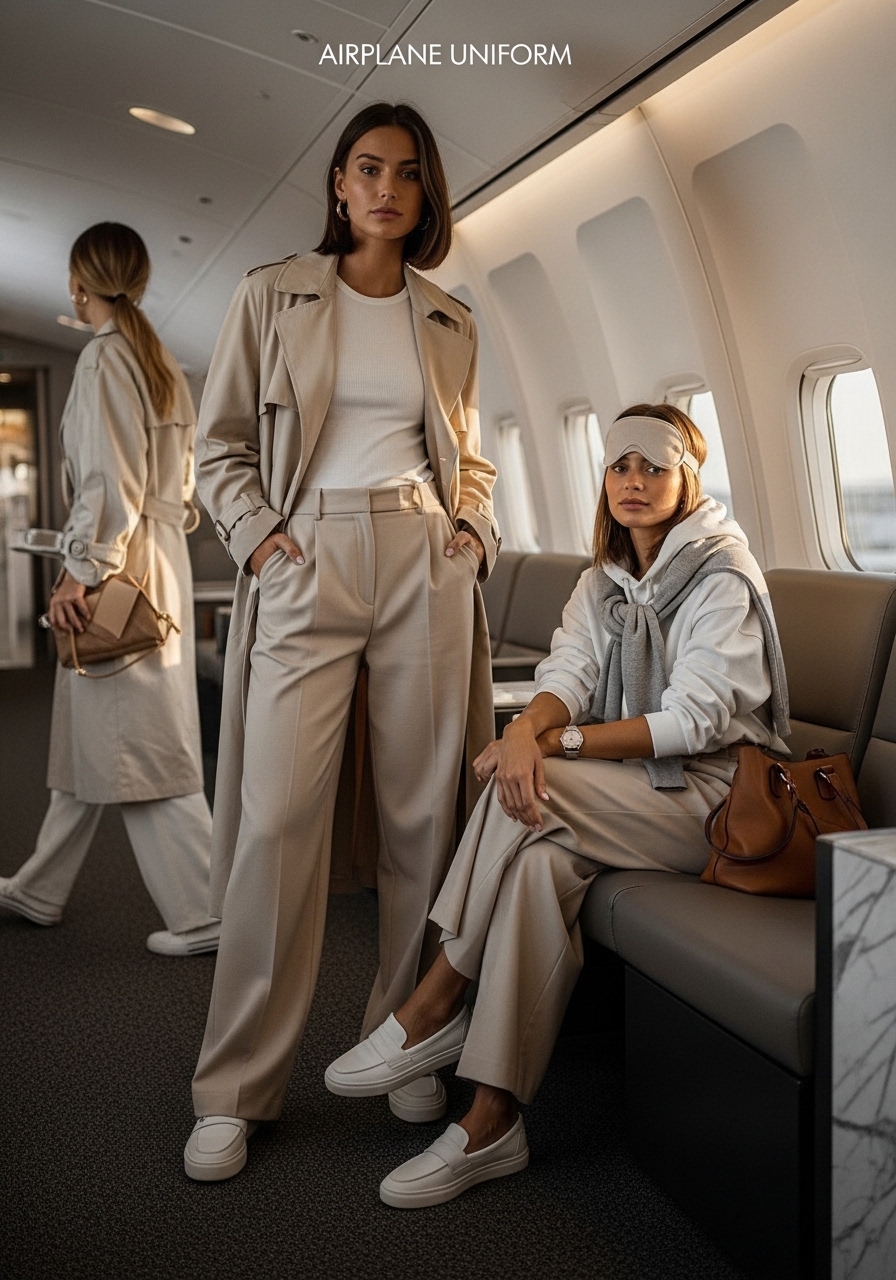
1. The Intercontinental Airplane Uniform
Scenario: Long-haul flights, train terminals, fluctuating cabin pressure.
The Formula: High-back wide-leg knit pants + Fitted ribbed tank + Oversized open-weave button-down + Slide sandals.
In the pressurised cabin of an airplane, your body expands. Tight waistbands become instruments of torture. The solution is a trouser with a wide, smocked, or drawstring waistband, cut in a wide-leg silhouette from a heavy Tencel or a “Ponte” knit (a stable, double-knit fabric). This material is thick enough to feel like structured trousers but has the stretch of yoga pants. Pair this with a fitted tank to maintain a vertical line of the torso; this prevents the outfit from looking sloppy. The third piece, an oversized open-weave cotton or linen shirt, serves as an airlock. It traps heat when the cabin is freezing but opens fully for ventilation during a sprint through a stuffy connecting terminal.
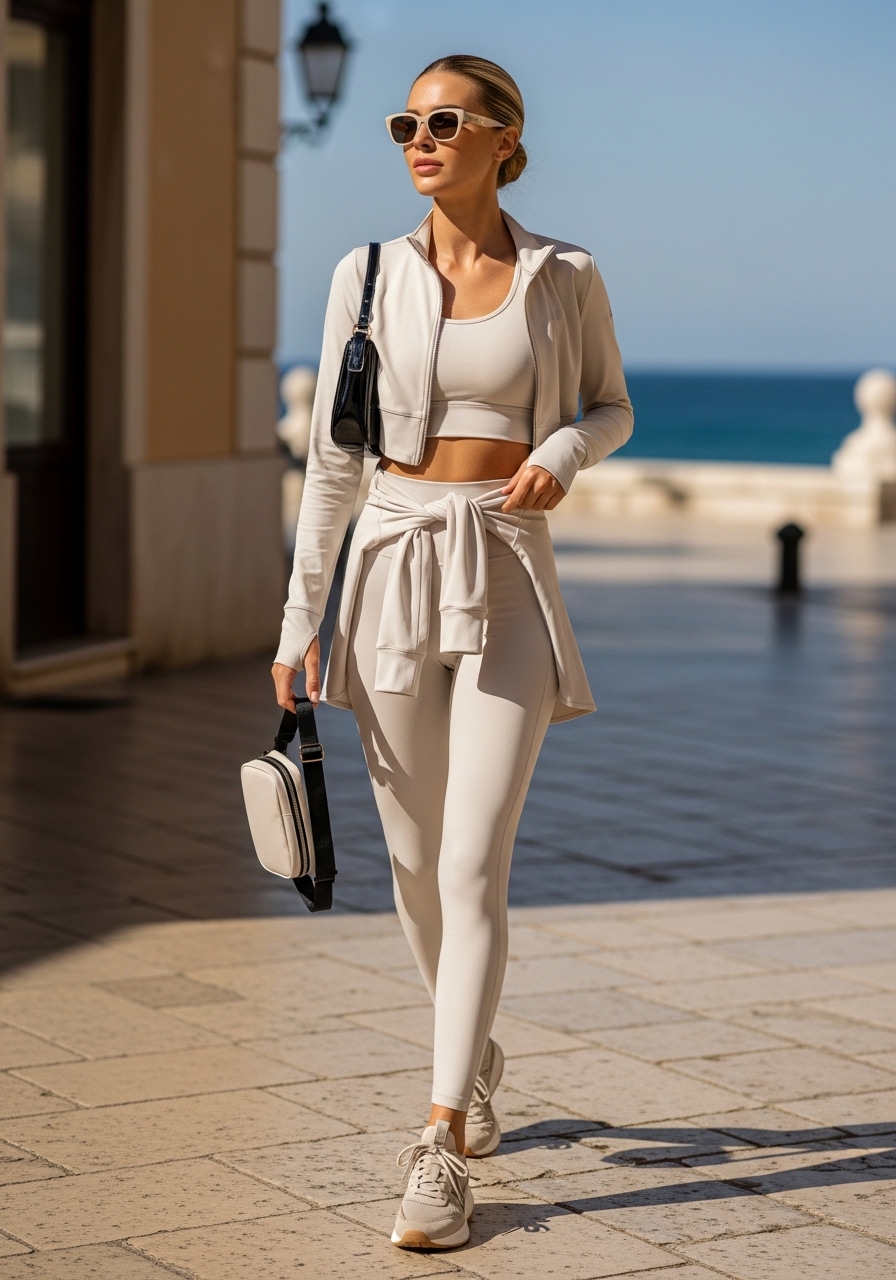
2. The Multi-Way Sightseeing Active Set
Scenario: 12 hours of walking, museum tours, rugged viewpoints, al fresco lunch.
The Formula: Breathable sport dress + Concealed compression shorts + Classic trainers.
The modern skort or sport dress (often made from recycled nylon or performance crepe) is the ultimate sleeper hit of comfortable travel. It offers the airflow of a dress with the security of shorts. Look for hidden zipper pockets on the thigh or waistband for a credit card and room key. Underneath, wear lightweight compression or “anti-chafe” shorts to prevent the endemic summer travel injury: thigh rub. Footwear here is critical; avoid stark white “dad sneakers” which visually dominate the outfit. Instead, choose a retro court leather sneaker in a “greige” or ecru tone. The leather casing shields your toes from cobblestone fatigue while the muted color masks the inevitable dust of city exploration.
3. The Evening-Transition Elevated Co-Ord
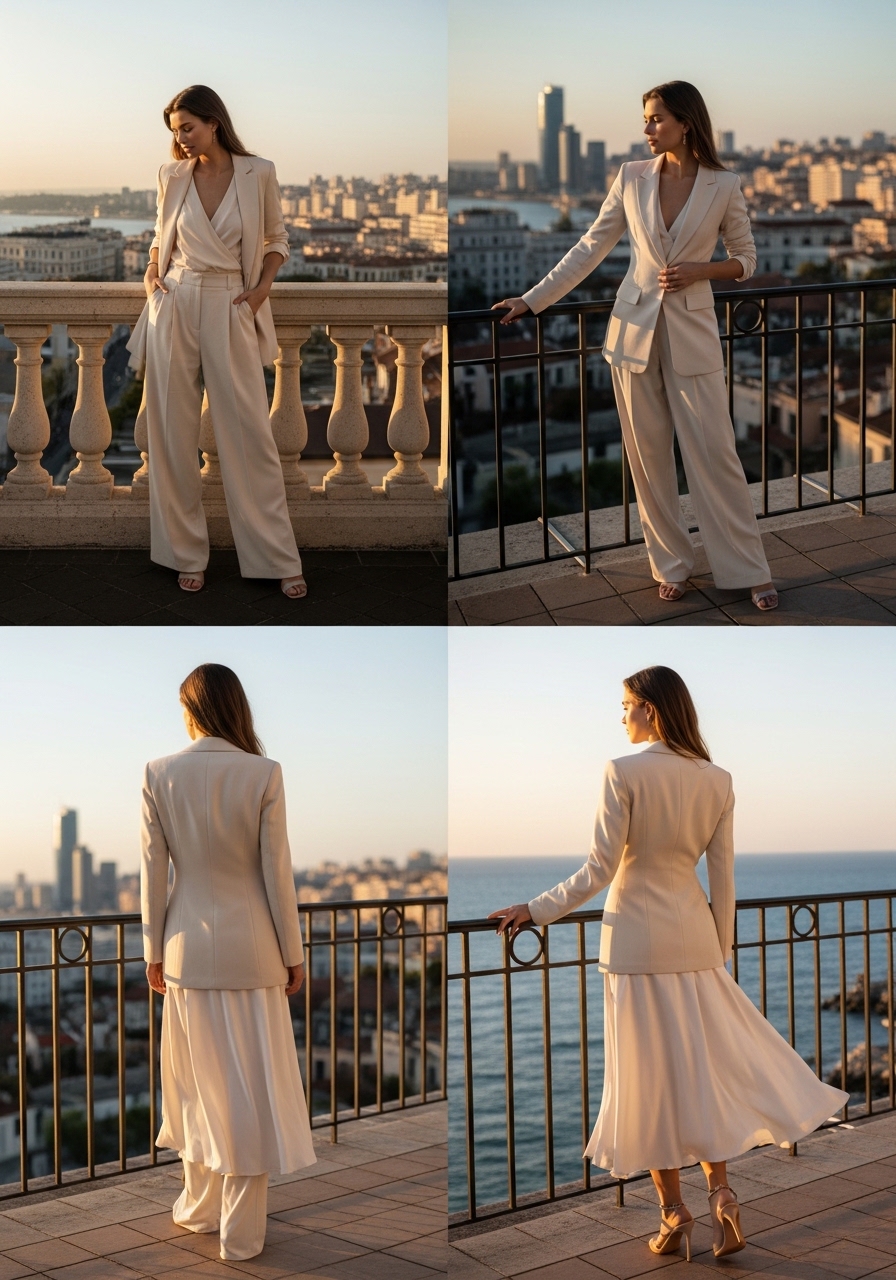
Scenario: Train ride arriving at 6 PM, straight to a reservation at a dimly lit wine bar.
The Formula: Textured matching separates (Top + Skirt/Pant) + Delicate strappy mules.
A matching set in a crepe jersey or a textured seersucker immediately signals “intentional fashion” while feeling identical to pajamas. The co-ord solves the “decision fatigue” of travel; you don’t need to think about matching. During the transit phase, wear the mules; for a sharp visual contrast that grounds the silky fabric, swap to flat leather sandals for the day. The texture—maybe a puckered seersucker or a stretch rib—disguises sit-down creases far better than a flat satin.
The Art of the Travel Color Palette (Packing Light, Looking Rich)
Color Strategy: A Unified Palette For a Capsule Wardrobe
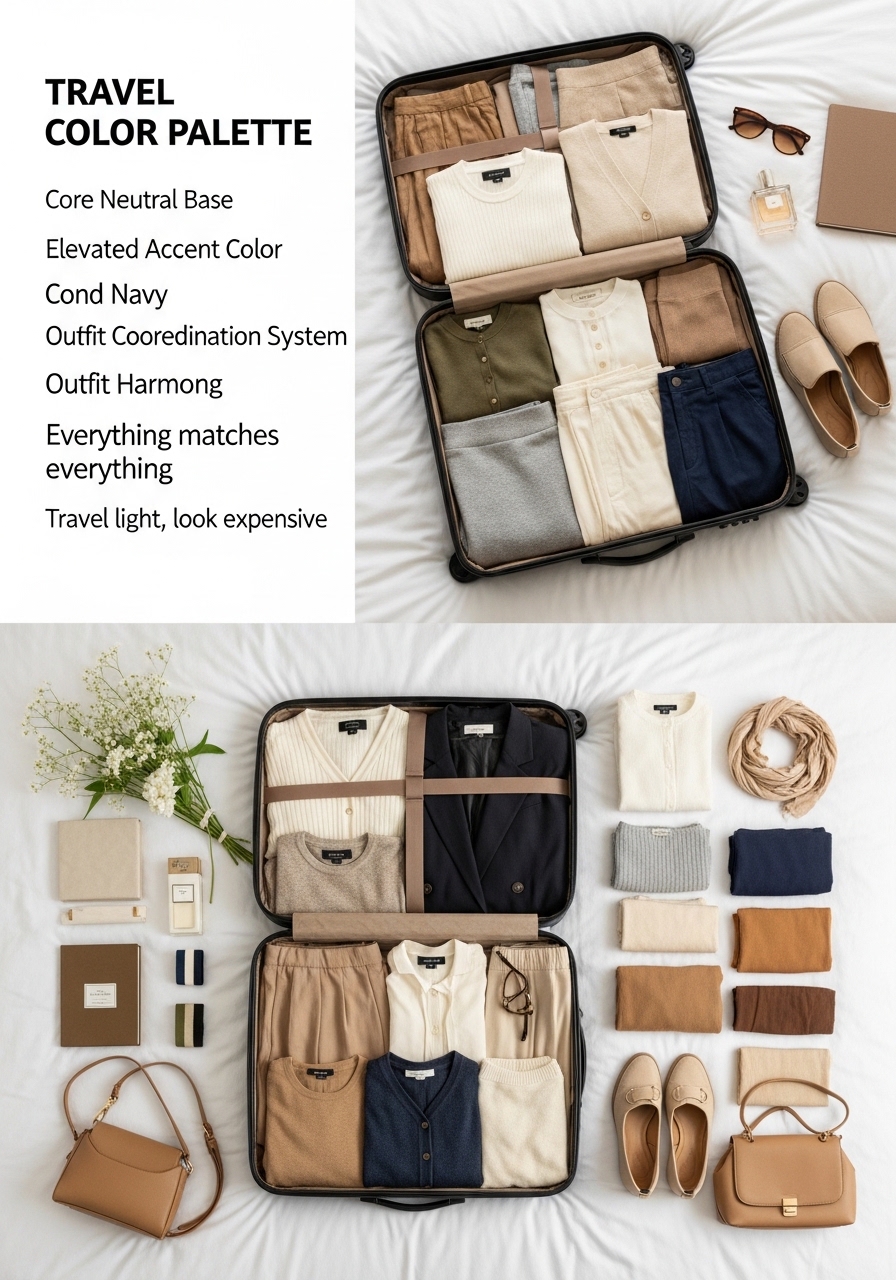
To achieve 30 outfits from 10 items, you must abandon a riot of colors in favor of a disciplined, neutral tonal gradient. A packed bag should look like a monochrome gradient from cream to chocolate, not a scattered rainbow.
The Base (60%): Neutral Tones
Your heavy-lifting items—trousers, shorts, blazers—should be in heat-reflecting or sweat-concealing neutrals. Ecru, Oatmeal, Sand, and Taupe are superior to stark black or white. Stark white reflects heat but highlights every speck of city grime; stark black absorbs heat and makes you look severe against a bright sky. Muted earth tones look luxurious and blend seamlessly.
The Accents (30%): Monochromatic Depth
Layering shades of the same color creates a column of visual height. Pair an oatmeal wide-leg pant with a dark roast espresso tank top. This creates a singular vertical line that elongates the body, a technique frequently used in high-end fashion styling to make the wearer appear taller and more cohesive.
The Flash (10%): Strategic Vibrancy
Summer travel calls for a single high-impact accessory. This might be a vibrant silk twill scarf tied around a topknot or a tote bag in a lacquered cherry red. By keeping the architecture of the outfit neutral, this single pop of color draws the eye precisely where you want it and photographs extraordinarily well without requiring you to pack multiple bulky statement pieces.
The Non-Negotiable Summer Footwear Trinity
Footwear Engineering: The Three Shoes You Actually Need
Shoes dictate the structural integrity of your suitcase and your spine. Three is the magic number. Less is risky, more is overpacking.
- The Cushioned Power Walker: A technical knit sneaker with a robust, cloud-like sole. Brands utilizing Ortholite or proprietary high-rebound foam are non-negotiable. Avoid canvas plimsolls; they offer zero arch support and compress under body weight, leading to plantar fasciitis flares on hard European cobblestones.
- The “Comfort” Elevated Sandal: This is not a flat, unsupported slider. This is a fisherman’s sandal or a two-strap slide with a contoured, buckled footbed and a modest lug sole. A slight platform (1-1.5 inches) cushions the heel bone from shocking pavement, and the covered toe of a fisherman style protects against uneven streets.
- The Weightless Slingback: For dinner, nothing beats a knit or fabric slingback flat. They compress to almost nothing in a suitcase, weigh under 200 grams, and the slingback strap prevents the annoying heel-slipping of a mule while still visually elongating the leg line.
Accessories as Functional Armor
The Finishing Layer: Accessories That Work Hard
In the context of summer travel, accessories must move beyond decoration into pure function.
- The Pashmina (The Summer Weight): A massive, 100-inch square of ultra-fine cotton-gauze or cashmere/silk blend (for cooler evenings). It is a plane blanket, a shoulder cover for cathedral visits requiring modest dress codes, a rolled-up lumbar pillow, and a sarong for the beach.
- The Structured Tote Trap: Avoid open-top bucket bags. They are pickpocket magnets. The ideal travel bag is a zippered, coated-canvas tote with a wide, reinforced shoulder strap. The coated canvas can be wiped of sunscreen and ice cream drips, and the zip closure provides security without the fuss of a flap.
- Statement UV Protection: A tightly-woven, wide-brimmed packable visor or straw hat (with a removable chin strap) functions as a portable shade structure, preventing squinting (which causes tension headaches) and protecting the delicate eye area from UV damage.
Key Takeaways
- Fabric First, Style Second: Prioritize Merino, high-quality Tencel, and heavy crepe over generic cotton and rigid denim.
- The “Third Piece” Rule: A look isn’t complete with just a top and bottom. An open shirt, a light jacket, or a structured shacket finishes the silhouette and provides climate control.
- Texture Over Print: To hide travel wrinkles and to appear more expensive, choose seersucker, slub knit, or basket-weave textures instead of flat printed fabrics.
- The 3-Shoe Cap: A technical trainer, a contoured sport-sandal, and a packable slingback cover 100% of travel scenarios without overloading your luggage.
FAQs
Q: What is the best fabric to wear on a stuffy, hot airplane?
A: The best airplane fabric is a loose-weave natural fiber like lightweight Merino wool or a premium Tencel blend. Avoid tight-weave synthetics (pure polyester) which trap body heat and low-grade viscose which visibly retains sweat patches. A Merino t-shirt actively manages moisture vapor and resists odor for the duration of a long-haul flight.
Q: How can I look stylish but hide my stomach in summer travel outfits?
A: The most effective strategy is structural draping, not tight compression. Look for “fit-and-flare” midi dresses in heavy crepe jersey. The fabric should graze, not cling to, the midsection. A high-waisted wide-leg trouser paired with a top that has a strategic asymmetrical hemline or a side-ruching detail also creates visual disruption that flatters the torso without sacrificing comfort.
Q: Does linen always look too wrinkled for travel?
A: It depends on the quality and the construction. Washed European linen or a linen/cotton blend will wrinkle, but the creases are softer and look intentionally lived-in. Avoid crisp, starched office linen. The silhouette matters too; a loose, oversized linen tunic looks bohemian and acceptable when creased, whereas a tight-fitting, tailored linen blazer will look messy.
Q: What colors don’t show sweat marks?
A: The absolute worst offenders are light grey and pale heather blue, which turn deeply dark when wet. The safest colors are ultra-dark prints (which break up the silhouette of a stain), dense black (though it gets hot), and surprisingly, stark white in very thick, textured weaves. Organic neutrals like oatmeal and marled beige also tend to mask moisture effectively.
Q: How can I look dressed up at night without packing heels?
A: The secret is in the silhouette and material. Swap cotton shorts for a fluid silk-blend or Tencel wide-leg pant. Swap a canvas sneaker for a sleek, pointed-toe knit flat or a minimal leather slide sandal in a metallic (gold or silver) finish. A metallic sandal delivers the visual “sparkle” of a heel with a flat profile.
Q: Are bike shorts acceptable for summer travel style?
A: Yes, but only when styled as a component, not the main event. Thick, black matte-performance biker shorts (not sheer cotton leggings) look chic and urbane when paired with an oversized, tented button-up shirt that brushes the mid-thigh, chunky socks, and a retro sneaker. This balances the skin exposure on the legs with an architectural volume up top.
Conclusion
Mastering summer travel outfits that are truly stylish and comfortable is not about finding a magical single garment; it is about understanding the physics of fabrics and the architecture of proportion. When you shift your packing list from arbitrary “vacation clothes” to a strategic capsule built on thermoregulating textures, a unified neutral color palette, and modular layers, you remove the friction from the journey.
Dressing well for travel is a form of self-respect that radiates calm in chaotic environments. With the right Tencel trouser, a lightweight Merino shell, and a cushioned walking shoe, you aren’t just dressed for the weather—you are armored for the experience. Embrace the alchemy of technical natural fibers and intentional styling, and every boarding pass will become a runway.