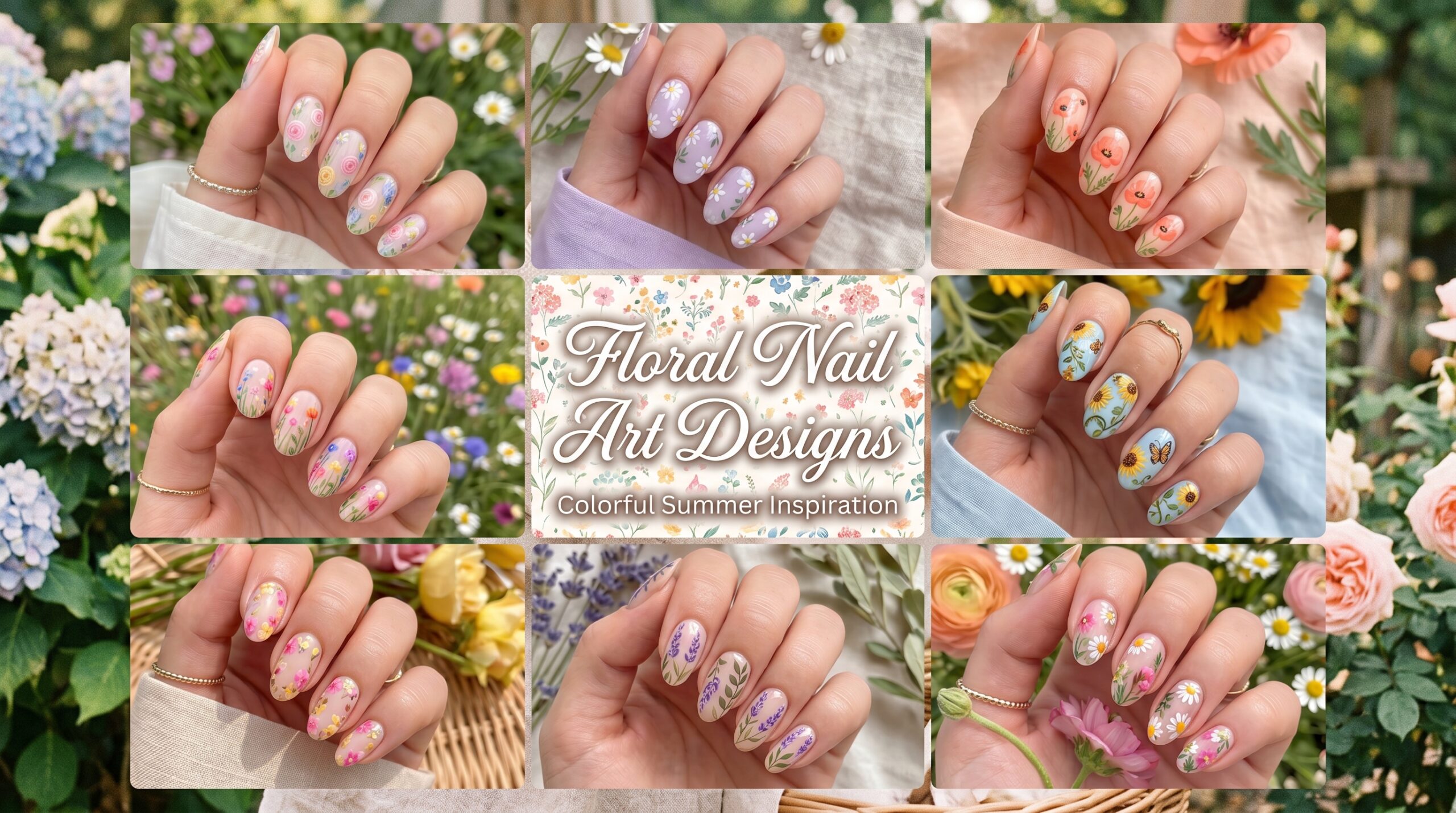
Floral Nail Art Designs Perfect For Summer Season 2026
Floral nail art designs represent the ultimate expression of summer beauty, combining delicate botanical motifs with vibrant seasonal colors to create stunning manicures that capture the essence of blooming gardens and sunny days. These intricate nail decorations feature hand-painted flowers, leaves, and botanical elements that transform ordinary manicures into wearable art pieces perfect for the warm weather season. As we enter summer 2026, floral nail art has evolved to incorporate fresh color palettes, innovative techniques, and modern design elements that reflect both timeless elegance and contemporary trends.
This comprehensive guide explores the most beautiful and trending floral nail art designs specifically curated for summer 2026, providing detailed instructions, expert tips, and creative inspiration for achieving salon-quality botanical manicures at home. Whether you’re drawn to minimalist single-flower accents or elaborate garden-inspired masterpieces, these designs will help you embrace the natural beauty of summer through stunning nail art that complements the season’s vibrant energy and outdoor lifestyle.
What Are Floral Nail Art Designs?
Floral nail art designs are decorative manicures that feature botanical elements such as flowers, leaves, vines, and other plant-inspired motifs painted or applied onto the nail surface. These artistic creations range from simple single-flower accents to complex garden scenes that showcase multiple floral varieties, colors, and design techniques. The art form combines traditional manicure techniques with detailed artistic skills to create wearable masterpieces that celebrate the natural beauty of flowers and plants.
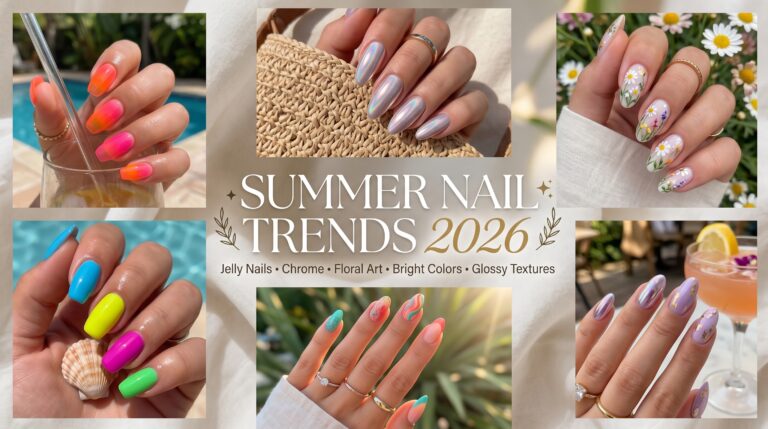
Summer floral nail designs specifically incorporate seasonal elements that reflect the abundance and vibrancy of warm-weather botanicals. These designs often feature bright, cheerful colors that mirror summer blooms like sunflowers, roses, daisies, hibiscus, and tropical flowers. The artistic approach can vary from realistic botanical illustrations that accurately depict specific flower species to stylized, abstract interpretations that capture the essence and movement of flowering plants.
The technique for creating floral nail art involves various methods including hand-painting with fine brushes, stamping with floral plates, applying nail decals or stickers, using water marble techniques, or combining multiple approaches for layered, dimensional effects. Advanced floral designs may incorporate 3D elements like dried flowers, rhinestones, or textural gels that add depth and visual interest to the botanical themes.
Also Read: Ombre Summer Nails: 15 Gorgeous Gradient Ideas 2026
Modern floral nail art has expanded beyond traditional flower paintings to include negative space designs where flowers are created through strategic polish removal, gradient backgrounds that simulate sunset or sunrise lighting on garden scenes, and mixed-media approaches that combine photography, digital printing, and hand-painted elements for unique artistic expressions.
Why Floral Designs Are Perfect for Summer 2026
Floral nail art designs align perfectly with summer 2026’s emphasis on natural beauty, sustainability consciousness, and connection to the outdoors that defines this season’s aesthetic trends. The botanical themes inherently complement summer’s abundance of fresh flowers, blooming gardens, and outdoor activities, creating harmony between personal style choices and seasonal environments. This natural coordination makes floral designs particularly photogenic and appropriate for summer’s social activities, from garden parties to beach vacations.
Summer 2026 fashion trends emphasize organic shapes, natural color palettes, and artisanal craftsmanship that floral nail art embodies through its hand-painted details and nature-inspired motifs. The intricate artistry required for quality floral designs reflects the growing appreciation for skilled craftsmanship and personalized beauty choices that move away from mass-produced, uniform appearances toward individual artistic expression.
The color versatility inherent in floral designs makes them ideal companions for summer wardrobes that often feature bright, varied palettes and mixed patterns. A single floral manicure can coordinate with multiple outfits throughout the week, incorporating colors from coral summer dresses to sage green linens to bright blue swimwear, providing versatility that busy summer schedules demand.
Psychological benefits associated with floral imagery include stress reduction, mood enhancement, and feelings of connection to nature that are particularly valuable during active summer periods. The meditative process of creating or admiring detailed botanical art provides mental relaxation that complements summer’s emphasis on leisure, creativity, and personal well-being.
Additionally, floral nail art offers excellent longevity when properly applied and sealed, making these designs practical for summer activities that might stress simpler manicures. The detailed patterns and multiple color layers create visual interest that disguises minor chips or wear better than solid color applications, extending the practical life of the manicure through busy summer schedules.
Essential Tools and Materials for Summer Floral Nail Art
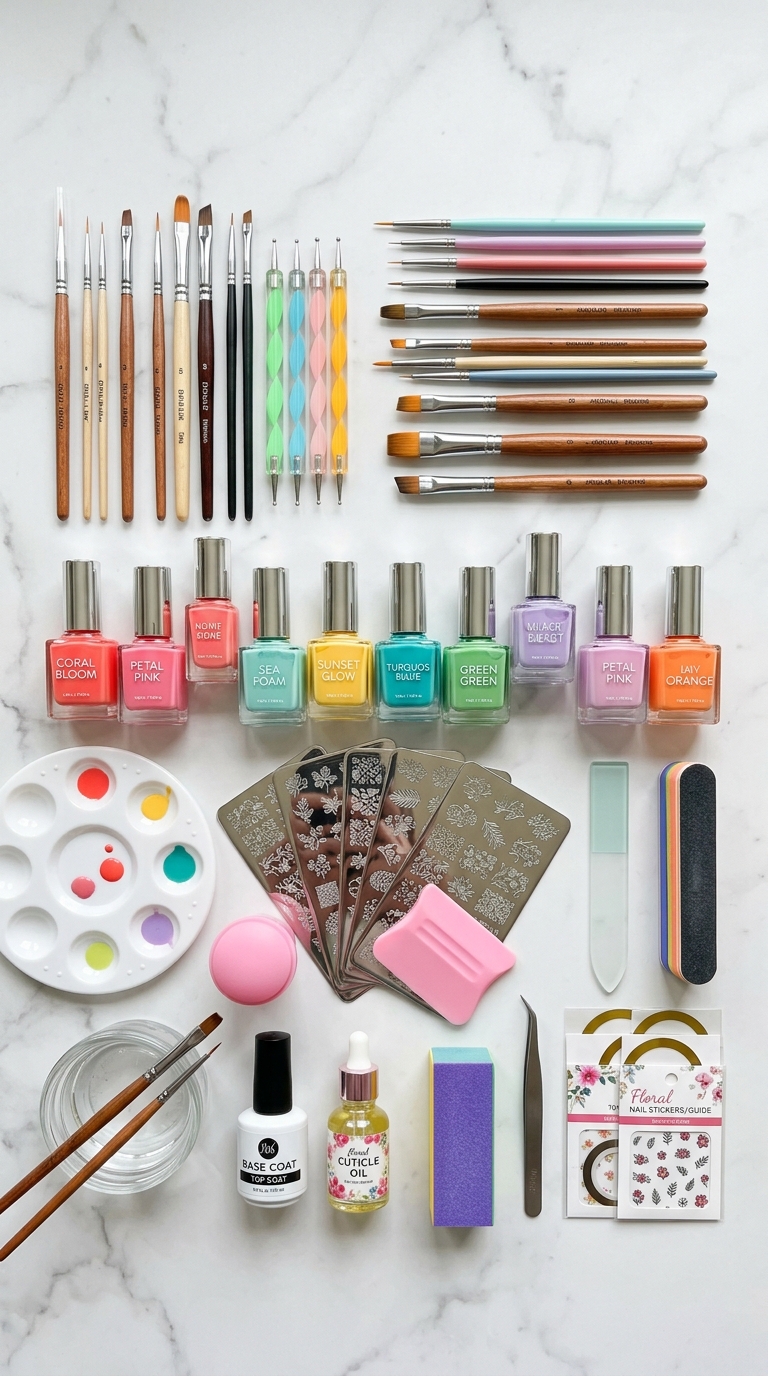
Creating professional-quality floral nail art requires specific tools and materials designed for detailed artistic work and precise application techniques. Fine-tipped nail art brushes represent the most critical tools, with sizes ranging from 0 to 3 for different detail levels, including liner brushes for stems and outlines, flat brushes for petal shading, and fan brushes for textural effects like grass or foliage backgrounds.
High-quality nail polishes in appropriate colors form the foundation of successful floral designs, with particular emphasis on opaque formulas that provide consistent coverage and vibrant color payoff. Essential colors for summer floral art include various greens for stems and leaves, multiple petal colors like pinks, corals, yellows, and whites, and accent shades for flower centers and detail work. Nail art paints or acrylic paints specifically formulated for nail use offer superior opacity and working time compared to traditional nail polishes.
Dotting tools in various sizes create perfect flower centers, small blooms, and textural details that add realism to botanical designs. These tools range from fine-pointed implements for tiny details to larger dotting tools for substantial flower centers or fruit elements within garden scenes.
Water containers for brush cleaning, palette surfaces for color mixing, and paper towels for brush maintenance ensure clean, precise application throughout the design process. Palette knives or small spatulas help mix custom colors and create gradient effects that enhance the realistic appearance of floral elements.
Protective base coats and fast-drying top coats specifically designed for nail art preserve the detailed work while providing professional finish quality. UV-resistant top coats prevent color fading during extended sun exposure, particularly important for summer outdoor activities. Additionally, nail guides, striping tape, and stencils can assist with creating clean lines and precise shapes that enhance the overall composition of complex floral designs.
Step-by-Step Guide to Creating Summer Floral Nail Art
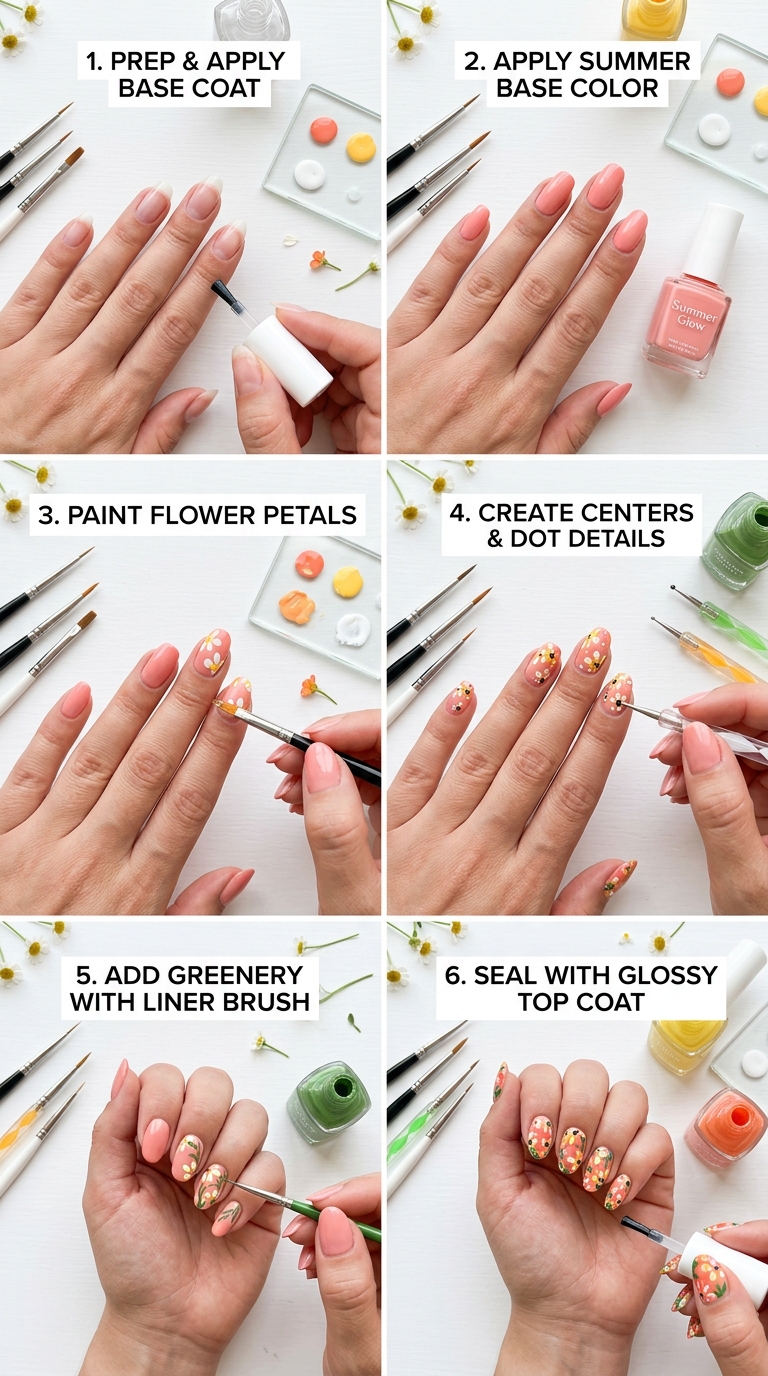
Creating beautiful summer floral nail art begins with proper nail preparation including thorough cleaning, shaping, and cuticle care to establish a smooth canvas for detailed artistic work. Apply a high-quality base coat and allow it to cure completely before beginning any decorative elements, ensuring optimal adhesion and preventing staining of natural nails.
Plan your floral design by sketching ideas on paper or creating a color palette that coordinates with your intended summer outfits and activities. Consider the size and placement of floral elements across all nails, deciding whether to create a cohesive garden scene across multiple nails or individual floral accents on each nail. This planning phase prevents design inconsistencies and ensures balanced composition across the entire manicure.
Begin with background colors that will complement your floral elements, applying 2-3 thin coats for even coverage and allowing each layer to dry thoroughly. Gradient backgrounds created with makeup sponges can simulate sunrise or sunset lighting that enhances the natural beauty of floral motifs. Subtle color transitions provide depth without competing with the main floral elements for visual attention.
Start floral painting with larger elements like main flower blooms, using appropriately sized brushes and working from the background to foreground to create realistic depth relationships. Apply base petal colors first, then add shading and highlights using slightly darker and lighter versions of the main colors. This layering technique creates dimensional appearance that makes flowers appear more realistic and visually striking.
Add stems, leaves, and smaller detail elements using liner brushes and steady hand movements, connecting floral elements into cohesive compositions. Pay attention to natural growth patterns and realistic proportions to maintain botanical accuracy while allowing for artistic interpretation. Fine details like petal veining, flower centers, and small accent blooms complete the realistic appearance of the floral design.
Finish with appropriate top coat application, using products specifically designed for nail art that won’t smudge detailed work while providing long-lasting protection and enhanced color vibrancy. Allow adequate drying time between each step to prevent smudging or color bleeding that can compromise the precision of detailed floral work.
Popular Summer Floral Design Themes for 2026
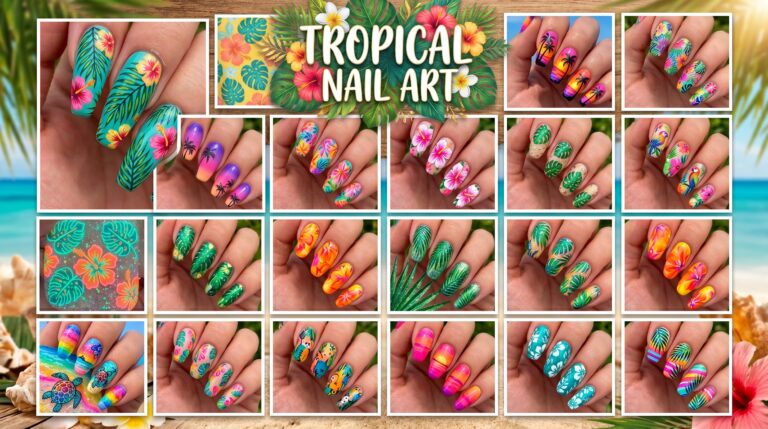
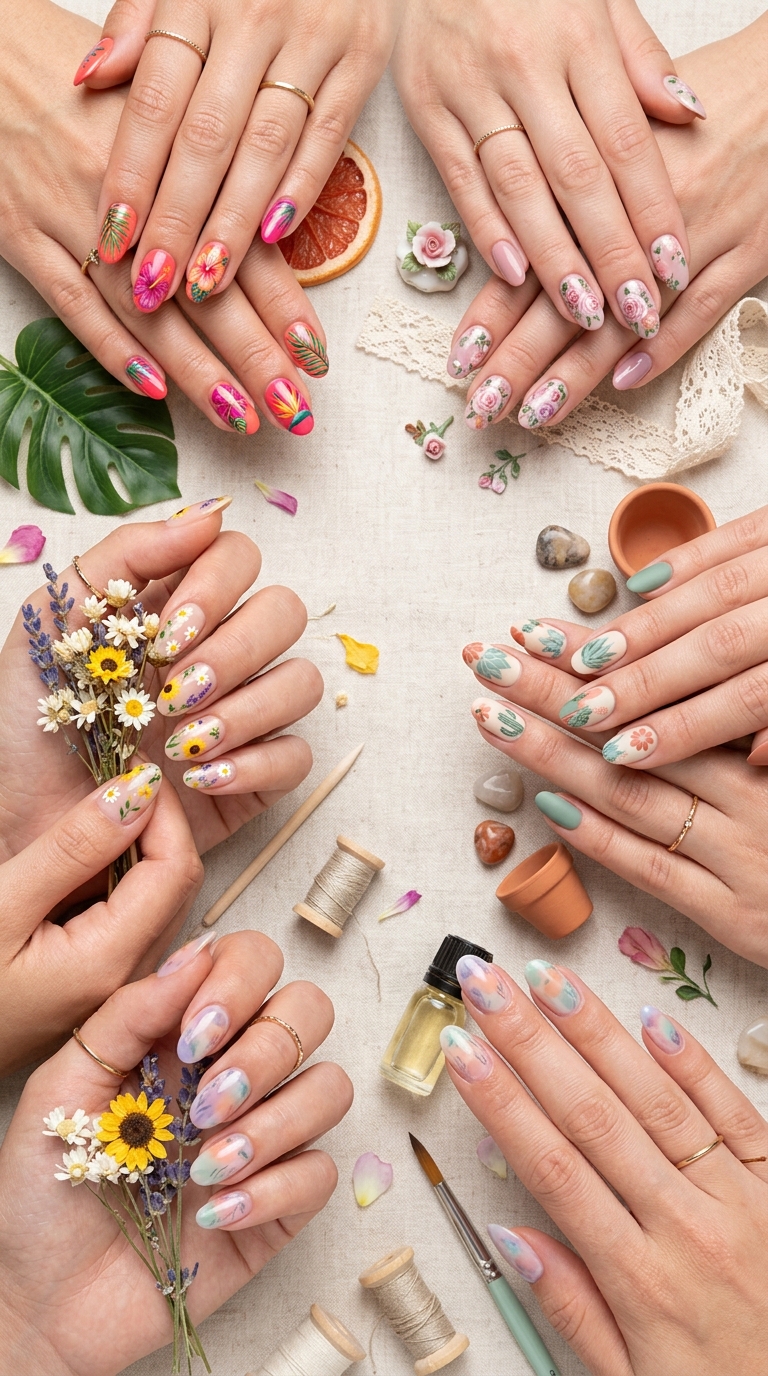
Tropical paradise themes dominate summer 2026 floral nail art trends, featuring vibrant hibiscus flowers, bird of paradise blooms, and exotic orchids painted in brilliant coral, magenta, and sunset orange hues. These designs often incorporate palm fronds and tropical foliage in deep greens and blues, creating vacation-inspired manicures perfect for beach trips and resort wear. The bold color combinations and dramatic flower shapes make powerful visual statements while maintaining the elegance expected from sophisticated nail art.
English garden romanticism offers a softer alternative with delicate roses, peonies, and cottage garden flowers painted in gentle pastels and muted vintage tones. These designs feature climbing rose vines, scattered wildflower meadows, and classic flower arrangements that evoke countryside charm and timeless femininity. Dusty rose, lavender, sage green, and cream create harmonious color palettes perfect for romantic summer occasions and vintage-inspired fashion choices.
Wildflower meadow designs capture the carefree spirit of summer through scattered compositions featuring daisies, sunflowers, black-eyed Susans, and mixed field flowers. These designs emphasize natural randomness and organic placement rather than formal arrangements, creating playful, bohemian-inspired manicures that complement casual summer styling and outdoor festivals. Bright yellows, pure whites, and natural greens dominate these cheerful, optimistic designs.
Succulent and desert bloom themes reflect the growing popularity of drought-resistant plants and desert aesthetics in contemporary design. These nail arts feature geometric succulent shapes, desert cacti with colorful blooms, and architectural plant forms painted in sage greens, dusty blues, and coral accents. The clean lines and modern aesthetic appeal to minimalist design preferences while maintaining connection to natural botanical themes.
Watercolor floral effects create dreamy, artistic interpretations of summer blooms through soft color blending and ethereal transparency effects. These designs simulate the appearance of botanical watercolor paintings with flowing color transitions, soft edges, and delicate layering that creates depth and movement. The technique works particularly well for abstract floral interpretations that capture the essence of summer gardens without photographic realism.
Color Palettes That Define Summer 2026 Floral Nail Art
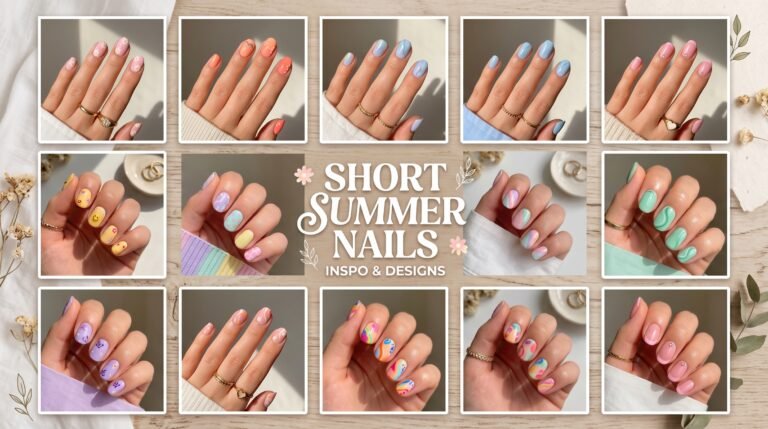
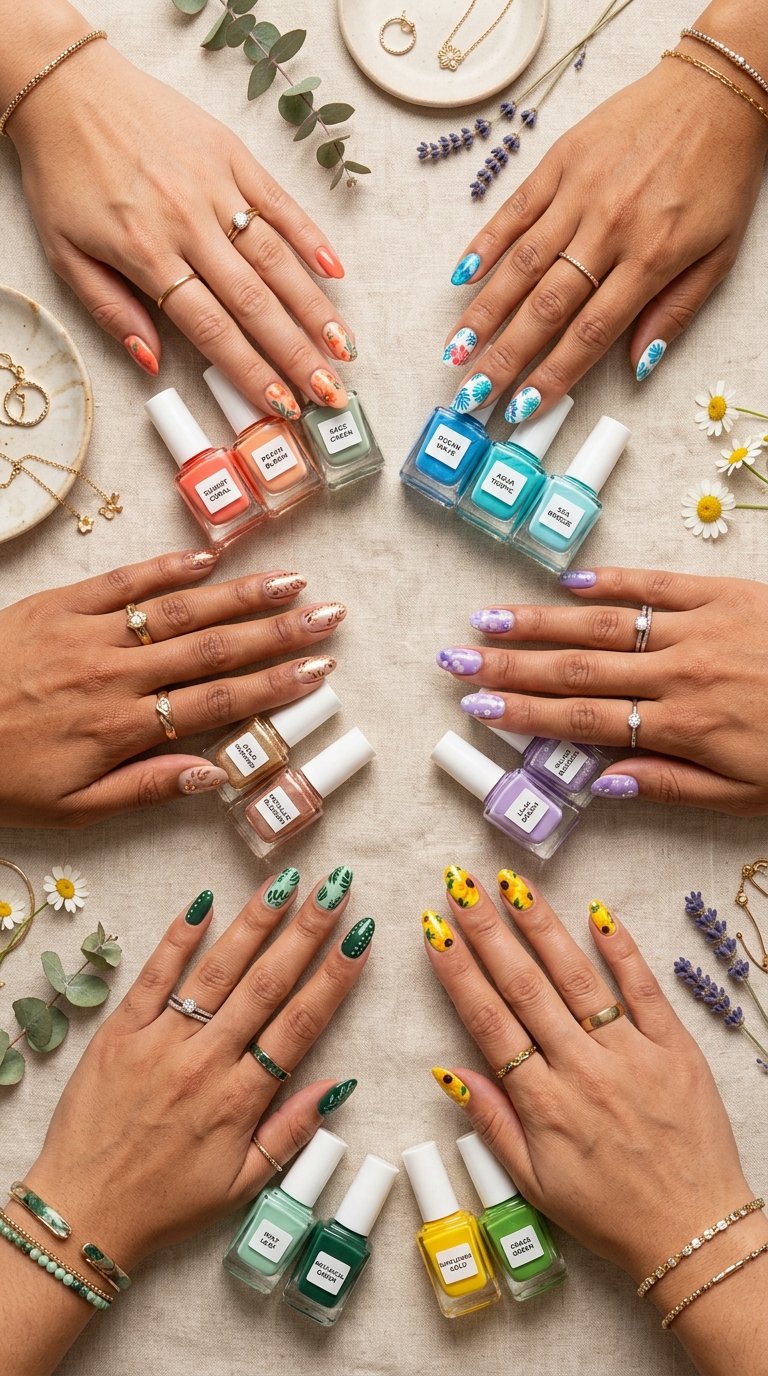
Sunset coral combinations lead summer 2026 color trends, featuring warm coral as the primary floral color paired with complementary peach, soft yellow, and cream accents for highlights and background elements. This palette captures summer evening beauty while flattering most skin tones and coordinating beautifully with popular summer fashion colors. Deep sage green provides perfect contrast for stems and foliage, creating balanced compositions that feel both vibrant and sophisticated.
Ocean-inspired blues offer cooling contrast to traditional warm floral palettes, with turquoise, aqua, and seafoam green creating tropical flower interpretations that evoke coastal environments and vacation settings. These blues pair exceptionally well with bright white flowers, coral accents, and sandy beige backgrounds to create manicures that complement beach and poolside activities while maintaining artistic sophistication.
Lavender and purple combinations provide romantic elegance through various purple hues from soft lilac to deep amethyst, creating monochromatic floral designs with subtle tonal variations. Silver and pearl accents add glamorous touches while maintaining the dreamy, romantic aesthetic perfect for summer evening events and special occasions. These cooler tones offer welcome relief from intense summer heat while providing elegant sophistication.
Sunshine yellow palettes embody summer’s joyful energy through bright yellow flowers accented with orange centers, green foliage, and white highlighting details. This cheerful combination creates optimistic, energizing manicures perfect for festivals, outdoor celebrations, and casual summer activities. The bold color choice makes confident statements while maintaining the natural beauty expected from floral designs.
Monochromatic green themes explore various shades from mint to forest green, creating sophisticated botanical designs that emphasize form and texture over bright color contrast. These designs appeal to minimalist aesthetic preferences while maintaining connection to natural themes through realistic leaf shapes, vine patterns, and subtle floral elements rendered in tonal variations of green.
Metallic accent integration adds contemporary sophistication to traditional floral palettes through strategic use of gold, silver, or rose gold elements that highlight flower centers, add dimensional details, or create elegant background effects. These metallic touches elevate simple floral designs to formal occasion appropriateness while maintaining the natural beauty that defines quality floral nail art.
Advanced Floral Nail Art Techniques
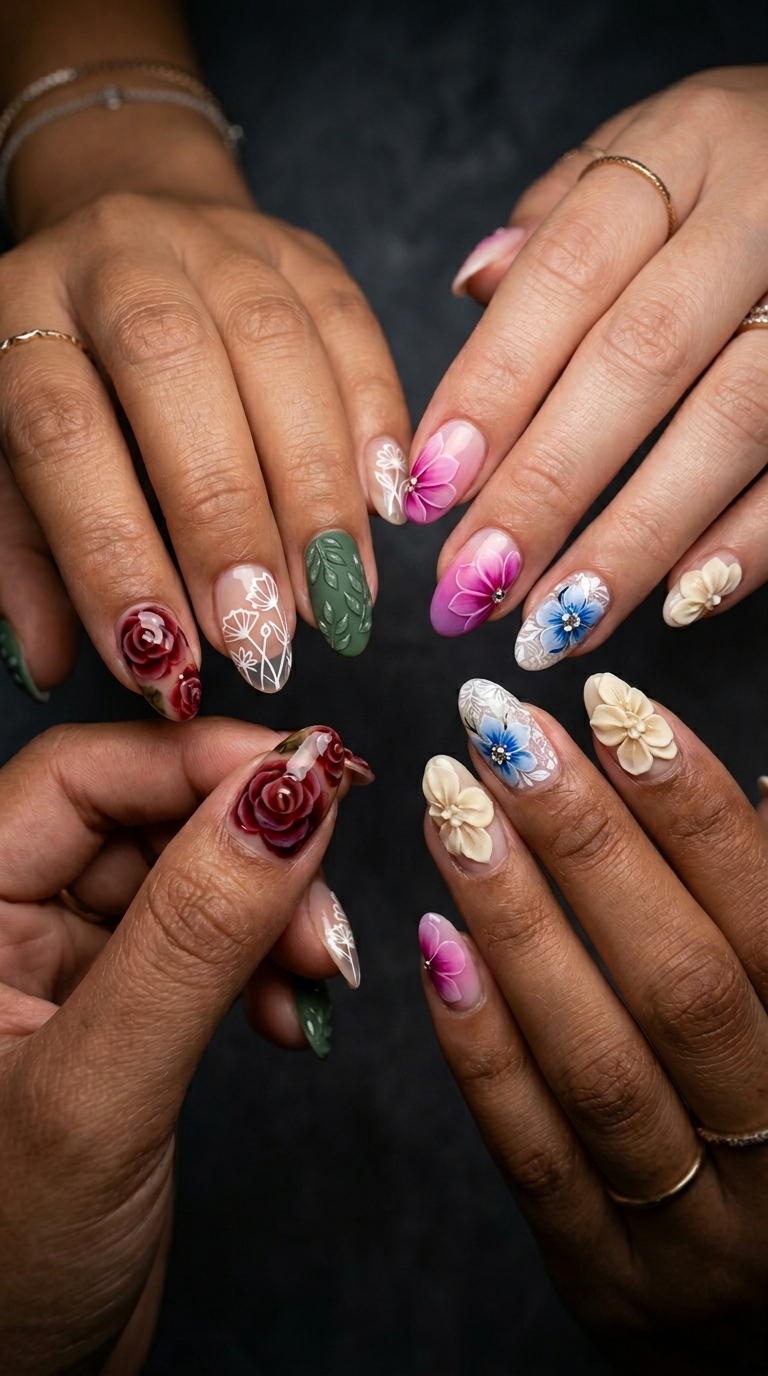
Layering techniques create dimensional depth in floral designs through strategic application of translucent and opaque colors that simulate natural flower petal transparency and shadow effects. This advanced method involves painting base flower shapes, then adding translucent color washes that create realistic depth and natural color variation within individual petals. Multiple translucent layers build rich, complex colors that appear more natural than single opaque applications.
Negative space incorporation creates modern, minimalist floral interpretations by strategically leaving areas of natural nail or base color visible within flower designs. This technique can outline flower shapes, create geometric pattern interruptions within botanical themes, or simulate light filtering through garden scenes. The contrast between detailed painted areas and clean negative space creates sophisticated, contemporary aesthetic appeal.
Texture application adds tactile dimension to floral designs through specialized nail art materials like textural gels, sand-effect polishes, or matte top coats applied to specific design areas. Textural contrast between smooth petals and rough leaf surfaces, or glossy flowers against matte backgrounds, creates visual interest and sophisticated artistic complexity that elevates simple floral themes to professional artwork quality.
Color gradient blending within individual design elements creates realistic petal shading and natural color transitions that enhance the three-dimensional appearance of painted flowers. This technique requires careful color selection and precise brush control to achieve smooth transitions from light petal edges to darker centers, or from bright flower faces to shadowed undersides that create convincing depth illusions.
Mixed media integration combines traditional hand-painting with other nail art techniques like stamping, water marbling, or applied decorative elements to create unique, personalized floral interpretations. This approach might involve stamped background patterns with hand-painted focal flowers, or dried flower applications integrated with painted elements for dimensional mixed-media effects that showcase multiple artistic skills.
Three-dimensional flower applications using gel modeling compounds or acrylic sculpting materials create raised floral elements that add physical dimension to nail art designs. These techniques require advanced skill and specialized materials but create stunning results that catch light and create shadow effects impossible with flat painted designs alone.
Maintenance and Longevity Tips for Summer Floral Nail Art
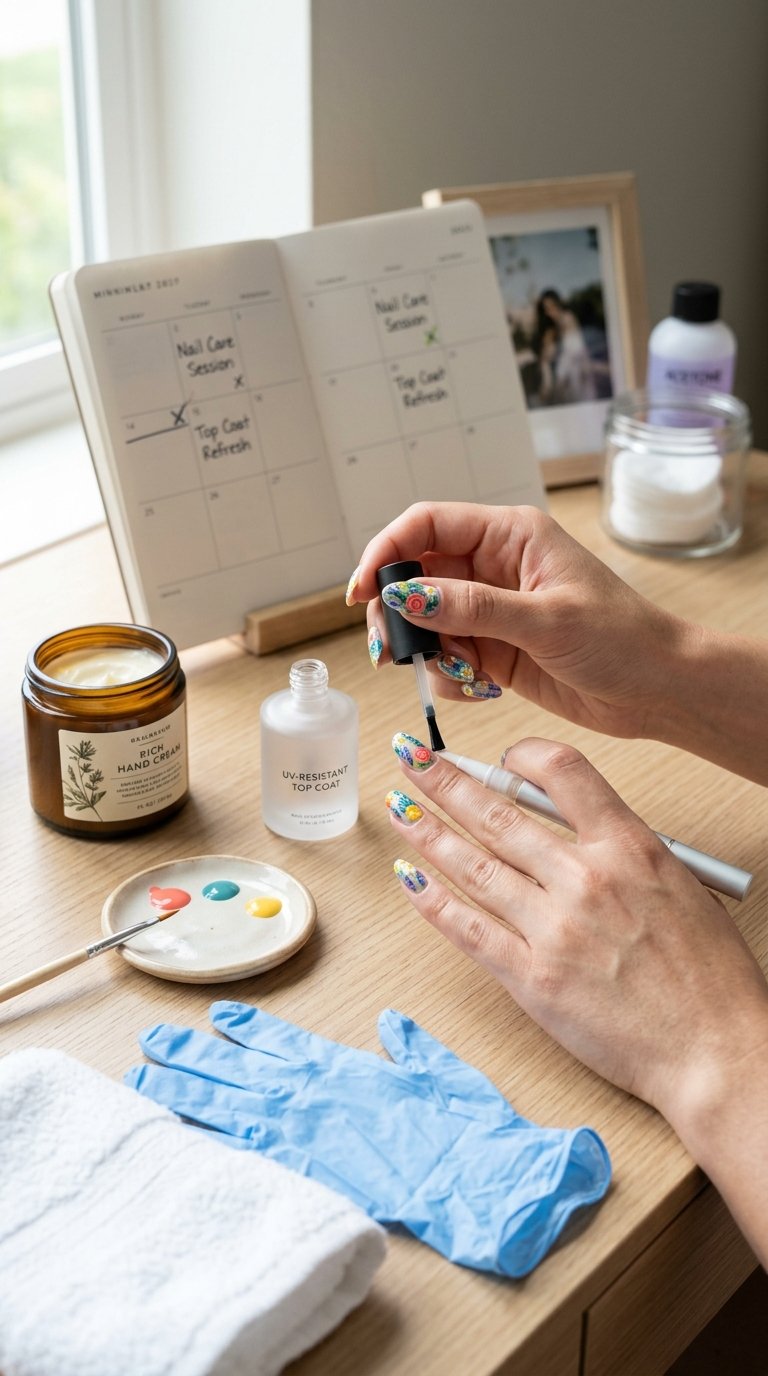
Protecting detailed floral nail art during summer activities requires strategic planning and preventive measures that preserve artistic integrity while allowing participation in active outdoor lifestyles. Apply high-quality UV-resistant top coat specifically designed for nail art preservation, reapplying every 2-3 days to maintain protective coverage and prevent color fading from intense summer sun exposure. Choose quick-dry formulas that minimize smudging risks during reapplication.
Daily moisturizing routines help maintain nail health and prevent drying that can cause premature chipping or peeling of detailed artwork. Focus cuticle oil application around nail beds without disturbing painted surfaces, and use hand creams that nourish skin without leaving residues that might affect nail art longevity. Healthy, moisturized nails provide better foundation for long-lasting decorative applications.
Activity modification strategies help preserve intricate floral designs during summer fun without completely avoiding enjoyable activities. Wear protective gloves during gardening, cleaning, or sports activities that might damage delicate artwork. Choose pool and beach activities that minimize direct nail contact with rough surfaces, and dry hands thoroughly after water exposure to prevent moisture-related lifting or peeling.
Touch-up techniques for minor damage can extend the life of detailed floral designs without requiring complete redo of complex artwork. Keep small amounts of original colors available for spot repairs, and master simple techniques for blending touch-up work into existing designs. Small chips in background areas can often be incorporated into design modifications rather than treated as damage requiring full removal.
Proper removal procedures preserve natural nail health when changing floral designs, using acetone-based removers and gentle techniques that don’t damage nail surfaces. Soak removal methods work better than scraping for preserving nail integrity, and immediate application of nourishing base treatments prepares nails for next artistic applications.
Professional maintenance scheduling every 2-3 weeks helps maintain complex floral designs beyond typical home care capabilities, with salon touch-ups, professional-grade product applications, and expert damage assessment that keeps intricate artwork looking fresh throughout active summer months.
Common Mistakes to Avoid in Floral Nail Art
Rushing the drying process between application steps leads to smudged designs, color bleeding, and muddy appearance that destroys the precision required for quality floral artwork. Each color layer, detail application, and protective coating requires adequate curing time to prevent subsequent applications from disturbing previous work. Patience during the creation process ensures clean, sharp details that define professional-quality floral nail art.
Overcomplicating designs with too many competing elements creates visual chaos rather than harmonious botanical beauty. Successful floral nail art requires restraint and focal point selection that guides viewer attention rather than overwhelming visual perception. Choose 2-3 main design elements per nail and develop these thoroughly rather than attempting to include every possible floral detail in single compositions.
Ignoring proper color theory principles results in unpleasant color combinations that detract from natural floral beauty rather than enhancing it. Study real flower color relationships and seasonal palettes to create harmonious designs that feel natural and aesthetically pleasing. Avoid combining colors that create muddy mixing or clash unpleasantly when placed adjacent to each other.
Neglecting nail preparation creates poor foundation for detailed artwork, leading to premature chipping, uneven application, and shortened manicure life. Clean, properly shaped nails with smooth cuticles and appropriate base coat application provide essential groundwork for successful floral designs that maintain beauty throughout active summer schedules.
Using inappropriate brush sizes for specific detail work compromises precision and artistic quality in floral elements. Match brush selection to intended design elements, using fine liners for stems and detail work, medium brushes for petal painting, and larger brushes for background applications. Wrong brush choices create amateur appearance regardless of artistic skill level.
Skipping protective top coat application leaves detailed artwork vulnerable to damage, fading, and premature wear that destroys hours of careful artistic work. Quality top coats preserve color vibrancy, add protective barrier against damage, and enhance overall appearance through appropriate shine levels that complement floral design aesthetics.
Key Takeaways
Floral nail art designs perfectly capture summer 2026’s emphasis on natural beauty, artistic expression, and connection to seasonal botanical abundance through detailed hand-painted flower motifs and nature-inspired color palettes. Success with these intricate designs requires proper tool selection, adequate time investment, and systematic approach to layering colors and details that create realistic dimensional effects.
Color palette selection significantly impacts the success and appeal of floral nail art, with summer 2026 trends favoring coral sunset combinations, ocean-inspired blues, romantic lavender themes, sunshine yellows, and sophisticated monochromatic green interpretations that complement seasonal fashion and lifestyle preferences.
Advanced techniques like layering, negative space incorporation, texture application, and mixed media integration offer opportunities for creating unique, personalized floral interpretations that showcase individual artistic skills while maintaining connection to natural botanical beauty that defines quality floral nail art.
Proper maintenance through UV protection, daily moisturizing, activity modification, and strategic touch-up applications extends the life and beauty of detailed floral designs, making them practical choices for active summer lifestyles while preserving the artistic investment required for creation.
Frequently Asked Questions
How long does it take to create detailed floral nail art designs?
Complex floral designs typically require 2-4 hours depending on detail level and drying time between steps. Simple single-flower accents can be completed in 30-45 minutes, while elaborate garden scenes across multiple nails may require several sessions to achieve professional results without rushing critical drying periods.
Can I create floral nail art without artistic experience?
Yes, beginners can start with simple designs like single daisies or basic roses using practice techniques on nail wheels or tips before attempting full manicures. Nail stamping plates, stencils, and water decals offer alternatives for achieving floral looks without hand-painting skills, though hand-painted results offer more customization and artistic satisfaction.
What’s the best way to choose colors that work well together in floral designs?
Study real flower photographs and seasonal garden palettes to understand natural color relationships that create harmonious combinations. Start with 2-3 main colors and add one accent color for highlights. Color wheels help identify complementary combinations, while monochromatic schemes using various shades of single colors create sophisticated, cohesive appearances.
How do I prevent my floral designs from looking amateur or messy?
Focus on clean brush technique, adequate drying time between applications, and restraint in design complexity. Practice basic flower shapes repeatedly until brush control becomes automatic. Use appropriate brush sizes for different design elements, and always finish with quality top coat to enhance overall appearance and hide minor imperfections.
Can floral nail art survive summer swimming and outdoor activities?
Well-applied floral designs with proper base and top coats can withstand moderate swimming and outdoor activities. Use UV-resistant top coats, reapply protective coating every few days, and wear gloves for intensive activities. Chlorine exposure and salt water may accelerate wear, but proper preparation and maintenance can extend design life significantly.
What’s the difference between nail art paints and regular nail polish for floral designs?
Nail art paints offer superior opacity, longer working time, and better consistency for detailed brush work compared to regular polish. They’re specifically formulated for precision application and often provide more vibrant color payoff. However, quality nail polishes can achieve excellent results with proper technique and patience.
How do I fix mistakes or chips in detailed floral designs?
Minor chips in background areas can often be blended into design modifications rather than requiring complete removal. Keep original colors available for touch-ups, and learn to incorporate small damage into design elements like additional leaves or flower details. For major damage, partial removal and repainting of affected areas may be necessary.
Are there any nail shapes that work better for floral designs?
Floral designs work beautifully on all nail shapes, though longer nails provide more surface area for detailed compositions. Oval and almond shapes complement flowing floral elements naturally, while square shapes work well for geometric or structured garden designs. Choose shapes that reflect your lifestyle and maintenance preferences rather than purely aesthetic considerations.
Conclusion
Floral nail art designs represent the perfect fusion of natural beauty and artistic expression, creating stunning summer manicures that celebrate the season’s botanical abundance while showcasing individual creativity and style preferences. These intricate designs offer endless possibilities for personalization through color selection, technique variation, and design complexity that can accommodate any skill level from beginner experimentation to professional artistry.
The comprehensive techniques and design ideas explored in this guide provide the foundation for creating beautiful floral nail art that captures summer 2026’s emphasis on natural beauty, sustainability consciousness, and artisanal craftsmanship. Whether you prefer simple single-flower accents or elaborate garden masterpieces, these methods ensure professional-quality results that enhance your summer style while expressing personal artistic vision.
Success with floral nail art requires patience, practice, and attention to detail, but the investment yields beautiful results that serve as wearable art throughout active summer schedules. The maintenance strategies and troubleshooting tips provided help preserve your artistic work while accommodating real-world summer activities and lifestyle demands.
As you experiment with these floral nail art techniques and design inspirations, remember that the most successful results combine technical skill with personal aesthetic preferences and lifestyle needs. Whether creating romantic rose gardens, tropical paradise scenes, or modern minimalist botanical interpretations, floral nail art offers the perfect medium for celebrating summer’s natural beauty while showcasing your unique artistic perspective and attention to detail.