
Summer Skincare Mistakes You Are Probably Making Right Now
Summer skincare mistakes are the seemingly small, repeated missteps that quietly sabotage your complexion during the year’s hottest months. They range from under-applying sunscreen and clinging to heavy winter creams to over-washing sweaty skin and ignoring the phototoxic potential of certain active ingredients. While these errors might feel harmless in the moment, they compound rapidly in the presence of stronger ultraviolet radiation, higher humidity, and increased perspiration, leading to outcomes like persistent hyperpigmentation, heat-induced breakouts, compromised barrier function, and premature collagen breakdown. This article identifies the most common errors people make right now, explains the dermatological mechanisms behind why each one damages skin, and provides precise, actionable corrections so your routine protects and perfects rather than punishes your complexion all season long.
Why Summer Demands a Different Skincare Approach
Before dissecting specific errors, it is essential to understand why behaviors that were benign in April become risky in July. Summer creates a unique dermatological environment where multiple stressors hit simultaneously.
How Heat and Humidity Alter Skin Behavior
When ambient temperature rises, your blood vessels dilate to release heat, and your sebaceous glands increase production to cool and lubricate the skin surface. Simultaneously, high humidity changes how products interact with your stratum corneum; heavy occlusives that prevented winter dehydration now mix with sweat and sebum to form a pore-clogging film. This shift explains why a cream you loved in January might suddenly trigger closed comedones or miliaria—heat rash—by August. Your skin is not fundamentally different; its environmental context is, and your routine must adapt to that new operating system.
The Hidden Impact of UV Radiation and Air Conditioning
Ultraviolet radiation peaks in summer, with UVA rays penetrating clouds and glass to degrade collagen and deepen existing pigmentation, while UVB causes direct sunburn and cellular mutation. At the same time, indoor air conditioning strips moisture from the air, creating an artificially arid microclimate that increases transepidermal water loss. The result is a paradoxical condition where skin can be simultaneously oilier on the surface and dehydrated underneath. Without seasonal adjustments, you are fighting a two-front battle against environmental damage and moisture loss with tools designed for a completely different climate.
Also Read: Gua Sha For Summer Skin: Benefits And How To Use It
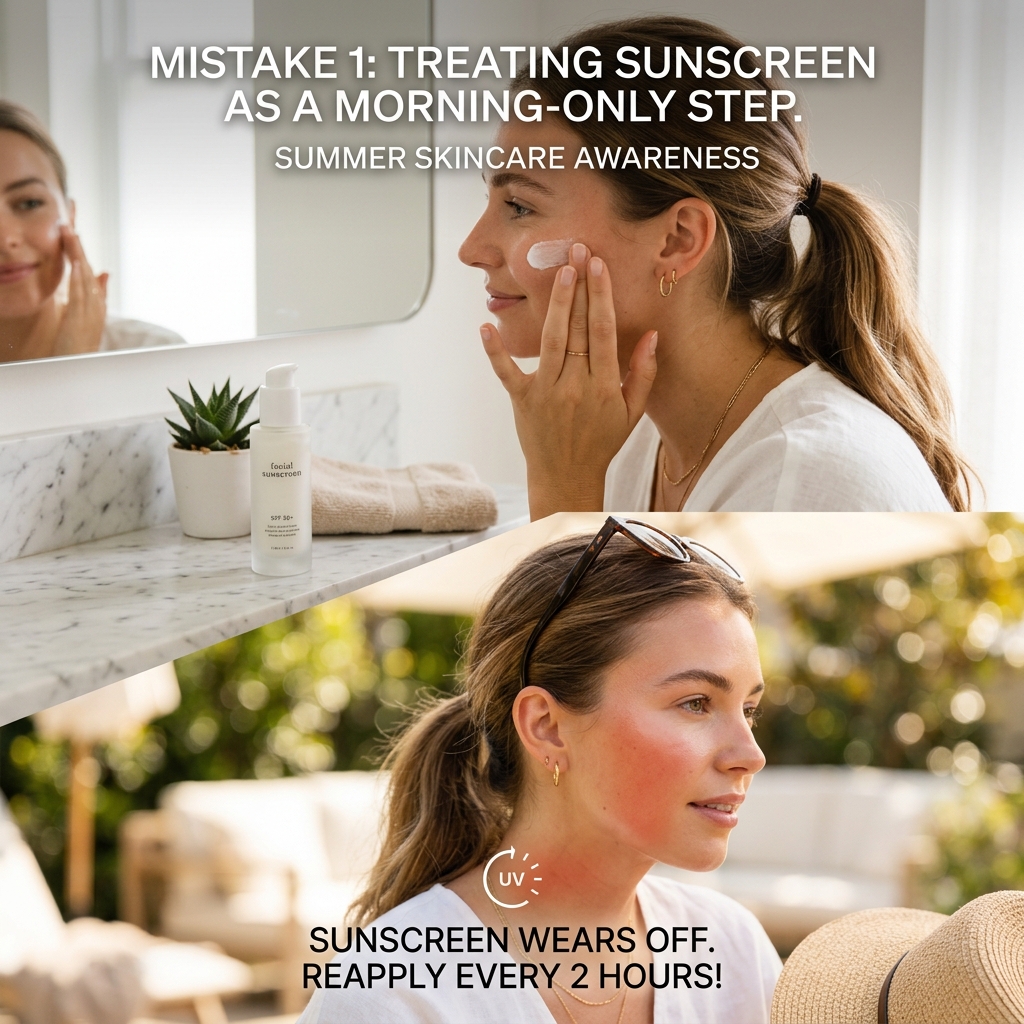
Mistake 1: Treating Sunscreen as a Morning-Only Step
The single most damaging of all summer skincare mistakes is applying SPF once and assuming you are protected for the entire day. No sunscreen maintains its labeled protection factor beyond approximately two hours of cumulative UV exposure, and that timeline shortens dramatically with swimming, sweating, or towel-drying.
The “Morning SPF Only” Trap
Many people diligently apply a broad-spectrum SPF 30 moisturizer at 8:00 AM and then spend hours at a park, beach, or outdoor café without reapplication. By noon, the UV filters have degraded through photodegradation, and the film has physically shifted or worn away. You are no longer wearing SPF 30; you are wearing remnants. This explains why so many individuals experience sunburns, new freckling, or melasma flares despite claiming they “wear sunscreen every day.” Daily wear is meaningless without consistent reapplication.
How Much Sunscreen You Actually Need
For the face alone, you need roughly two finger-lengths of product, or about a quarter teaspoon, to achieve the protection stated on the label. Most people apply between 25 and 50 percent of the recommended dose, effectively reducing an SPF 50 to an SPF 12.5. In summer, when UV index values regularly exceed 6 or 7, that under-application leaves skin dangerously exposed. For body coverage, think in terms of a full shot glass for average adult skin.
Fixing Your Sunscreen Habits
Set a timer on your phone for two hours after your first application. Use a stick or powder SPF for easier reapplication over makeup, or adopt a cushion compact with built-in protection. If you are swimming or sweating heavily, reapply immediately after drying off, even if the formula is labeled water-resistant. Make sunscreen the non-negotiable rhythm of your summer day, not a one-time morning ritual.
Mistake 2: Clinging to Heavy Winter Moisturizers
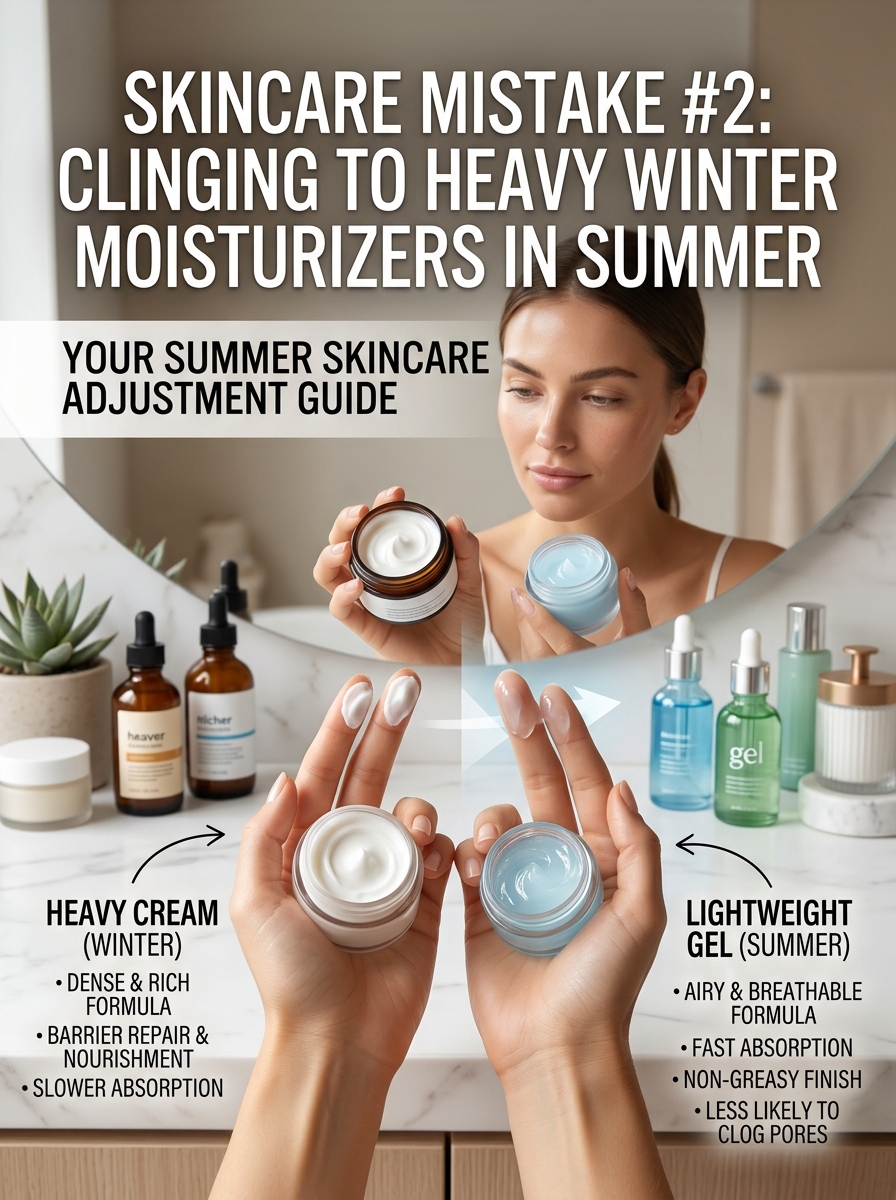
Your rich, ceramide-packed night cream was a barrier-saving hero in February, but in July it may be suffocating your skin.
Why Occlusive Creams Cause Summer Breakouts
Winter moisturizers rely heavily on occlusive agents like petrolatum, dimethicone in high concentrations, shea butter, and lanolin to seal in moisture against dry, cold air. In summer, these same ingredients create an impermeable layer on top of skin that is already producing more sebum and sweat. The trapped mixture stretches pores, breeds bacteria, and creates an anaerobic environment where Cutibacterium acnes thrives. If you have noticed an uptick in jawline or cheek breakouts since the weather warmed, your moisturizer is likely the culprit.
Switching to Seasonally Appropriate Textures
Replace heavy creams with gel-creams, water-based gels, or lightweight lotions that prioritize humectants like hyaluronic acid and glycerin over dense occlusives. These textures hydrate by increasing water content within the skin rather than trapping heat and oil on the surface. You can still support your barrier with micro-doses of ceramides or squalane, but the vehicle should feel breathable and absorb within seconds, not minutes.
Mistake 3: Skipping Moisturizer Because Skin Feels Oily
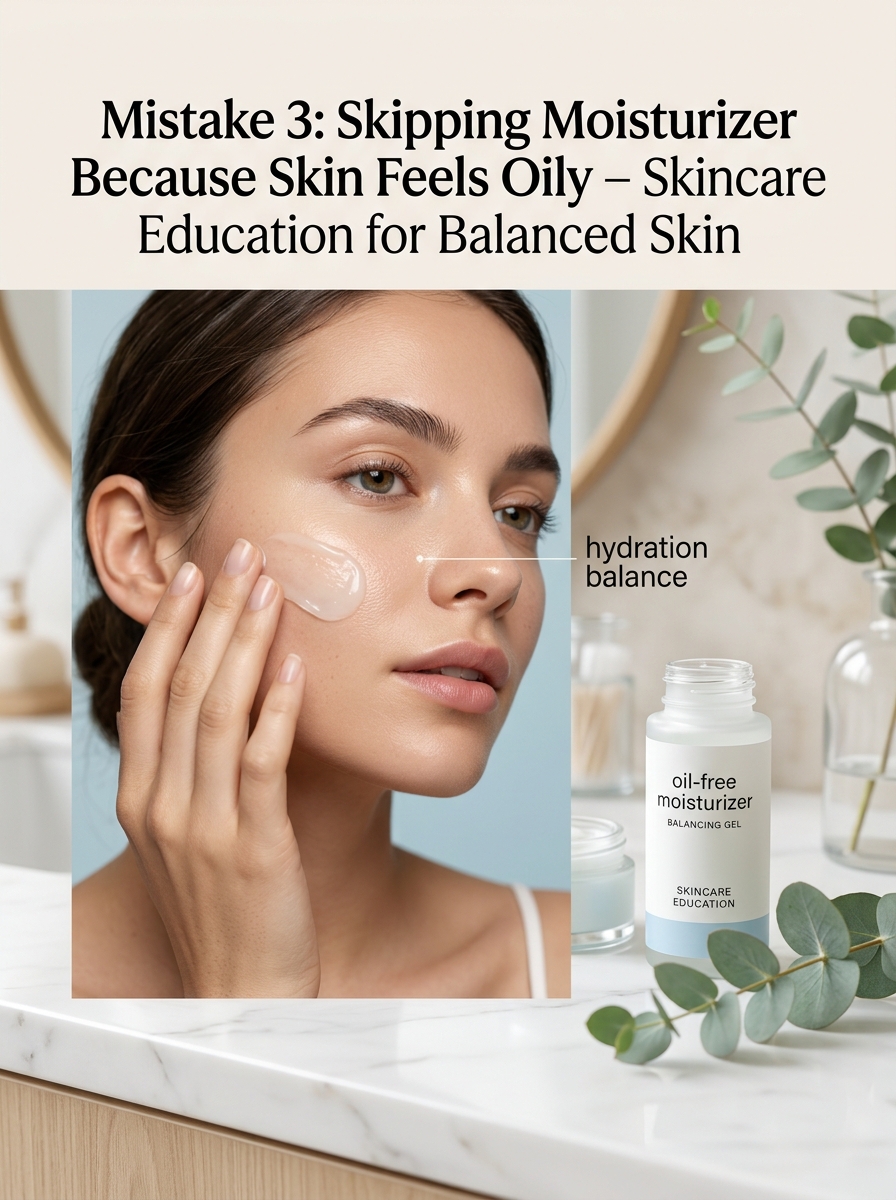
Among the most counterproductive summer skincare mistakes is the decision to abandon moisturizer entirely once temperatures rise. The logic seems sound—why add moisture to an already shiny face?—but the physiology works in reverse.
The Dehydration-Rebound Oil Cycle
When you strip your skin of external hydration, the stratum corneum signals distress to the sebaceous glands. In response, your skin ramps up sebum production to compensate for the perceived lack of moisture and to reinforce the barrier. The result is skin that is simultaneously dehydrated underneath and slick on top, often accompanied by irritation and enlarged pores. Skipping moisturizer does not solve oiliness; it manufactures a more unstable version of it.
Choosing the Right Lightweight Hydrator
Look for oil-free, non-comedogenic gel moisturizers that contain both hydrating and mildly mattifying ingredients. Niacinamide regulates sebum production while supporting barrier repair; hyaluronic acid binds water without adding lipid weight; and zinc PCA offers both hydration and antimicrobial benefits. Apply to slightly damp skin after cleansing to lock in ambient moisture, and you will find your midday shine diminishes rather than intensifies.
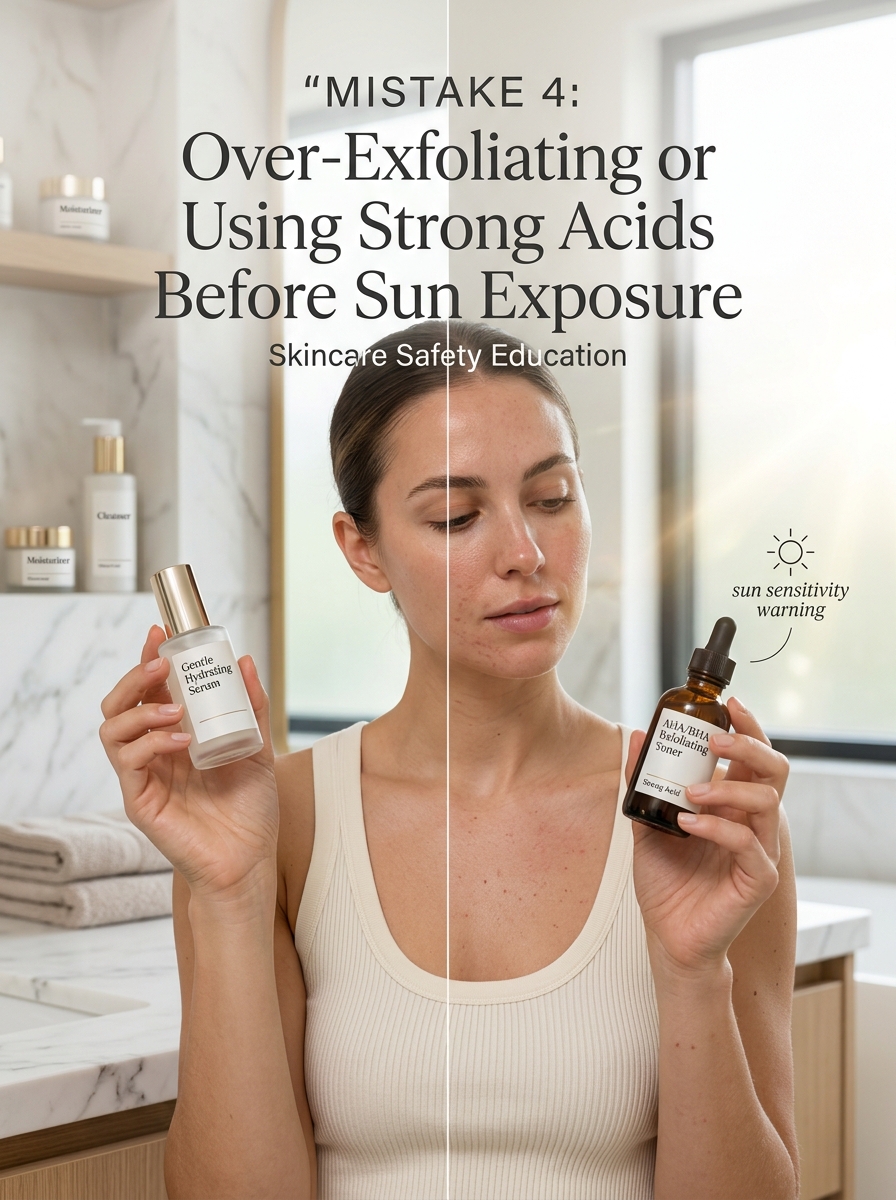
Mistake 4: Over-Exfoliating or Using Strong Acids Before Sun Exposure
Summer inspires a desire for smooth, glowing skin, but aggressive exfoliation during peak sun season is a recipe for photosensitivity and barrier collapse.
Compromising Your Barrier When It Needs Protection Most
Chemical exfoliants like glycolic acid, salicylic acid, and retinoids thin the stratum corneum and increase the skin’s vulnerability to UV damage. When you use a strong 10 percent AHA serum at night and then walk into intense morning sun, you have effectively removed the very layer that provides physical and optical protection against radiation. This leads to faster burns, deeper pigmentation, and a higher risk of post-inflammatory erythema.
Safe Exfoliation Timing for Summer
You do not need to abandon acids entirely, but you must recalibrate. Reduce frequency from daily to two or three times per week. Consider switching to gentler polyhydroxy acids (PHAs) like gluconolactone, which offer exfoliation with less photosensitizing risk. If you use retinoids, apply them at night and ensure your morning routine includes a robust antioxidant like vitamin C followed by diligent SPF reapplication. Never exfoliate in the morning before a day of outdoor activity.
Mistake 5: Forgetting SPF on Commonly Missed Body Areas
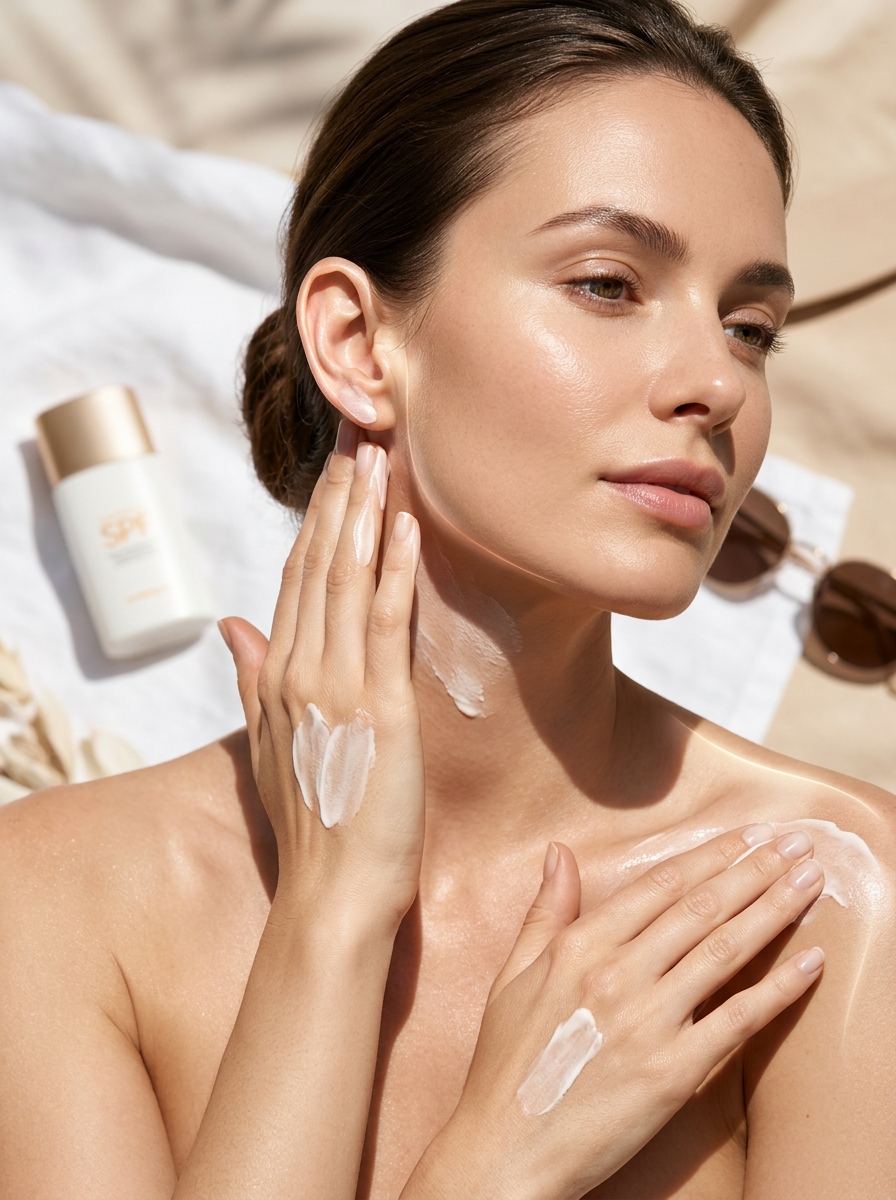
Facial sunscreen gets most of the attention, but summer exposes vast swaths of skin that rarely see direct sunlight, and people consistently miss critical zones.
The Ears, Scalp, Feet, and Lips
The ears are a high-risk site for melanoma because they protrude and are rarely protected by hair or hats. The scalp part-line, tops of the feet, and the vermilion border of the lips are similarly neglected. A baseball cap does not shade your ears; flip-flops expose the entire dorsal foot to reflective UV from sand or pavement. These areas burn quickly and painfully, and repeated damage accumulates into actinic keratosis or worse over decades.
Treating Body Acne and Heat Rash Incorrectly
When body breakouts or prickly heat appear on the chest or back, many people respond with aggressive benzoyl peroxide washes and then skip sunscreen on those areas to avoid “greasiness.” This leaves healing, inflamed skin vulnerable to dark post-inflammatory hyperpigmentation. Instead, use a non-comedogenic, spray-on SPF for large body areas, and treat folliculitis or heat rash with lightweight, breathable fabrics and gentle salicylic acid body washes rather than heavy creams or oils.
Mistake 6: Storing Skincare Products in Heat and Sunlight
Where you keep your products matters as much as what you put on your face, yet this is one of the most overlooked summer skincare mistakes.
Heat Degrading Active Ingredients
Vitamin C serums, retinoids, and certain chemical sunscreen filters like avobenzone are notoriously unstable. When stored in a hot car, a sunny bathroom windowsill, or a steamy shower-adjacent shelf, these actives oxidize or separate, rendering them ineffective or potentially irritating. A vitamin C serum that has turned amber or brown has oxidized and will not deliver antioxidant benefits; it may even contribute to free radical formation on your skin.
Proper Storage for Efficacy
Store your skincare in a cool, dark drawer or cabinet. If you are traveling to the beach, use an insulated bag for your products, just as you would for beverages. Refrigeration can extend the life of certain antioxidant serums and provide a soothing, de-puffing application experience, but check manufacturer guidance first, as some emulsions break down at very low temperatures.

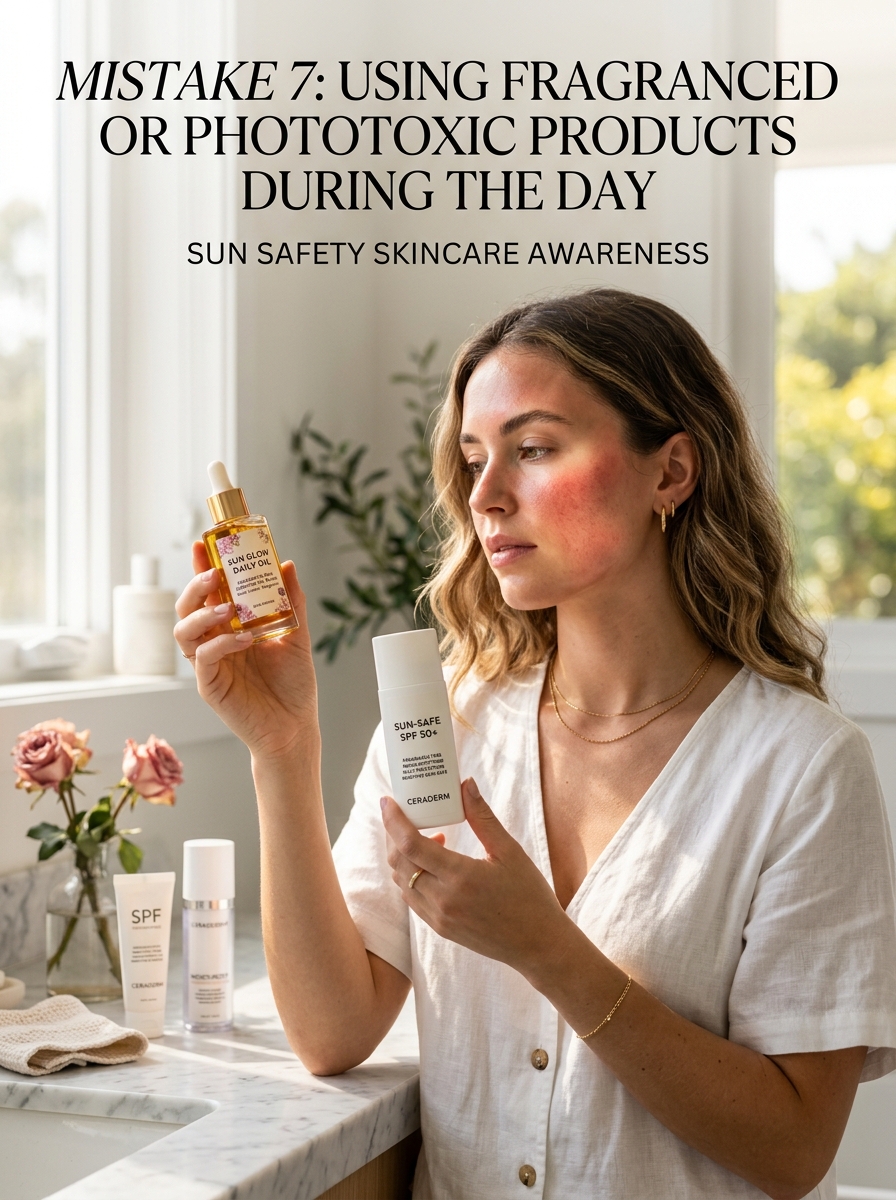
Mistake 7: Using Fragranced or Phototoxic Products During the Day
That refreshing citrus facial mist or bergamot-infused body oil might smell like summer, but it could be causing invisible damage.
Essential Oils and Citrus Extracts That Cause Burns
Many botanical ingredients, including lemon, lime, bergamot, grapefruit, and certain citrus essential oils, contain furocoumarins that become phototoxic when exposed to UVA radiation. This means they can trigger severe sunburns, blistering, or permanent hyperpigmentation that appears days after exposure. Synthetic fragrances can also cause photosensitivity and are a leading cause of allergic contact dermatitis, which is harder to manage when sweat and heat drive ingredients deeper into pores.
Reading Labels for Hidden Irritants
Scan ingredient lists for terms like Citrus aurantium bergamia (bergamot) peel oil, limonene, linalool, and unspecified “fragrance” or “parfum.” If you love scented skincare, reserve it for your nighttime routine or choose products where fragrance appears at the very end of the ingredient list, indicating minimal concentration. Your daytime summer products should be fragrance-free to minimize reactivity.
Mistake 8: Over-Cleansing or Under-Removing Sunscreen
Sweat, oil, and layers of reapplied SPF create a film by evening that demands thorough removal, but many people swing too far in either direction.
Over-Cleansing Sweaty Skin
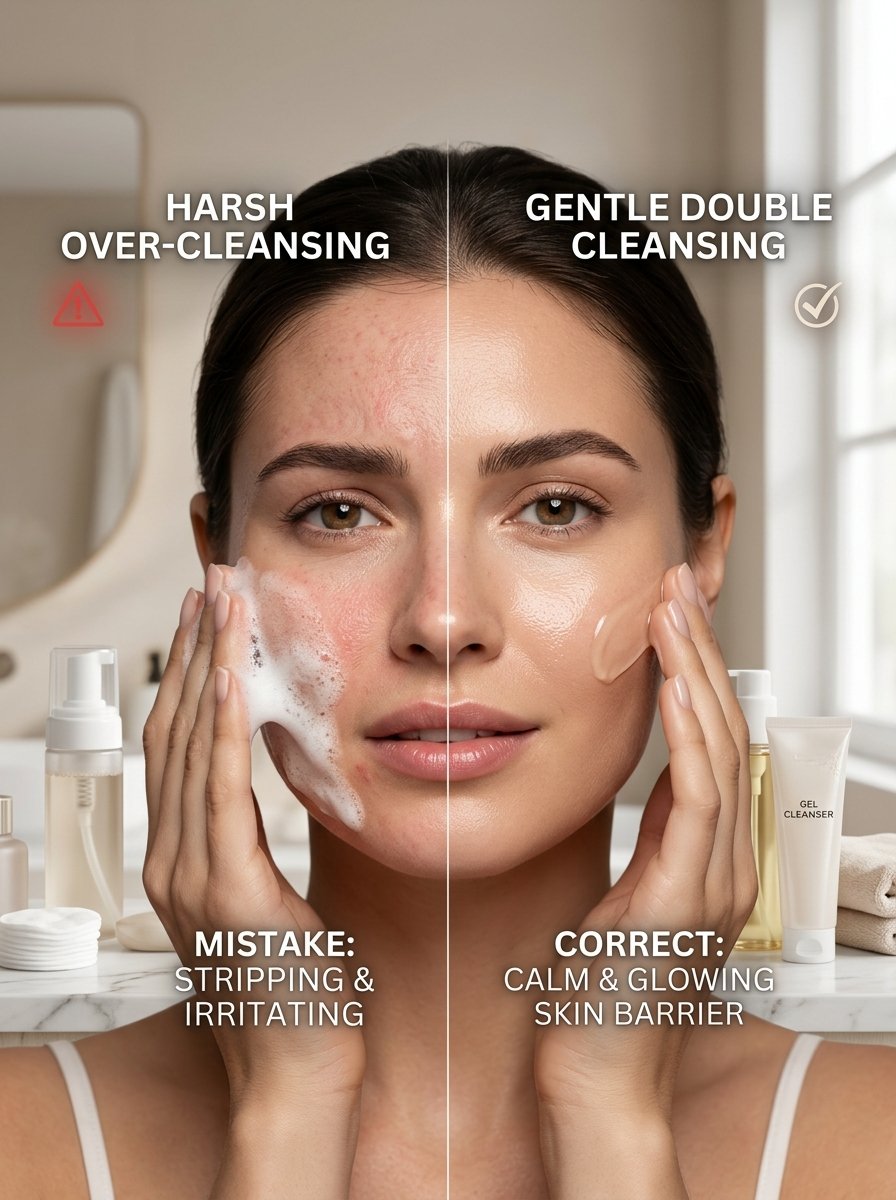
It is tempting to wash your face three or four times a day when it feels grimy from heat, but excessive cleansing strips natural lipids and disrupts the acid mantle. This leads to barrier impairment, increased sensitivity, and paradoxical oil overproduction. A gentle gel or cream cleanser used morning and night is sufficient; midday, use a clean, damp cloth to blot sweat rather than washing again.
The Double-Cleanse Balance for Sunscreen Removal
On the other end of the spectrum, some people use a single weak cleanser that fails to break down water-resistant sunscreen, leaving residue that clogs pores overnight. The solution is a targeted evening double cleanse: first with an oil-based cleanser or micellar water to dissolve SPF, sebum, and pollution, followed by a water-based cleanser to remove any remaining residue. This ensures skin is truly clean without being stripped.
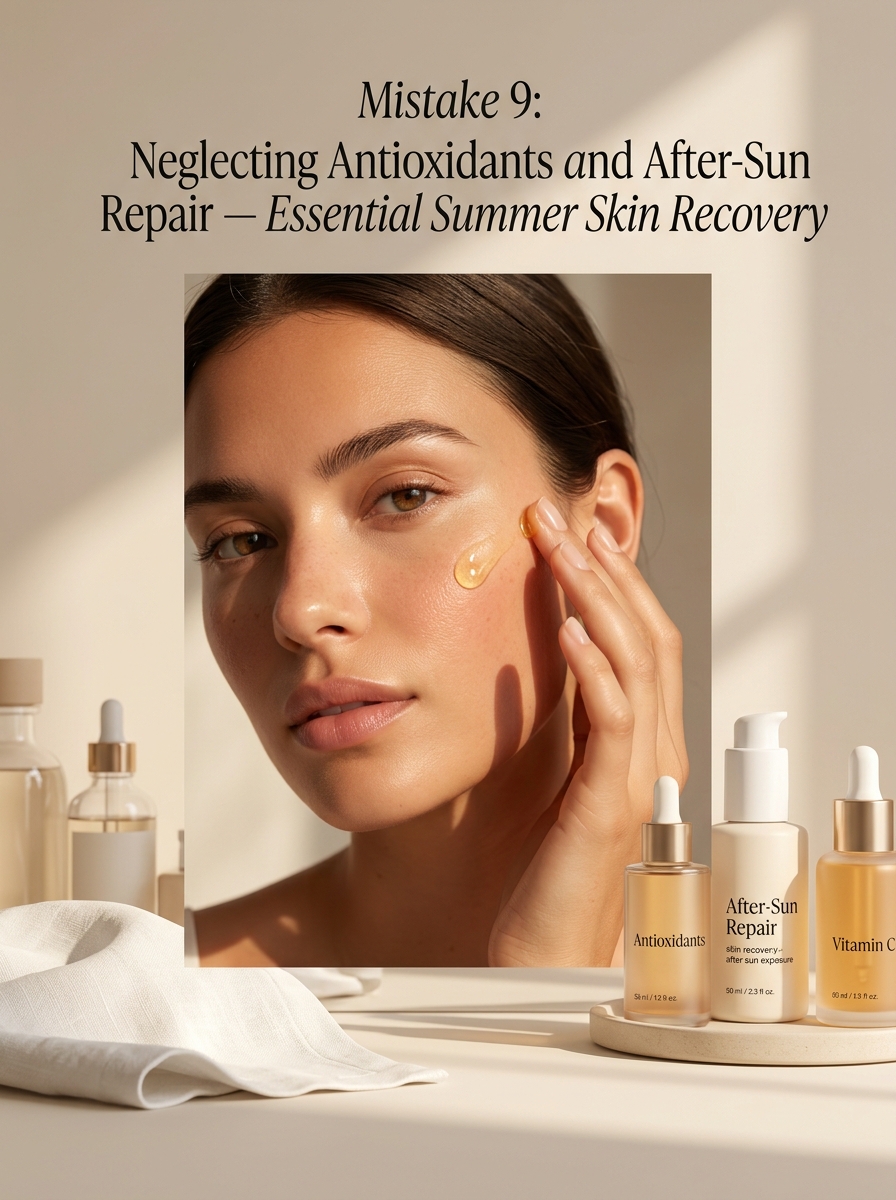
Mistake 9: Neglecting Antioxidants and After-Sun Repair
Sunscreen is your primary defense, but it is not perfect. UV rays still generate free radicals that degrade collagen and trigger melanin production, which is why antioxidant support and post-exposure care are non-negotiable.
Why Vitamin C and Niacinamide Matter More in Summer
Topical antioxidants like L-ascorbic acid (vitamin C), ferulic acid, and niacinamide neutralize the reactive oxygen species created when UV filters absorb radiation. Think of them as your insurance policy for the SPF you missed or the rays that slipped through. Vitamin C also inhibits tyrosinase, the enzyme responsible for melanin synthesis, making it a powerful ally against summer hyperpigmentation and melasma flares.
Cooling Down Inflammation Before It Becomes Damage
If you have spent extended time in the sun, your skin is inflamed even if it is not visibly burned. Applying a cool, soothing mask or serum containing aloe vera, centella asiatica, allantoin, or bisabolol in the evening reduces the inflammatory cascade that leads to delayed redness, peeling, and long-term photoaging. Do not wait for a burn to treat your skin; treat sun exposure as an event that always requires recovery.
How to Correct Your Summer Routine: A Practical Framework
Knowing the mistakes is only half the battle. Here is how to restructure your routine to avoid them entirely.
Morning Protocol
Cleanse gently if needed, or simply rinse with water if your skin is dry. Apply a vitamin C or antioxidant serum to naked skin. Follow with a lightweight, non-comedogenic gel moisturizer. Apply a broad-spectrum SPF 30 or higher generously to face, ears, neck, and any exposed chest or hands. Allow it to set for several minutes before makeup. Set a reapplication reminder for two hours if you will be outdoors.
Evening Recovery Protocol
Double cleanse to remove sunscreen, sweat, and pollution. Apply a hydrating toner or essence if desired. Use your treatment step—this is the time for retinoids, exfoliating acids, or peptides, as long as you are not planning intense sun exposure the next morning. Seal with a gel-cream or lightweight lotion. If you had significant sun exposure, prioritize a calming, barrier-supporting serum over active treatments for that night.
Key Takeaways
- Summer skincare mistakes like skipping sunscreen reapplication, using heavy winter creams, and over-exfoliating under summer sun cause cumulative damage that manifests as burns, breakouts, and premature aging.
- Sunscreen must be applied generously and reapplied every two hours during outdoor exposure; under-application and single daily use are the most common and costly errors.
- Switch to lightweight, gel-based, non-comedogenic moisturizers that hydrate with humectants rather than heavy occlusives that trap sweat and sebum.
- Never skip moisturizer due to oiliness; dehydration triggers rebound sebum production that worsens shine and congestion.
- Reserve strong chemical exfoliants and retinoids for nighttime, reduce frequency in peak summer, and always pair them with diligent morning antioxidant and SPF protection.
- Store products away from heat and sunlight, avoid daytime fragranced or citrus-based products, and treat your skin to calming after-sun repair to neutralize inflammation before it hardens into damage.
Frequently Asked Questions
What are the biggest summer skincare mistakes people make?
The most damaging errors are applying sunscreen only once in the morning, using heavy winter moisturizers that clog pores, skipping moisturizer because of oiliness, over-exfoliating before sun exposure, and forgetting to protect commonly missed areas like the ears and lips.
Should I stop using retinol in the summer?
You do not need to stop entirely, but you should use retinoids only at night, reduce frequency if your skin becomes sensitive, and be meticulous about morning sunscreen and antioxidant application. If you are spending extended time at high altitude or near water, consider pausing retinoids during that period.
Why does my skin break out more in summer even though I wash it constantly?
Over-washing strips your barrier and triggers increased oil production, while sweat mixed with heavy products and trapped bacteria clogs pores. Switch to a gentle cleanser, use lightweight non-comedogenic products, and blot sweat rather than repeatedly washing your face.
How often should I reapply sunscreen if I work indoors?
If you are near windows or step outside periodically, reapply once midday. UVA penetrates glass and contributes to aging. If you are entirely indoors away from windows, your morning application may suffice, though reapplying before any outdoor exposure is essential.
Can I use the same cleanser year-round?
Many people can, but if your skin becomes oilier or you are wearing water-resistant sunscreen, you may need to switch to a slightly more thorough gel cleanser or adopt an evening double-cleanse routine. Avoid overly stripping foaming cleansers that contain sulfates, as they worsen summer dehydration.
What should I do if I get a sunburn despite using sunscreen?
Immediately cool the skin with a damp cloth, then apply a fragrance-free soothing gel or cream containing aloe or centella asiatica. Take an anti-inflammatory if appropriate, drink plenty of water, and avoid further sun exposure until healed. Do not apply retinoids or acids to burned skin.
Are spray sunscreens as effective as lotions?
Spray sunscreens can be effective, but most people apply them too thinly. Spray until the skin glistens, then rub it in to ensure even coverage. Do not inhale the mist, and never use sprays as your sole facial application if you can avoid it; lotions and sticks allow for more precise, generous dosing.
Conclusion
Summer skincare mistakes are rarely dramatic single events; they are quiet habits repeated daily until the damage becomes visible in the mirror. The good news is that each error is correctable with a simple shift in product choice, application technique, or timing. By treating sunscreen as a ritual rather than a one-time step, swapping heavy creams for breathable hydrators, respecting your barrier’s limits with exfoliation, and adding antioxidant and after-sun support, you transform summer from a season of dermatological stress into one of healthy, resilient radiance. Your skin faces enough from the environment; your routine should be its strongest ally, not its hidden weakness.