Farmhouse Living Room Ideas That Feel Cozy, Warm, and Timeless
Farmhouse Living Room Ideas design brings the comfort, authenticity, and warmth of rural countryside living into your home, creating a cozy retreat that feels both welcoming and timeless. A well-designed farmhouse living room combines rustic elements, natural materials, soft textures, and vintage-inspired furnishings to establish an inviting atmosphere that prioritizes comfort and family gathering. Whether you’re drawn to traditional farmhouse aesthetics inspired by 19th-century American country homes or modern farmhouse style that blends contemporary functionality with rural charm, creating a cozy and warm farmhouse living room requires thoughtful planning, intentional design choices, and an understanding of the core principles that make this design style enduringly appealing.
This comprehensive guide explores everything you need to know about designing farmhouse living room spaces that feel genuinely cozy, naturally warm, and timelessly beautiful, from foundational design concepts and color palettes to furniture selection, decor styling, and practical implementation strategies that transform your living room into a peaceful farmhouse-inspired sanctuary.
What Is Farmhouse Living Room Design?
Farmhouse living room design is an interior design aesthetic that emphasizes rural, countryside, and agrarian-inspired elements within a residential living space. This design philosophy celebrates simplicity, functionality, and the charm of traditional farm life while maintaining modern comfort and livability. The farmhouse style prioritizes genuine authenticity, natural materials, and a lived-in quality that feels warm and welcoming rather than overly polished or formal.
Also Read: Boho Living Room Ideas That Bring Warmth and Character to Your Home
The core of farmhouse living room design rests on several foundational principles: a commitment to natural and reclaimed materials such as wood and metal, a neutral and earthy color palette grounded in nature-inspired hues, comfortable and well-used furniture that invites relaxation, vintage and repurposed elements that tell stories and add character, and an overall aesthetic that feels unpretentious, accessible, and deeply livable. Unlike some design styles that prioritize statement-making or trendy elements, farmhouse design prioritizes genuine comfort, family functionality, and the kind of beauty that doesn’t fade with time or trend.
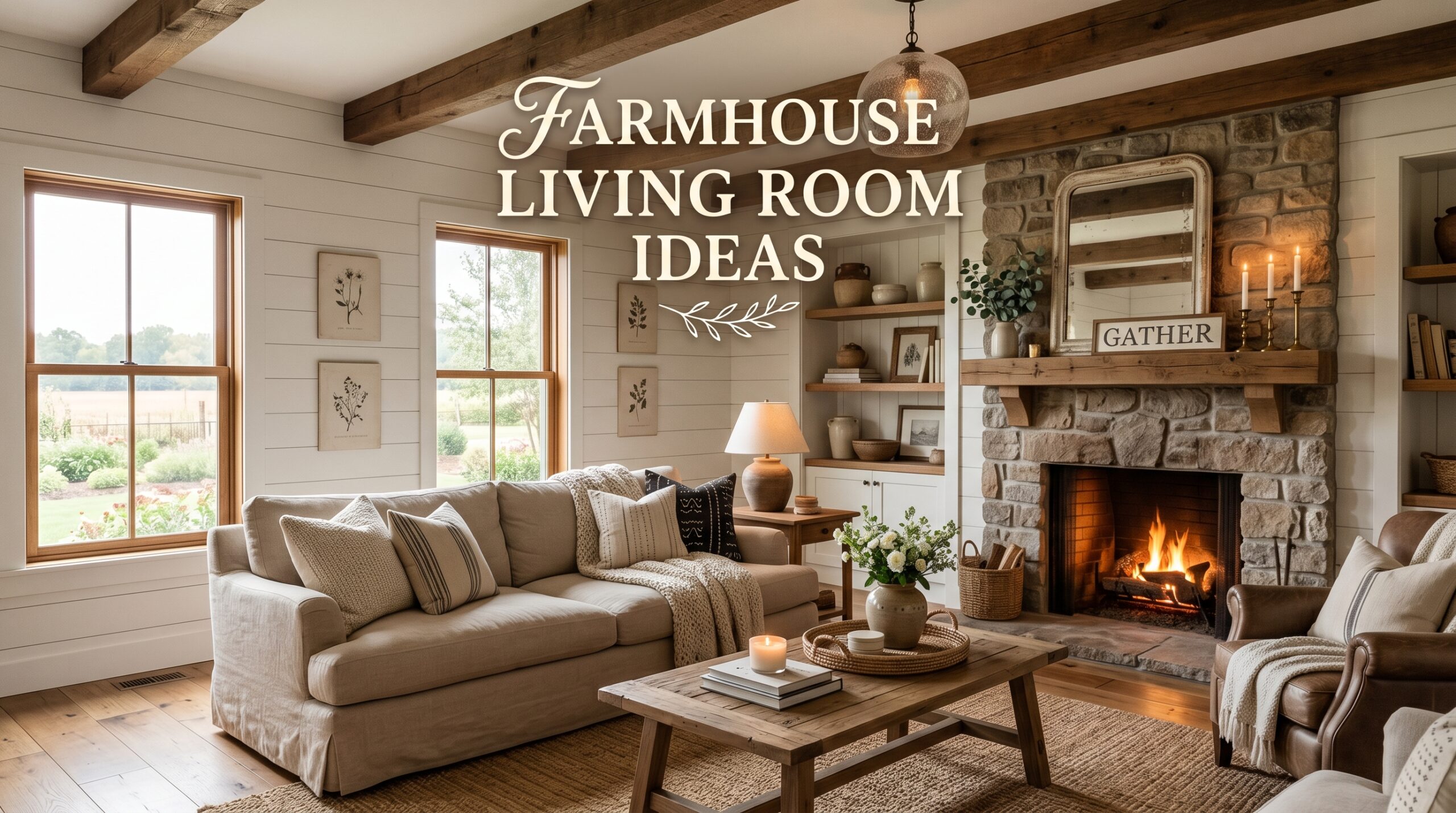
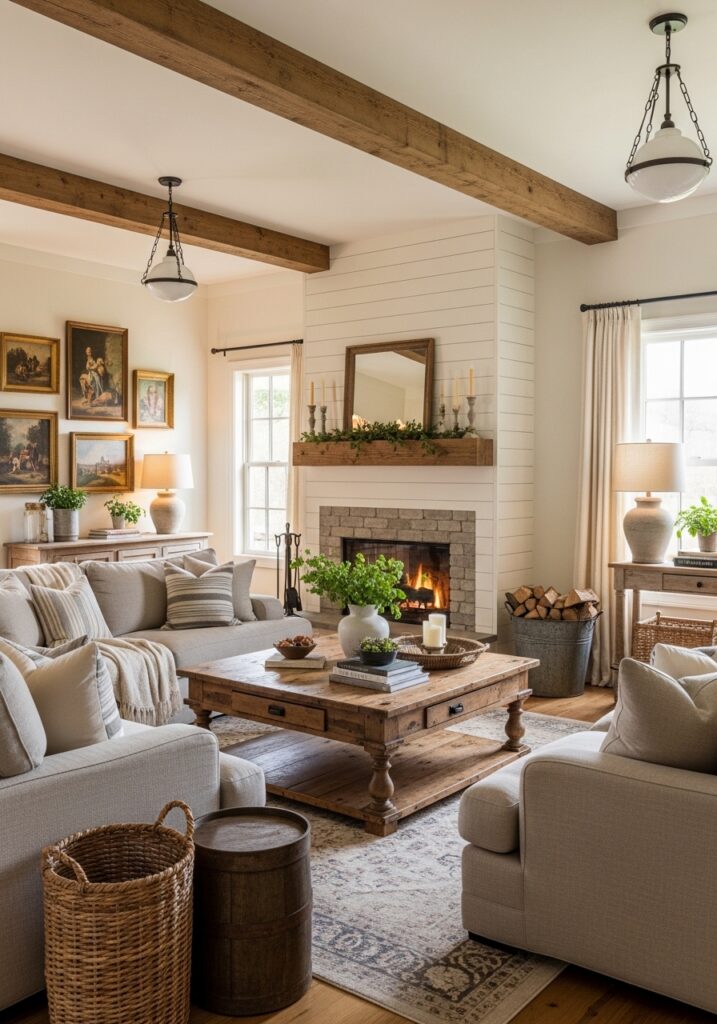
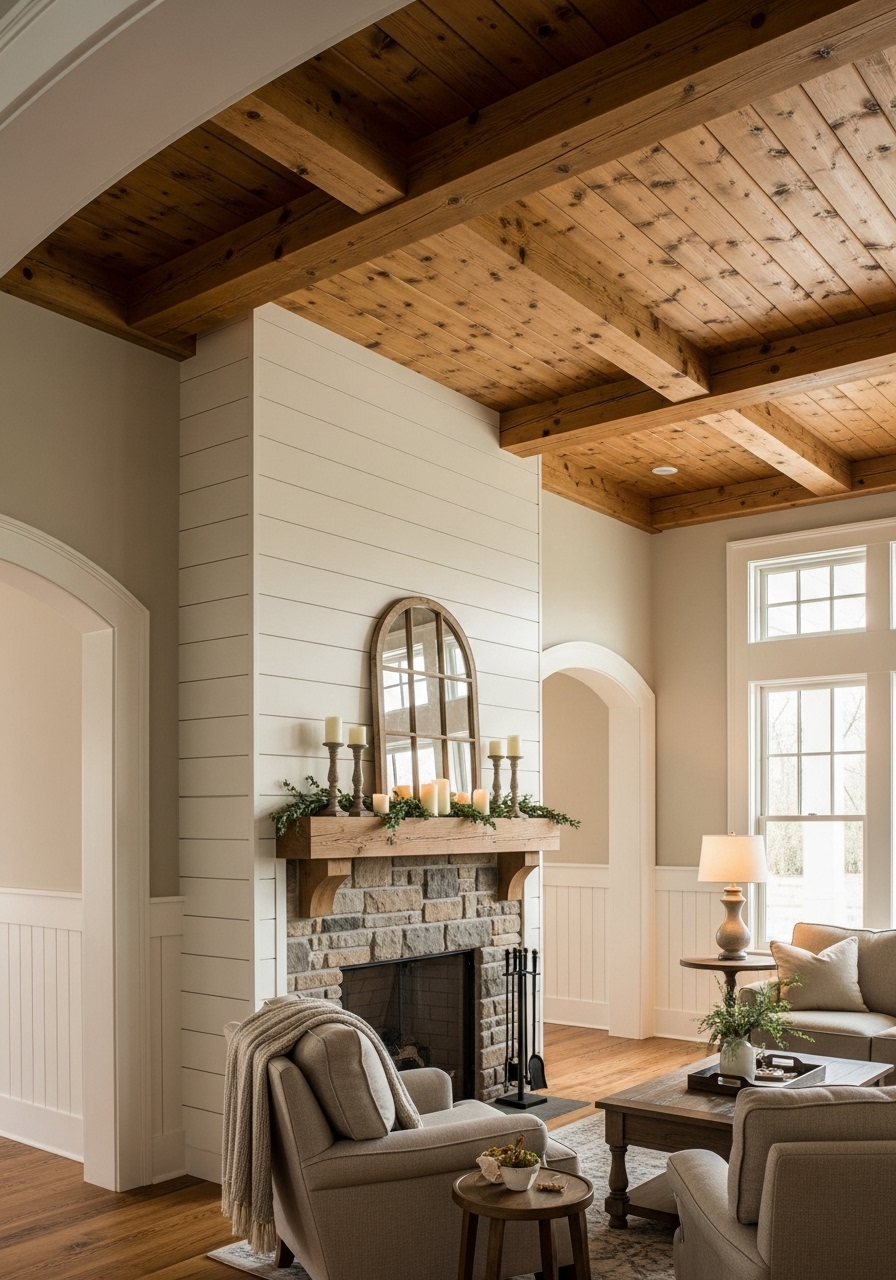
Farmhouse living rooms typically feature exposed wood beams or wooden ceilings, shiplap accent walls, vintage or antique-inspired furnishings, natural fiber textiles, metal accents reminiscent of farm equipment or barn doors, and decor that celebrates rural heritage and countryside living. The style is deeply rooted in American farmhouse traditions but has evolved to incorporate global farmhouse influences and contemporary interpretations that maintain the core warmth and authenticity while meeting modern lifestyle needs.
Why Farmhouse Style Creates Cozy and Warm Living Spaces
Quick Answer: Farmhouse style feels cozy and warm because it emphasizes natural materials, soft textures, warm neutral colors, comfortable furnishings designed for living rather than showing, generous lighting, and an authenticity that creates emotional connection and belonging.
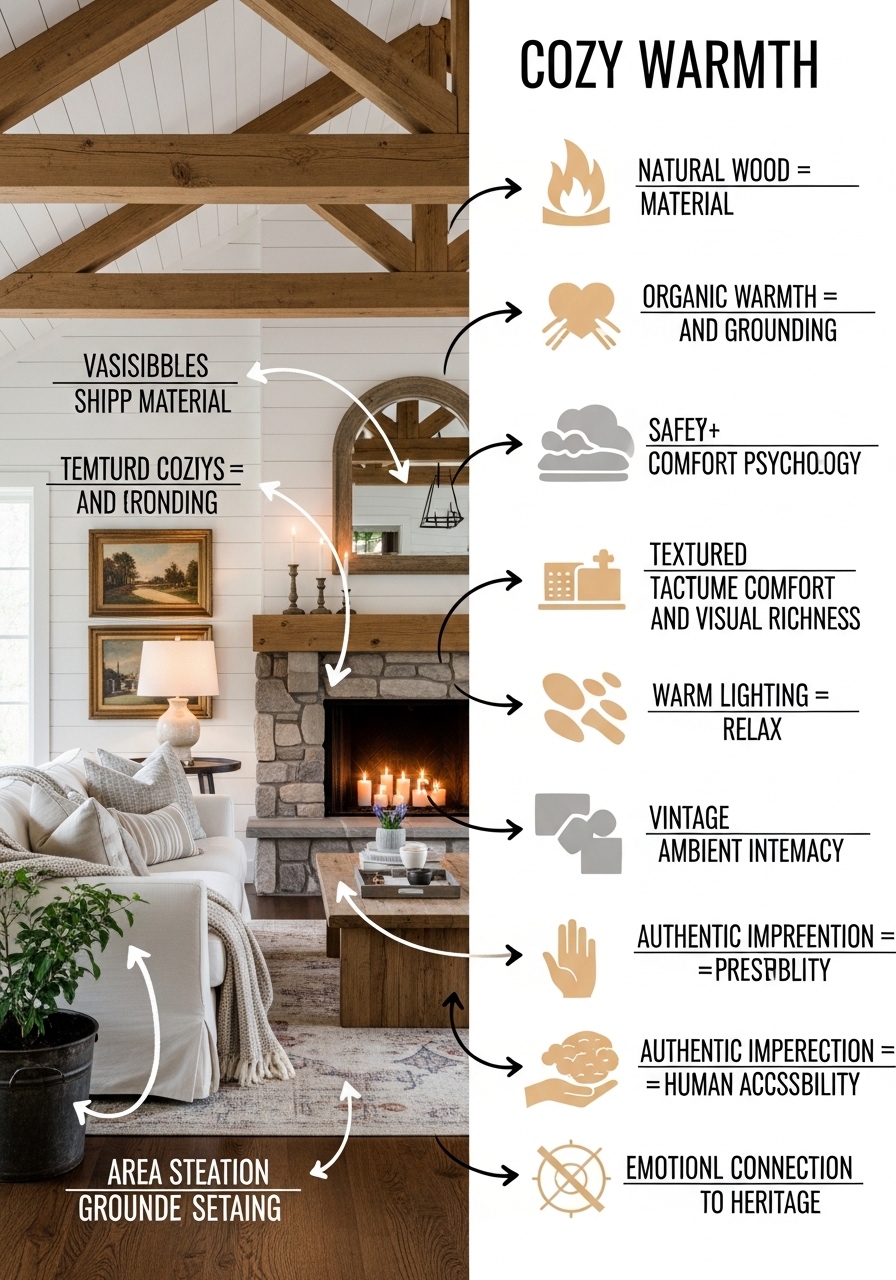
Farmhouse design naturally creates cozy and warm atmospheres through several interconnected design principles that work together to establish comfort and emotional resonance. Understanding why farmhouse style inherently feels inviting helps you intentionally incorporate these elements into your own living room design.
Natural Materials and Organic Warmth
Natural materials used throughout farmhouse living rooms—reclaimed wood, stone, linen, wool, and iron—carry inherent warmth and visual richness that man-made materials cannot replicate. Wood, in particular, serves as the heart of farmhouse design, providing warmth through its natural color variations, grain patterns, and aging characteristics. When you bring real wood into a space through flooring, ceiling beams, furniture, or wall treatments, you’re introducing an organic element that has been naturally warmed by time and use. This material authenticity creates psychological warmth that extends beyond temperature to include emotional comfort and a sense of grounding connection to nature and natural processes.
Texture and Tactile Comfort
Farmhouse design celebrates layered textures that encourage touch and create visual interest. Soft linens, chunky knit throws, woven baskets, distressed wood surfaces, and vintage textiles all contribute to a highly textured environment that feels inviting and comfortable. This emphasis on varied textures creates a sensory-rich environment where people naturally want to settle in and spend time. The visual richness of layered textures prevents spaces from feeling sterile or cold, instead establishing an environment that feels abundant, lived-in, and genuinely comfortable.
Warm Color Palettes
Farmhouse living rooms typically employ warm, neutral color palettes that include creams, warm whites, soft beiges, warm grays, and earthy tones inspired by natural landscapes. These colors reflect light warmly rather than coldly, creating an atmosphere of safety and comfort. Warm neutrals work particularly well in farmhouse design because they allow natural materials to shine while creating a cohesive, calming backdrop. Unlike stark white or cool gray palettes that can feel impersonal or clinical, warm neutrals in farmhouse spaces feel welcoming and approachable, inviting people to relax and be themselves.
Furniture Designed for Comfort and Use
Farmhouse furniture prioritizes comfort and functionality over formality or showcasing. Furniture pieces are typically substantial, well-made, and selected for their ability to be lived with rather than merely displayed. Oversized sofas with deep seating, comfortable armchairs, ottomans, and tables designed for gathering and use create spaces where people feel permission to be comfortable. This furniture approach stands in stark contrast to design styles where pieces are pristine, intimidating, or designed to be admired rather than used, which naturally creates tension and prevents genuine relaxation.
Authentic Imperfection and Aging
Farmhouse design celebrates the beauty of aging, wear, patina, and imperfection rather than demanding pristine newness. Distressed finishes, worn edges, visible repairs, and the marks of use create a space that feels authentic and lived-in rather than artificially perfect. This authenticity is psychologically comforting because it removes the pressure to maintain perfection and creates an environment where real life—with its messiness and imperfections—is welcome. This quality makes farmhouse spaces feel more human and accessible than design styles that demand perfection and preservation.
Intentional Lighting and Ambient Warmth
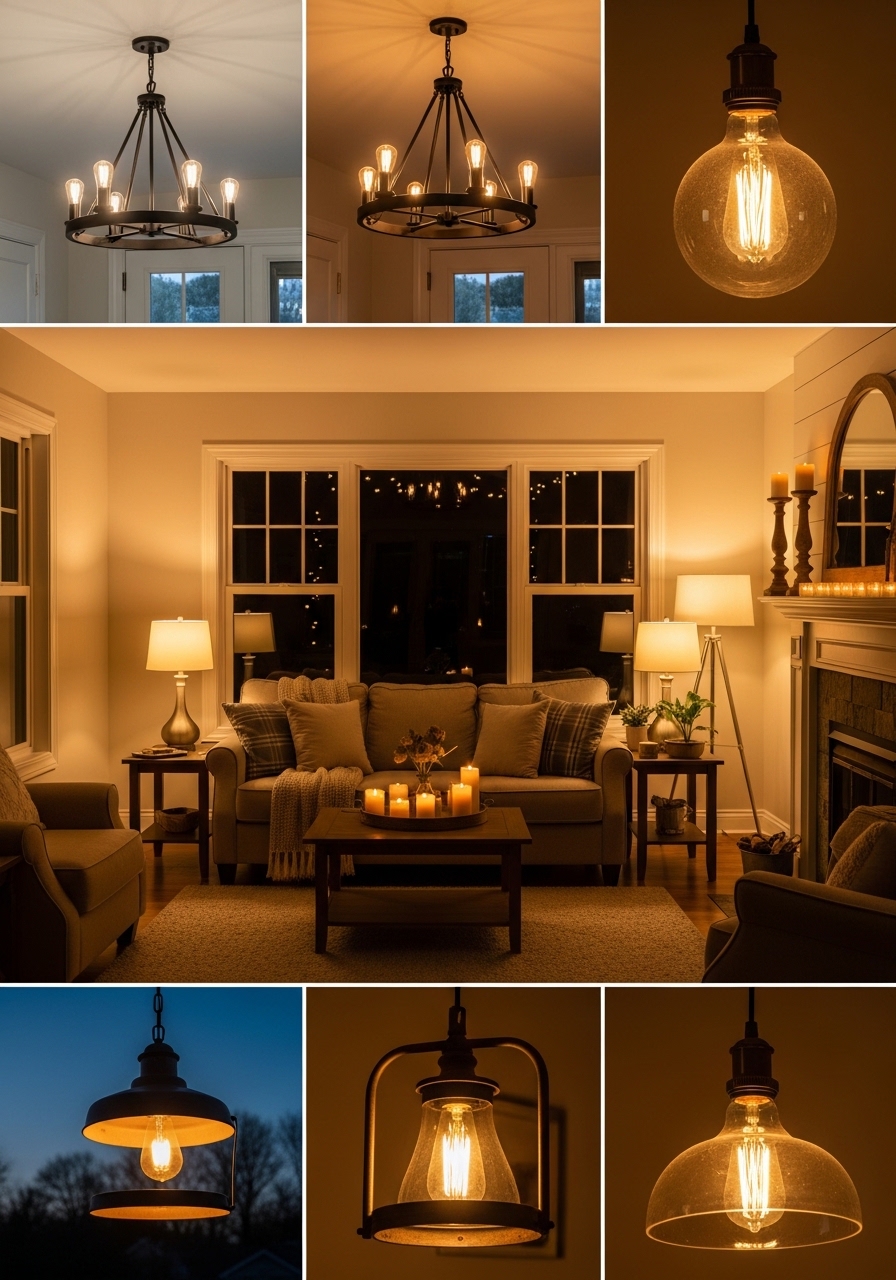
Farmhouse living rooms typically employ layered, warm lighting from multiple sources rather than relying on harsh overhead fixtures. Table lamps, floor lamps, candles, and string lights create ambient warmth and flexibility in lighting design. Warm-toned bulbs (2700K color temperature) further enhance the cozy atmosphere by providing light that mimics the warmth of natural fire and sunset. This approach to lighting creates an environment that feels safer, more intimate, and more conducive to relaxation and connection than bright, cold overhead lighting.
Visual Connection to Rural Heritage
The design elements used in farmhouse spaces—barn doors, vintage farm equipment, weathered wood, metal accents—carry cultural and historical associations with rural life, family heritage, and simpler times. These elements create a subconscious emotional connection to ideas of authenticity, self-sufficiency, family gathering, and enduring traditions. This emotional resonance contributes significantly to the cozy, warm feeling of farmhouse spaces because people respond positively to design that connects them to meaningful traditions and values.
Essential Farmhouse Living Room Color Palettes
Color selection forms the foundational layer of successful farmhouse design, influencing the overall warmth, tone, and character of your living room. Farmhouse color palettes work within a carefully curated range that emphasizes natural, neutral, and warm tones while remaining flexible enough for personal expression and variation.
Warm White and Cream Base Colors
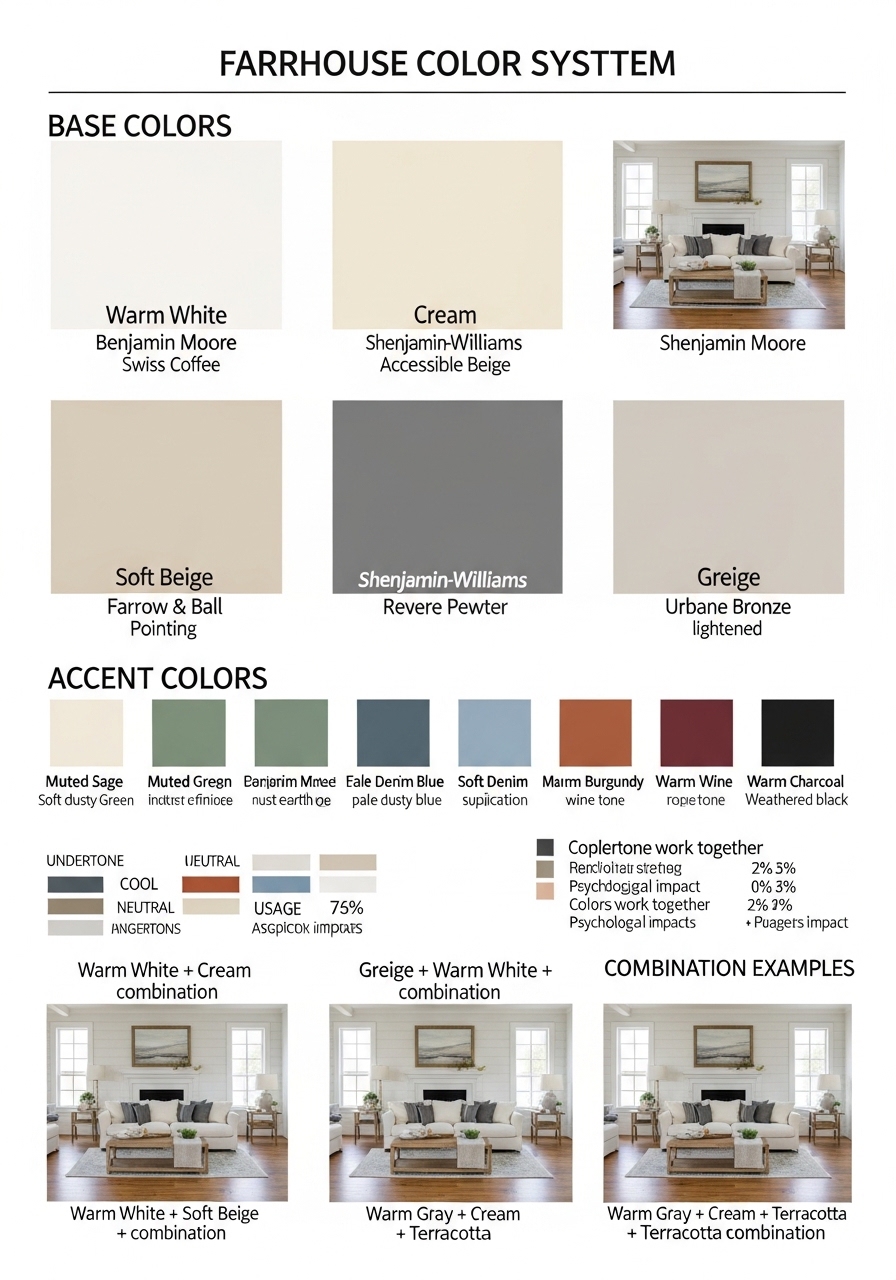
Warm whites and cream tones serve as the primary background color in most farmhouse living rooms, providing a neutral canvas that allows other design elements to shine while creating brightness and visual spaciousness. These colors differ significantly from stark white or cool white because they contain subtle undertones of yellow, beige, or warm gray that prevent a sterile feeling. Warm whites work particularly well in farmhouse design because they reflect natural light while maintaining visual warmth and preventing the cold, clinical appearance associated with bright white spaces. Paint colors that achieve this include Benjamin Moore’s “Swiss Coffee,” Sherwin-Williams “Alabaster,” or Farrow & Ball “Old White,” all of which provide warm white tones suitable for farmhouse living rooms.
Warm Gray and Greige Integration
Warm gray tones—particularly greige (a blend of gray and beige)—have become increasingly popular in farmhouse design because they bridge the gap between the neutrality of gray and the warmth of beige. These colors maintain the sophisticated simplicity of gray while adding the approachability and warmth that farmhouse design requires. Greige works beautifully as an accent wall color, for major furniture pieces, or as a secondary wall treatment that adds depth without creating visual harshness. Warm grays also work well for ceiling treatments, creating definition and visual interest while maintaining the cohesive farmhouse aesthetic.
Soft Beige and Tan Warmth
Soft beige and tan tones honor the farmhouse design’s connection to natural landscapes, weathered finishes, and earthy materials. These colors appear throughout farmhouse design in multiple applications—walls, large furniture pieces, flooring, and textiles—creating a naturally cohesive and grounded environment. Beiges work particularly well in farmhouse spaces because they feel organic and timeless while remaining flexible for accent color introduction. These warm earth tones create a visual connection to natural landscapes and agricultural heritage while maintaining the calm, inviting atmosphere essential to cozy farmhouse design.
Accent Colors: Muted and Earthy
While farmhouse color palettes remain predominantly neutral, carefully selected accent colors add depth and personality without disrupting the calm, cohesive foundation. Successful farmhouse accent colors include muted greens (soft sage, dusty olive, muted forest green), warm terracotta and rust tones, soft blues (pale denim, dusty slate blue), muted burgundy, and warm charcoal. These accent colors should feel like they’ve been naturally weathered by time and sun exposure rather than appearing bright or saturated. Accent colors work best when used in moderation—perhaps in a single accent wall, through textiles and decor, or via vintage-inspired artwork—rather than dominating the space.
Deep, Rich Accent Walls
Deeper accent colors in charcoal, navy, or weathered black create sophisticated contrast in farmhouse living rooms without disrupting the warm, inviting atmosphere. These deeper tones work beautifully as accent wall treatments behind a fireplace, on shiplap walls, or as a backdrop for displaying collections of vintage decor. The key to successfully implementing darker accent colors in farmhouse design is ensuring they feel weathered and authentic rather than harsh or modern, which maintains visual continuity with the overall aesthetic.
Color Psychology and Warmth
Warm colors in the yellow, orange, and red families naturally evoke feelings of warmth, comfort, and safety. Even when these colors appear in their most muted, desaturated forms in farmhouse design, they trigger positive emotional responses that contribute to the cozy, welcoming atmosphere. Layering multiple warm tones—warm whites, soft creams, beiges, and soft earth tones—creates a naturally harmonious and comforting environment where colors work together to reinforce the warmth theme rather than competing for attention.
Selecting and Styling Farmhouse Furniture
Farmhouse furniture selection balances aesthetic authenticity with practical comfort and modern functionality, emphasizing pieces that feel both timeless and genuinely livable. The right furniture choices establish the comfort and warmth that define successful farmhouse living rooms.
Sofas: Comfort and Generosity
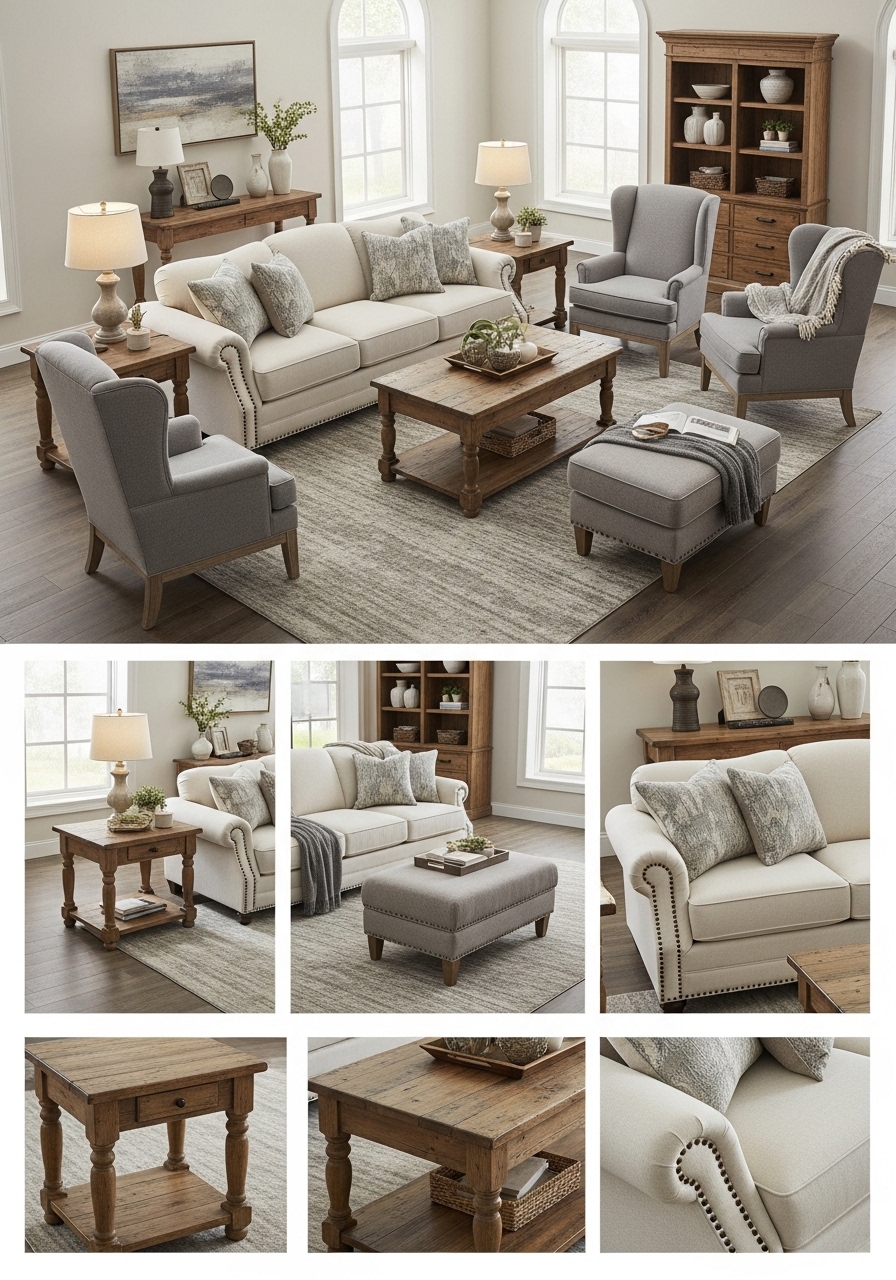
The sofa serves as the anchor furniture piece in most farmhouse living rooms, and selecting the right sofa is crucial to establishing comfort and warmth. Farmhouse sofas typically feature substantial frames, generous proportions, and deep seating that prioritizes comfort over minimal footprint. Look for sofas upholstered in natural fabrics like linen, cotton canvas, or weathered leather that can accommodate the lived-in aesthetic of farmhouse design. Neutral upholstery colors—cream, soft gray, warm beige, or soft white—create a cohesive foundation that allows textiles and decor to add visual interest without overwhelming the space.
Farmhouse sofas often feature rolled arms, nailhead trim, or simple straight-line designs that evoke vintage or antique furniture while utilizing modern construction methods that provide durability and comfort. Avoid sleek, contemporary sofas with minimal frame details or tight, modern upholstery styles, as these work against the farmhouse aesthetic. The sofa should invite sitting, lounging, and true relaxation rather than appearing formal or intimidating. Many farmhouse living rooms successfully incorporate vintage or antique sofas alongside modern reproductions that capture the aesthetic while providing contemporary comfort and durability.
Armchairs and Accent Seating
Layering comfortable armchairs throughout the farmhouse living room creates multiple zones for relaxation and conversation. Wingback chairs, club chairs, and simple wooden frame chairs upholstered in natural fabrics work beautifully in farmhouse spaces. These pieces should feel substantial and well-made rather than delicate or modern. Pairing upholstered chairs with occasional wooden frame chairs creates visual variety while maintaining aesthetic cohesion. Upholstery fabrics in cream, soft gray, soft blue, or subtle patterns like linen stripes or classic ticking add texture and interest while remaining appropriate for the farmhouse aesthetic.
Coffee Tables and Side Tables
Tables in farmhouse living rooms should showcase natural wood, showcase authentic vintage materials, or demonstrate simple, functional designs inspired by country furniture traditions. Reclaimed wood coffee tables, simple wooden tables with turned legs, or vintage-inspired designs with visible wood grain and natural patina work beautifully as central gathering pieces. Metal accents—iron bases, hardware, or frame details—complement wood nicely and add industrial farmhouse elements. Tables should feel substantial and well-made rather than lightweight or trendy, with visible construction details that showcase craftsmanship.
Side tables, console tables, and smaller accent tables throughout the farmhouse living room should coordinate with the coffee table in terms of material and style while allowing for variety in wood tones and finishes. These surfaces provide functional space for lamps, decor, and everyday items while contributing to the layered, collected aesthetic that makes farmhouse rooms feel authentic and personal.
Storage Solutions and Case Goods
Farmhouse design celebrates visible storage and display rather than minimizing visible belongings. Wooden cabinets, shelving units, bookcases, and hutch-style pieces provide functional storage while adding architectural interest and visual warmth. Reclaimed wood finishes, weathered surfaces, and pieces that show their age and use are particularly authentic choices for farmhouse living rooms. Storage pieces should feel like they’ve earned their place through generations of use rather than appearing as purposeful design additions.
Ladder shelves, open shelving with bracket details, and built-in cabinetry provide storage options that showcase farmhouse aesthetic principles. These pieces work best when filled with a combination of functional items and decorative collections displayed in a curated but not fussy manner. The farmhouse approach to storage celebrates what you own and use rather than hiding everything away, creating an environment that feels authentic and personal.
Textiles: Layers of Comfort
Throws, pillows, blankets, and upholstered pieces in varied natural fabrics create the layered texture and comfort essential to cozy farmhouse design. Linen, cotton, wool, and vintage textiles introduce softness and visual richness while reinforcing the natural material foundation of the style. Neutral colored textiles with subtle patterns—stripes, checks, florals, or solid weaves—create visual interest without overwhelming the space. Mixing textures (smooth linen with chunky knit, soft cotton with structured canvas) creates a sophisticated and inviting layering that encourages comfort and relaxation.
Architectural Elements and Wall Treatments
Architectural elements significantly influence the character and authenticity of farmhouse living rooms, with wall treatments playing a particularly important role in establishing visual warmth and timeless appeal.
Shiplap and Vertical Paneling
Shiplap—wooden planks joined with overlapping edges—represents one of the most iconic elements of farmhouse design. Shiplap creates visual warmth through visible wood grain, texture, and the sense of authenticity that comes with traditional building materials. Shiplap works beautifully on accent walls behind fireplaces, on ceilings for architectural interest, or as a complete wall treatment that creates dramatic visual impact. Painted shiplap (typically in warm white or cream) maintains the texture benefits while creating a clean, bright aesthetic, while natural wood shiplap (stained or finished to show wood grain) emphasizes the material authenticity. Shiplap successfully bridges rustic and contemporary aesthetics, making it highly versatile for farmhouse living room design.
Vertical paneling, beadboard, and board-and-batten treatments offer alternatives to shiplap that provide similar visual warmth and architectural interest while offering different aesthetic expressions. These treatments work particularly well when combined with wainscoting or as accent wall features that create architectural definition without overwhelming the entire room.
Exposed Wood Beams and Ceiling Details
Exposed wood beams—whether authentic reclaimed beams or modern reproductions that evoke traditional farm architecture—create dramatic architectural interest and visual warmth while reinforcing the natural material emphasis of farmhouse design. Beams work beautifully in rooms with higher ceilings, creating visual interest while drawing the eye upward and creating a sense of spaciousness. The warm tones and visible grain patterns of wooden beams introduce organic texture that makes spaces feel more inviting and less sterile than smooth drywall ceilings.
Coffered ceilings, tray ceilings, or simple wooden ceiling treatments create architectural dimension and visual interest while maintaining the natural material foundation of farmhouse design. Even in rooms without structural beams, using wooden planks or boards to create the appearance of traditional beam work adds architectural authenticity and visual warmth.
Fireplace as Focal Point
Fireplaces serve as natural focal points in farmhouse living rooms, providing both functional warmth and visual interest. Stone, brick, or shiplap fireplace surrounds create authentic texture and visual warmth. Wooden mantels—whether reclaimed, antique, or reproduction—provide display space and warm architectural interest. Fireplace design should emphasize natural materials and authentic detailing rather than modern minimalism, with fireplace surrounds showcasing the material beauty of wood, stone, or brick rather than appearing slick or contemporary.
Accent Wall Design
Accent walls in deeper colors, different textures, or visual interest patterns create dimension and focus in farmhouse living rooms. Successful accent walls typically feature shiplap, paneling, stone, brick, or a deeper paint color that contrasts subtly with surrounding walls while maintaining the warm, cohesive aesthetic. The most common accent wall location is behind the sofa or fireplace, where the visual interest naturally draws the eye and becomes a design feature rather than appearing arbitrary.
Lighting Design for Warmth and Ambiance
Lighting design profoundly influences the warmth and coziness of farmhouse living rooms, with layered, warm lighting creating the inviting atmosphere essential to the style.
Warm Bulb Temperature Selection
Color temperature significantly impacts perceived warmth in interior spaces. Warm white bulbs (2700K color temperature) provide light that mimics natural candlelight or sunset, creating an innately cozy and inviting atmosphere. Avoid cool white (4000K) or daylight (5000K) bulbs in farmhouse living rooms, as these cooler tones make spaces feel more clinical and less inviting. All lighting fixtures in farmhouse living rooms should utilize warm white bulbs throughout, creating visual and emotional consistency that reinforces the cozy, warm aesthetic.
Layered Lighting Approach
Farmhouse living rooms should incorporate multiple light sources at different levels—overhead fixtures for general illumination, table lamps for task and ambient lighting, and accent lighting for highlighting specific elements or creating intimate zones. This layering approach provides flexibility in ambiance creation and ensures that spaces don’t rely on harsh overhead lighting that creates unflattering shadows and diminishes coziness. Dimmers on multiple light sources allow for adjusting light levels to create different moods throughout the day and evening, enhancing the warmth and comfort of the space.
Fixture Styles and Materials
Light fixtures in farmhouse spaces should emphasize natural materials, vintage inspiration, or simple designs that showcase craftsmanship. Pendant lights with metal shades, vintage-inspired glass fixtures, wrought iron chandeliers, and simple wooden frame lamps all work beautifully in farmhouse design. Avoid ultra-modern fixtures with chrome, brushed nickel, or minimalist designs that conflict with the warm, traditional aesthetic. Fixture materials should align with the farmhouse material palette—iron, brass, wood, glass, and ceramic all work beautifully—creating visual continuity throughout the space.
Candles and Ambient Lighting
Candles play a special role in farmhouse design, providing soft, warm light that enhances coziness and authenticity. Grouping pillar candles in varying heights, incorporating candles in decorative candlesticks throughout the living room, and using flameless candles (particularly in high-traffic areas) creates ambient warmth and visual interest. Candle scents—vanilla, lavender, cedarwood, or other natural scents—enhance the sensory experience of the farmhouse living room, contributing to the overall cozy and inviting atmosphere.
Decor and Styling Elements
Farmhouse decor transforms the foundational elements of color, furniture, and architecture into a cohesive, personal living space that reflects authentic style and warmth.
Vintage and Antique Accessories
Genuine vintage and antique pieces bring authenticity, stories, and character to farmhouse living rooms. Vintage signage, antique farm tools, old books, vintage textiles, and period-appropriate accessories create a lived-in aesthetic that feels collected over time rather than purchased to match a design scheme. These pieces work best when displayed with intentionality but without excessive curation—the goal is creating an environment that feels like a real home where meaningful items have accumulated through time and use rather than appearing staged or overly decorated.
Artwork and Wall Displays
Farmhouse artwork emphasizes landscapes, botanical prints, vintage advertising, family photography, and rustic scenes that connect to rural heritage and natural beauty. Gallery walls combining vintage frames with prints, photography, and mixed media create visual interest while celebrating the aesthetic of collected art over time. Simple wooden frames, black frames, or ornate vintage frames all work well depending on the specific aesthetic and other decor choices. Artwork should feel authentic and meaningful rather than selected primarily to match color schemes or appear trendy.
Collections and Display
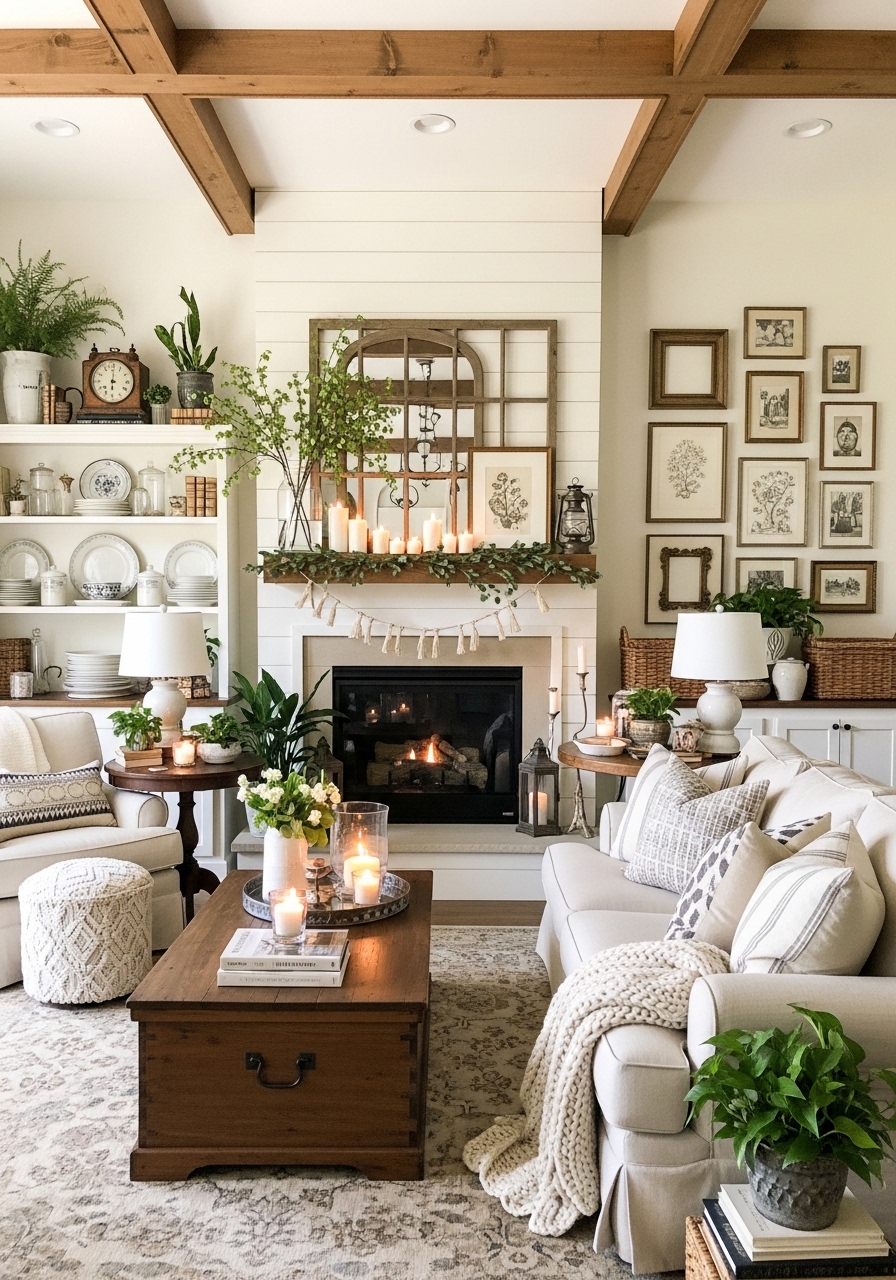
Farmhouse design celebrates visible collections—vintage dishware, glass bottles, old cookbooks, vintage linens, architectural salvage—displayed in open shelving, on mantels, in glass cabinets, or integrated throughout the living room. These collections should feel curated but not precious, suggesting genuine passion for collected items rather than decoration selected primarily for visual impact. Displaying collections in groupings rather than scattered individual pieces creates visual cohesion and allows for telling stories about collected items.
Textiles: Throws, Pillows, and Rugs
Layered textiles create comfort, warmth, and visual interest essential to cozy farmhouse design. Throws draped over sofas and chairs invite relaxation and add texture, while decorative pillows in varying sizes, patterns, and textures create visual richness and comfort. Area rugs, runners, and layered rugs ground furniture groupings and add warmth to wood flooring. Textile patterns should work within the farmhouse aesthetic—stripes, checks, botanical prints, subtle florals, or solid natural weaves—rather than introducing bold modern patterns that conflict with the timeless design approach.
Greenery and Natural Elements
Fresh plants, dried flowers, branches, and natural elements bring life and organic beauty to farmhouse living rooms. Potted plants in vintage containers, branches in large vases, dried wheat or cotton in arrangements, and window herb gardens all introduce natural elements that reinforce the connection to rural heritage and natural beauty. These living elements also improve air quality and create a sense of connection to nature that enhances the warmth and wellness aspects of the farmhouse aesthetic.
Mirrors for Light and Spaciousness
Vintage or ornate mirrors reflect light and create the illusion of spaciousness while adding visual interest. Mirrors with interesting frames—wooden, metal, ornate, or distressed finishes—become decor elements rather than purely functional items. Leaning large mirrors against walls or hanging mirrors strategically amplifies natural light and creates the sense of expanded space, enhancing the bright, inviting quality of farmhouse living rooms.
Creating Cozy Zones and Functional Spaces
Successful farmhouse living rooms prioritize functionality and comfort through thoughtful space planning that creates designated zones for different activities and ensures the room genuinely serves family needs.
Seating Arrangements for Conversation
Arrange furniture to facilitate conversation and connection rather than orienting all seating toward a television. Grouping sofas and chairs to face each other or create an angle encourages interaction and creates intimate conversation zones. Multiple seating options throughout the room—not all furniture focused on a single media viewing arrangement—creates a more versatile, livable space that adapts to various activities and gatherings.
Also Read: Living Room Lighting Ideas to Set the Perfect Mood Every Night
Reading Nooks and Relaxation Corners
Dedicated reading nooks featuring comfortable seating, good lighting, storage for books, and adjacent tables for setting down drinks and personal items create spaces specifically designed for quiet relaxation. These nooks often occupy window seats, corner areas, or spaces adjacent to fireplaces, utilizing less central real estate while creating highly functional and cherished personal spaces. Adding soft textiles, good reading light, and accessibility to books makes these nooks genuinely usable rather than purely decorative.
Family Entertainment Zones
Farmhouse living rooms should comfortably accommodate the actual entertainment and gathering activities that families engage in while maintaining design integrity. Thoughtfully positioning a television (using a decorative media console or hiding it in farmhouse-style cabinetry) creates a functional entertainment zone without allowing the television to dominate the room’s aesthetic or force all furniture orientation around it. Creating distinct zones for television viewing versus conversation ensures the room serves multiple purposes and remains comfortable for various activities.
Workspace Integration
Modern farmhouse living rooms often integrate subtle workspace elements—a desk positioned against a wall, a console table with office supplies, or a hutch with work surfaces—acknowledging that contemporary living often requires flexible spaces that serve multiple functions. These workspace elements should integrate seamlessly into the farmhouse aesthetic rather than appearing as office furniture that disrupts the design scheme.
Flooring and Foundation Elements
Flooring selections significantly influence the warmth and character of farmhouse living rooms, establishing the foundation upon which all other design elements rest.
Hardwood Flooring
Wide-plank hardwood flooring showcases the natural beauty of wood while creating visual warmth and authenticity essential to farmhouse design. Light to medium wood tones (oak, hickory, or similar species in natural or honey stains) create warmth without the coldness of very dark woods. Visible grain patterns, natural variations, and evidence of the wood’s character enhance authenticity. Hand-scraped or distressed finishes evoke aged wood and add visual interest that newer, perfectly smooth finishes lack. Hardwood flooring provides warmth underfoot and a feeling of quality and permanence that supports the timeless aspect of farmhouse design.
Concrete with Character
Polished concrete, stained concrete, or concrete with rustic finishes provides an alternative foundation that works beautifully in farmhouse spaces, particularly those incorporating industrial farmhouse elements. Concrete’s durability and authentic material quality align well with farmhouse values, while finishes that create visual interest and warmth prevent cold, institutional appearances.
Area Rugs for Layering
Area rugs layered over primary flooring create visual warmth, define spaces, and introduce textile comfort to seating areas. Jute rugs, sisal rugs, or wool rugs in neutral tones with simple patterns work beautifully in farmhouse spaces. Layering multiple rugs or using runners creates visual interest and practicality while adding the texture that makes farmhouse spaces feel inviting and lived-in.
Common Mistakes to Avoid in Farmhouse Design
Understanding common pitfalls helps you navigate farmhouse design more successfully and avoid choices that undermine the cozy, warm, timeless aesthetic.
Over-Decorating and Excess
Farmhouse design celebrates authenticity and simplicity, not excessive decoration or cluttered abundance. Too many decor items, overwhelming visual busyness, or trying to incorporate too many styles and colors simultaneously disrupts the cohesion and warmth that make farmhouse spaces appealing. Instead, curate choices thoughtfully, allowing space to breathe while creating visual interest through layering and authentic collections rather than abundance.
Choosing Modern or Sleek Elements
Incorporating ultra-modern furniture, minimalist design elements, chrome fixtures, or sleek contemporary pieces disrupts farmhouse aesthetic cohesion. Every element should work within the warm, traditional, natural material framework of the style. This doesn’t mean everything must be vintage or antique, but modern reproduction pieces should capture farmhouse aesthetic principles rather than introducing conflicting modern design language.
Using Cool Color Palettes
Cool whites, cool grays, cool blues, or cool undertones throughout the space reduce warmth and undermine the cozy, inviting atmosphere essential to farmhouse design. Stick firmly to warm color palettes, warm paint undertones, and warm lighting to create the consistent warmth that defines successful farmhouse living rooms. Every color choice should reinforce rather than contradict the warmth theme.
Ignoring Quality and Construction
Choosing poorly made furniture, thin materials, or construction shortcuts undermines the farmhouse emphasis on quality, durability, and items worth keeping long-term. Invest in well-made pieces that showcase visible craftsmanship, quality materials, and construction that will withstand daily use. Authentic farmhouse design celebrates pieces that improve with age and use rather than those that appear disposable.
Creating Sterile, Staged Spaces
Farmhouse design celebrates lived-in authenticity, not sterile perfection or spaces that appear staged for photographs. Allowing spaces to show signs of use and real life—worn furniture, displayed books and collections, evidence of actual living—creates warmth and authenticity that pristine, perfectly curated spaces lack. The goal is creating a home where people genuinely live and gather, not a showroom that appears untouched by real life.
Mixing Too Many Patterns and Styles
While farmhouse design embraces variety and layering, mixing too many incompatible patterns, styles, or aesthetic directions creates visual chaos rather than cohesive warmth. Establish a clear stylistic direction—traditional farmhouse, modern farmhouse, industrial farmhouse, coastal farmhouse—and make choices that work within that framework. Patterns should coordinate rather than compete, and style mixing should feel intentional rather than haphazard.
Neglecting Functional Comfort
Prioritizing appearance over genuine comfort undermines the fundamental philosophy of farmhouse design. Furniture that looks great but feels uncomfortable, seating arrangements that don’t facilitate actual use, or decor choices that make the space difficult to live in contradict the farmhouse emphasis on livability and comfort. Every choice should enhance both the aesthetic and the actual functionality and comfort of the space.
Quick Answer: How to Create Cozy Farmhouse Living Rooms
To create a cozy farmhouse living room, start with warm neutral colors (creams, warm whites, soft beiges), select substantial comfortable furniture in natural fabrics, incorporate visible wood elements and natural materials, layer warm lighting from multiple sources, add texture through textiles and architectural elements like shiplap, showcase collections and vintage pieces thoughtfully, and ensure every choice prioritizes genuine comfort and warmth over styled perfection.
Frequently Asked Questions
What are the main characteristics that make a living room feel farmhouse style?
Farmhouse living rooms feature natural materials (especially wood), warm neutral color palettes, comfortable substantial furniture, visible architectural details (shiplap, beams, fireplaces), vintage or antique accessories, layered textiles, warm lighting, and an overall aesthetic that prioritizes authenticity and comfort over trendy styling or formal design. The style celebrates the beauty of aging, natural imperfection, and items that appear to have accumulated through genuine living rather than being selected for matching a color scheme.
How do I make a farmhouse living room feel warm without it looking dated?
The key to maintaining timeless warmth without dating your space is choosing classic elements that endure: natural materials, neutral color palettes, quality construction, and authentic design principles rather than trendy interpretations. Modern farmhouse design successfully bridges traditional farmhouse charm with contemporary comfort through updated furniture silhouettes, quality modern reproductions that capture the aesthetic, and contemporary functionality integrated thoughtfully. Focus on principles rather than specific trend manifestations, allowing your space to evolve as styles shift while maintaining the core warmth and character.
What’s the best color palette for a cozy farmhouse living room?
Warm neutral color palettes work best: warm whites, creams, soft beiges, warm grays, and greige as primary colors, with subtle accent colors in muted greens, soft blues, terracotta, or warm charcoal. This palette creates visual warmth and cohesion while remaining flexible for personal expression. Avoid cool tones, bright saturated colors, or stark white that reduce warmth and coziness, instead leaning toward colors that appear naturally weathered and inspired by landscapes and natural materials.
Can I incorporate farmhouse style in a small living room?
Absolutely. Farmhouse design works beautifully in small spaces through thoughtful furniture scale selection, focusing on vertical space with shelving and wall treatments, using light colors to create visual spaciousness, and prioritizing quality over quantity in decor. Open shelving, mirrors, and good lighting make small farmhouse spaces feel larger and more inviting. The core principles of warmth, comfort, and authenticity apply regardless of square footage, and many small farmhouse spaces feel more intimate and cozy than larger versions.
What furniture pieces are essential for farmhouse living room design?
Essential pieces include a comfortable sofa or seating arrangement, side or accent tables in natural materials, storage solutions that showcase farmhouse aesthetic (cabinets, shelving, hutches), adequate lighting fixtures, and area rugs that define seating areas and add warmth. Quality matters more than quantity—a well-chosen sofa in natural upholstery with good construction creates more authentic farmhouse style than numerous trendy pieces. Add layered textiles, a focal point like a fireplace or shiplap wall, and functional accessories that support actual living.
How important is lighting in farmhouse living room design?
Lighting is absolutely critical to creating the cozy, warm atmosphere essential to farmhouse design. Warm-toned bulbs (2700K), layered lighting from multiple sources, dimmers for ambiance adjustment, and fixture styles that align with natural materials and traditional aesthetics all contribute significantly to the overall effect. Poor lighting choices can undermine even excellent furniture and decor selections, while thoughtful lighting design enhances warmth and invites genuine relaxation and comfort.
Should I use real antique pieces or modern reproductions in farmhouse design?
Both work beautifully when chosen thoughtfully. Authentic antique and vintage pieces bring genuine history and character, while quality modern reproductions that capture farmhouse aesthetic allow for better functionality, durability, and consistency. Many successful farmhouse living rooms blend both—incorporating authentic vintage finds alongside reproduction pieces that provide contemporary comfort and reliability. The key is ensuring that whatever you choose aligns with farmhouse design principles and quality standards rather than mixing genuine vintage with poor-quality reproductions.
Can I incorporate a television in farmhouse living room design without it dominating the aesthetic?
Yes, by positioning the television thoughtfully and housing it within furniture that aligns with farmhouse aesthetic. Decorative media consoles, built-in cabinetry, or hutch-style pieces in natural wood can accommodate televisions without creating the visual focus of modern entertainment-first room arrangements. Alternatively, arrange furniture to create conversation-focused zones as primary seating, with television viewing as a secondary activity rather than the space’s organizing principle. This approach maintains farmhouse warmth and authenticity while accommodating contemporary entertainment needs.
Conclusion
Creating a farmhouse living room that genuinely feels cozy, warm, and timeless requires understanding the design principles that underlie the style and making intentional choices that reinforce these principles throughout your space. Farmhouse design succeeds not through trendy shortcuts or surface-level aesthetic adoption, but through committing to natural materials, warm color palettes, quality construction, authentic details, and a philosophy that prioritizes genuine comfort and livability over styled perfection.
Your farmhouse living room should feel like a gathering place where families and friends naturally want to spend time, where comfort is prioritized alongside beauty, and where the design elements create an atmosphere of warmth, safety, and belonging. This atmosphere develops through the accumulation of thoughtful choices—from the warm whites you select for walls to the comfortable sofa you invest in, from the layered lighting that creates ambient warmth to the meaningful collections you display. Every element works together to establish an environment that feels both deeply personal and timelessly beautiful.
The farmhouse aesthetic endures because it celebrates authenticity, craftsmanship, natural materials, and the warmth of true comfort—values that remain eternally appealing regardless of how design trends shift around them. By focusing on these core principles rather than chasing temporary style manifestations, you create a living room that brings genuine joy, comfort, and beauty to your home while developing character and richness that actually improves with time and use.
Begin your farmhouse living room design by establishing your warm color palette, investing in a quality comfortable sofa, introducing natural materials and architectural interest, and building your space thoughtfully from these foundations. Add meaningful decor, warm lighting, and personal touches that reflect your family’s values and lifestyle. The result will be a cozy, warm, and genuinely timeless living room—a true farmhouse retreat where real life happens and memories are created.