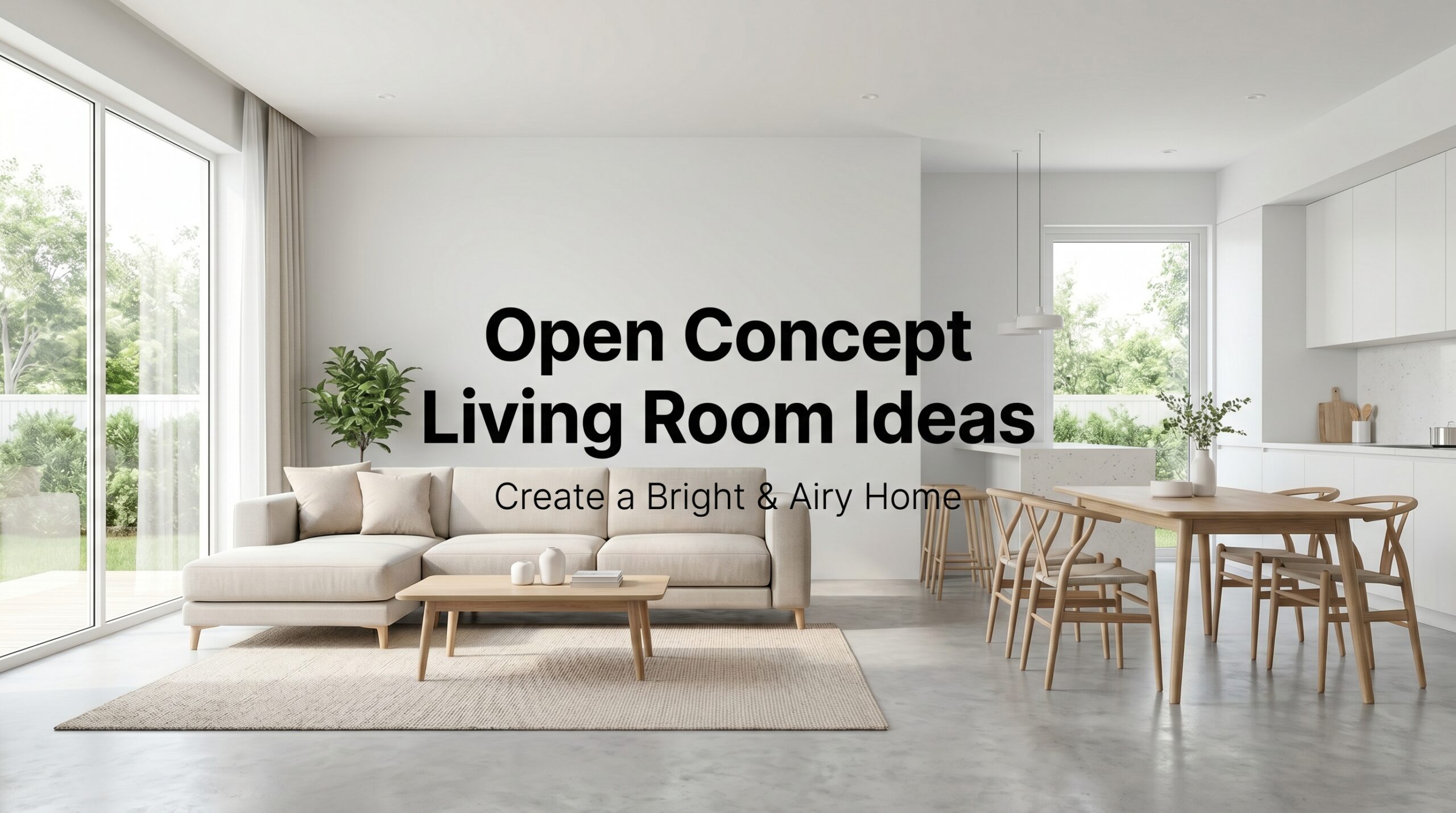
Open Concept Living Room Ideas for a Bright and Airy Home
You’ve finally moved into that dream home with the soaring ceilings and the combined kitchen-living space, but instead of feeling spacious, it feels like a chaotic warehouse. You’re constantly tripping over the transition from the sofa to the dining table, and the echo is driving you crazy. You aren’t alone taming a large, open space is one of the biggest challenges for homeowners. Open concept living room ideas are not just about buying new furniture; they are about creating distinct “zones” that flow seamlessly together without walls.
In this guide, we are going to transform your sprawling space into a functional, cozy sanctuary. You will learn exactly how to use interior design tricks like rug placement, color blocking, and strategic lighting to define areas while keeping that signature airy feel. By the end of this article, you’ll have a blueprint to refresh your living space that looks like it was curated by a professional designer. Get ready to turn your suburban home or city apartment into a Pinterest-worthy haven.
Why This Topic Matters
In American homes, the open floor plan has been the gold standard since the 1970s, merging the kitchen, dining, and living areas into one “Great Room.” However, a recent Houzz & Home survey revealed that 62% of homeowners with open layouts struggle with “acoustic chaos” and a lack of defined purpose for different areas. Without walls, home styling becomes a puzzle of visual cues.
Mastering open concept living room ideas is crucial because it directly impacts how you live. A well-zoned space encourages conversation while allowing someone to cook in peace. It’s the difference between a room that feels cold and empty and one that feels aesthetic and inviting. This isn’t just decorating ideas; it’s about organizing your life in a way that maximizes square footage and natural light.
Also Read: Small Living Room Ideas That Make Your Space Look Twice
1. The Art of Zoning: Defining Spaces Without Walls
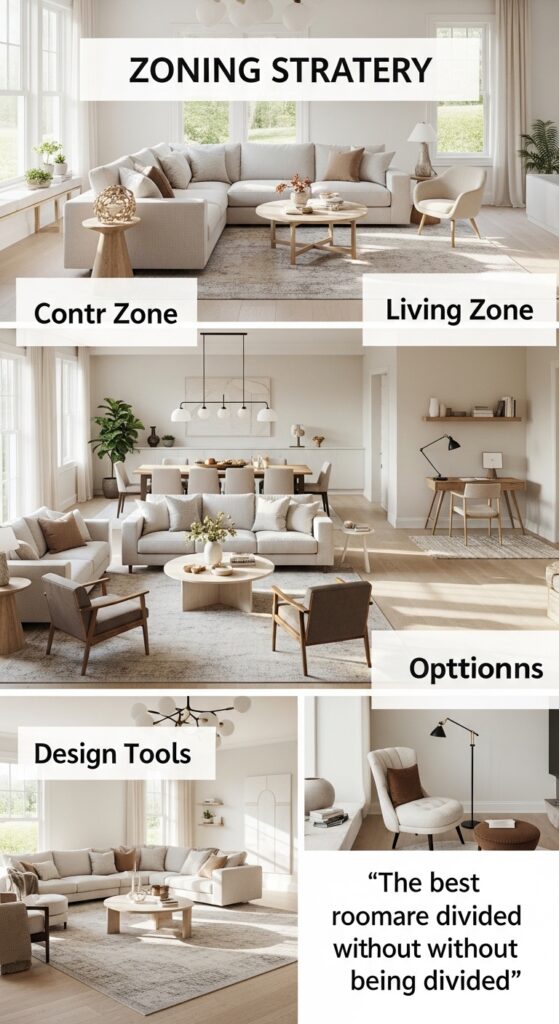
The biggest mistake in open concept homes is treating the whole area as one giant room. You need to create “rooms within a room.” The most effective way to do this is by using area rugs to anchor specific zones.
The Rule: Use a large rug (8×10 or 9×12) for the living area, ensuring the front legs of your sofa and chairs sit on it. This visually separates the lounge from the dining or kitchen zone. If your living room is near the kitchen, use a console table or a low bookshelf as a visual divider. This creates a “landing strip” for traffic without blocking light.
Product Suggestion:
- Budget: Look for a durable polypropylene rug like the IKEA LOHALS or a jute blend from Amazon for under $150.
- Premium: A hand-knotted wool rug from Pottery Barn or West Elm adds softness and clearly defines the luxury living zone.
How-To Tip: Use painter’s tape on the floor to outline your rug and furniture placement before you buy. Live with it for a day to see if the flow works.
Pro Designer Secret: If you have a fireplace, it is your natural anchor. Arrange furniture facing it. If you don’t have one, create a focal point with a large piece of art or a built-in media wall to signal “this is the living zone.”
2. Color Palettes That Breathe: Keeping It Light and Bright
Dark colors absorb light, which is the enemy of an open concept space. To maintain that airy vibe, you need a color strategy that reflects light rather than soaking it up.
The Strategy: Stick to a “warm white” or greige (grey-beige) for the majority of your walls. This creates a seamless backdrop. You can add depth by painting the adjacent dining area or kitchen island a slightly darker shade (like sage green or dusty blue), but keep the living area light.
Monochromatic Magic: Using different shades of the same color (e.g., cream sofa, ivory walls, beige rug) creates a sophisticated, expansive look. It tricks the eye into thinking the room is larger than it is.
Product Suggestion:
- Budget: Behr or Sherwin-Williams “Alabaster” or “Agreeable Gray” are perfect, affordable wall paints available at Home Depot.
- Premium: Farrow & Ball “Wimborne White” offers a high-end, warm undertone that looks incredible in natural light.
How-To Tip: Test paint samples on poster board and move them around the room at different times of day. Don’t just look at them on the wall; see how they look next to your floor and furniture.
Pro Designer Secret: Paint your baseboards the same color as your walls (or just a shade darker). This blurs the lines between wall and floor, making the ceiling look higher and the room feel bigger.
3. Furniture Placement: The “Floating” Technique
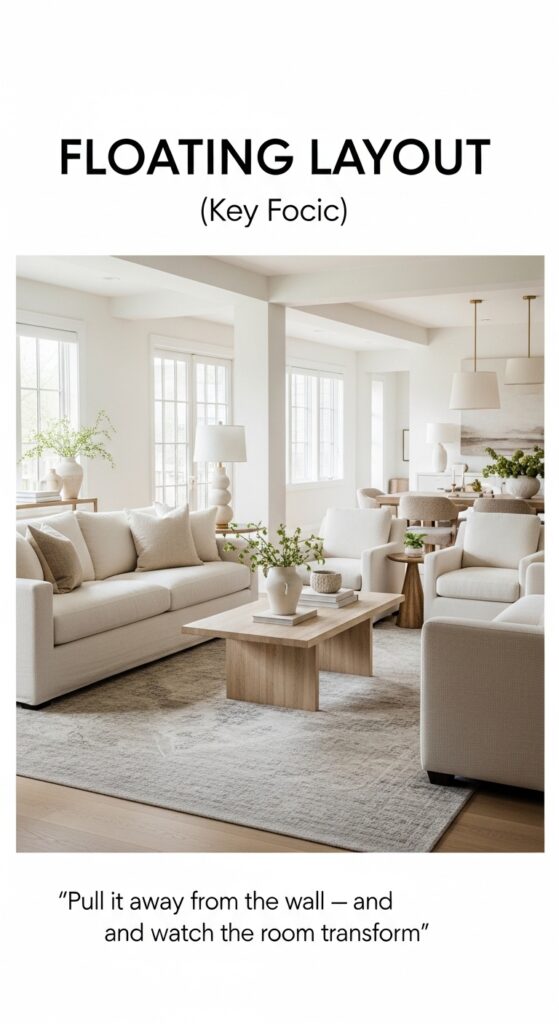
In American homes, we often push all furniture against the walls out of habit. In an open concept layout, this kills the intimacy. You need to pull furniture away from the walls to create a conversation area.
The Floating Sofa: Place your sofa 3–12 inches off the wall. This allows light to flow behind it and makes the room feel deeper. If the back of the sofa is visible, use a “console table” behind it. This acts as a sofa table for lamps and drinks, making the furniture look intentional rather than lost in space.
Product Suggestion:
- Budget: A slim, oak wood console table from Target’s Threshold line or Wayfair works perfectly.
- Premium: A marble or brass topped console from CB2 or Anthropologie adds a touch of glamour.
How-To Tip: If you have a sectional, use a low-profile coffee table to keep sightlines open. Avoid bulky, heavy tables that block the view of the TV or fireplace.
Pro Designer Secret: Arrange seating in a “U” shape or an “H” shape (two sofas facing each other) to encourage conversation without blocking the walkway to the kitchen.
4. Lighting Layers: The Invisible Walls
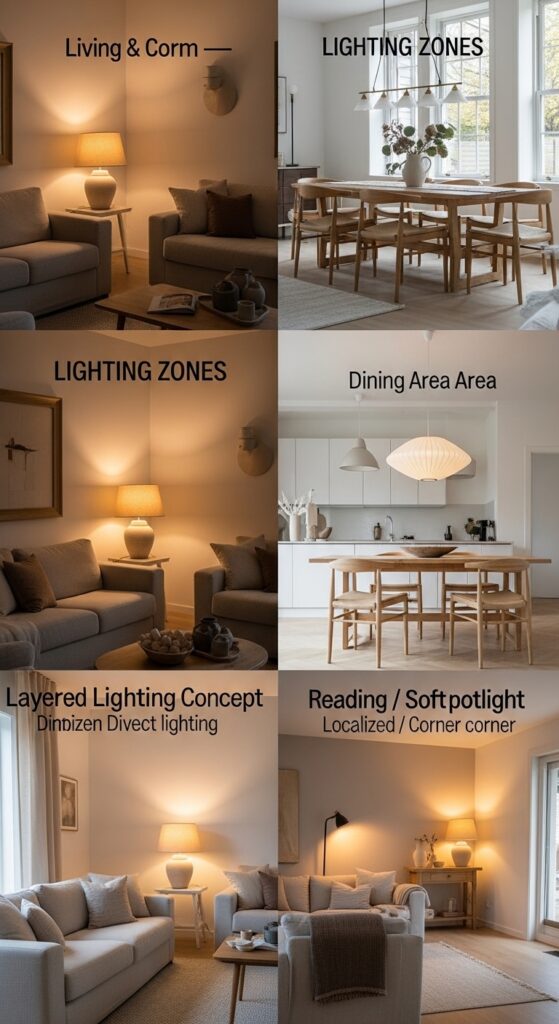
Lighting is the most powerful tool for zoning. In open floor plans, you can’t rely on one overhead light. You need layers: Ambient (general), Task (reading/cooking), and Accent (decorative).
The Living Zone: Use a statement chandelier or pendant over the coffee table to anchor the space. Then, add floor lamps in corners to create pools of light that make the space feel cozy rather than cavernous.
The Kitchen Zone: Under-cabinet lighting and pendants over the island define the cooking area without walls.
Product Suggestion:
- Budget: Arc floor lamps from Walmart or Amazon provide task lighting without taking up floor space.
- Premium: A linen drum shade pendant from Restoration Hardware diffuses light beautifully for a soft, aesthetic glow.
How-To Tip: Install dimmer switches on all your lights. This allows you to lower the lights for a movie night (cinema vibe) or brighten them for a party.
Pro Designer Secret: Use warm bulbs (2700K) in the living area and slightly cooler bulbs (3000K-3500K) in the kitchen/work zones to subtly differentiate the spaces.
5. Texture and Natural Materials: Adding Warmth
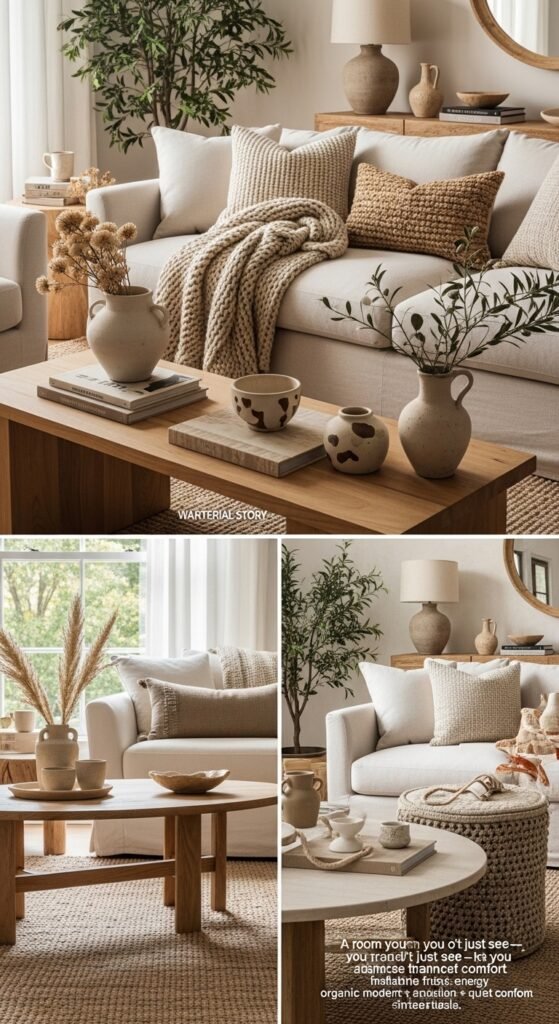
An all-white, minimalist open concept room can feel sterile, like a hospital. You need texture to absorb sound and add personality. This is where natural materials come in.
The Mix: Combine wood (coffee tables, shelves), metal (lamp bases, chair legs), fabric (sofas, curtains), and ceramic (vases). The contrast keeps the room interesting.
Softening the Edges: Modern open concept homes often have hard surfaces (tile, quartz, drywall). Introduce velvet pillows, a chunky knit throw, or a rattan chair to soften the acoustics and make the room feel lived-in.
Product Suggestion:
- Budget: Faux linen curtains from IKEA add softness without breaking the bank.
- Premium: A boucle or chenille sofa from West Elm or Article adds luxury texture that invites you to sit down.
How-To Tip: If you have a Mid-Century Modern vibe, mix teak wood with leather. If you prefer Farmhouse, use distressed wood and woven baskets.
Pro Designer Secret: Plants are the best texture! A large Fiddle Leaf Fig or a trailing Pothos adds organic shape and color. Place them in the corners of the room to fill empty space and purify the air.
6. Window Treatments: Framing the View
Windows are the eyes of the home, especially in suburban homes with great views. But in an open concept, you have to be careful not to block the flow with heavy drapes.
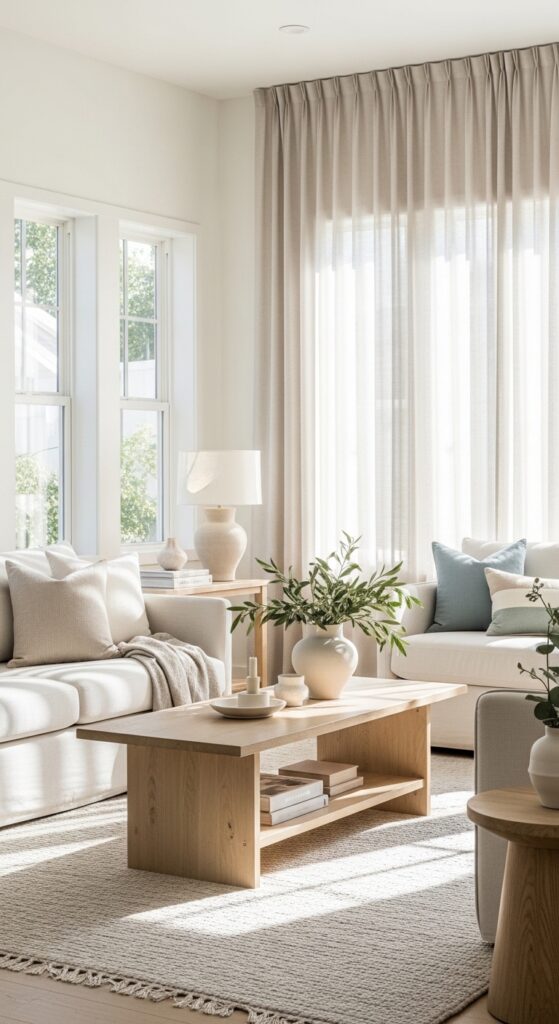
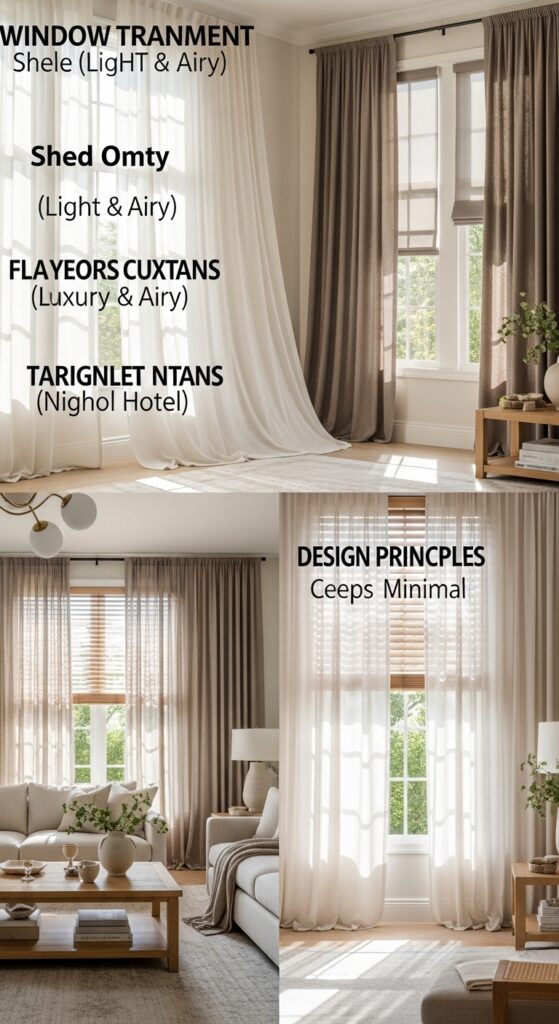
The Solution: Mount curtain rods high and wide—ideally 4-6 inches above the window frame and extending 8-12 inches past the window on each side. This makes the window look massive and lets in maximum light.
Fabric Choice: Use sheer linen or cotton for privacy during the day while keeping the room bright. Layer them with blackout drapes for movies or winter nights.
Product Suggestion:
- Budget: IKEA’s “Ritva” or “Sanela” sheer curtains are affordable and look high-end.
- Premium: Custom linen drapes from The Shade Store or Pottery Barn offer a tailored, luxurious look.
How-To Tip: If your living room opens to a patio, use sliding glass doors. Keep them uncovered or use sheer panels to maintain the indoor-outdoor connection.
Pro Designer Secret: If you have a long wall shared by the living and dining area, run the same curtain rod the entire length. This visually unifies the two zones.
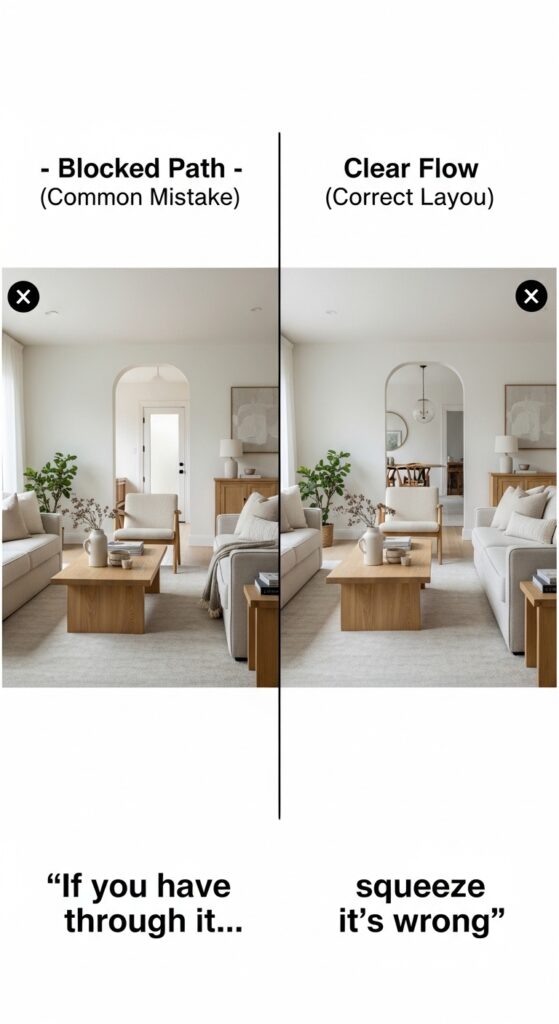
7. The “Traffic Flow” Check: Don’t Block the Path
One of the biggest complaints about open concept living is the “highway” effect, where people walk through your conversation circle to get to the fridge. You need to manage traffic flow without building walls.
The 3-Foot Rule: Ensure there is at least 36 inches of clearance between furniture groupings. If your sofa is blocking the path to the hallway or kitchen, angle it.
Furniture Choice: Avoid large, boxy armchairs that protrude into walkways. Opt for “slipper chairs” (armless) or low-profile loveseats that people can walk around easily.
Product Suggestion:
- Budget: Nesting tables or ottomans with trays (from Target or HomeGoods) can be moved out of the way when guests arrive.
- Premium: A modular sectional with a chaise can be configured to block a view (like a messy kitchen) while keeping the path open.
How-To Tip: Walk the path yourself. Pretend you are carrying a tray of drinks. If you bump into a coffee table or have to squeeze past a chair, rearrange it.
Pro Designer Secret: Use a round coffee table instead of a square one. The lack of sharp corners makes it easier to navigate around and improves the flow of energy (chi) in the room.
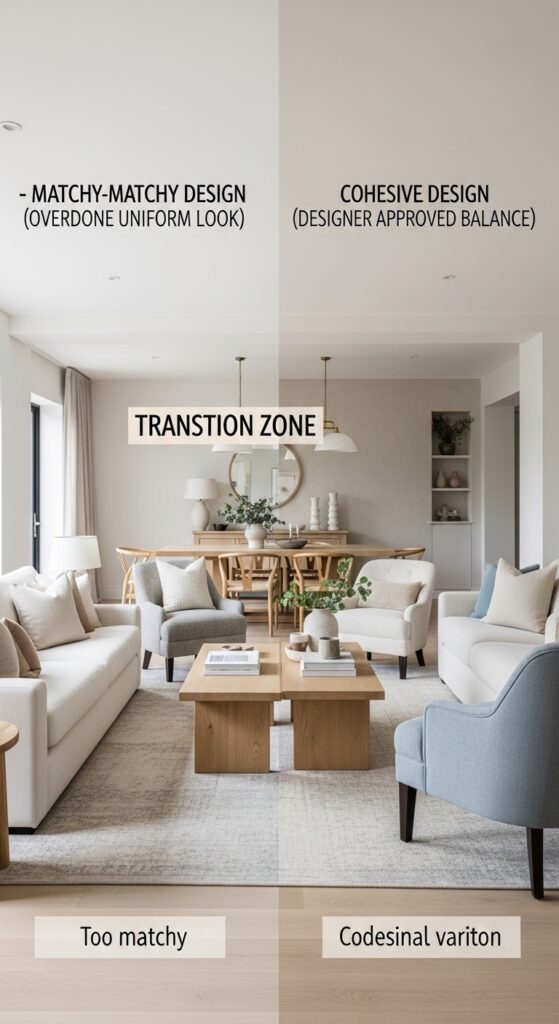
8. Cohesion vs. Matchy-Matchy: The Transition Zone
Your living room shouldn’t look exactly like your kitchen, but they need to be best friends. The transition zone (usually where the dining table or kitchen island ends) is critical.
The Bridge: Use a runner rug, a change in flooring (e.g., wood in living, tile in kitchen), or a peninsula island to signal the shift. Repeat a color or material from the living room in the kitchen. For example, if you have brass legs on your coffee table, use brass hardware on your kitchen cabinets or brass pendant lights over the island.
Product Suggestion:
- Budget: Use a vinyl runner rug from Amazon to define the walkway between zones.
- Premium: Install a quartz or marble waterfall island that matches the living room coffee table material.
How-To Tip: Display a bowl of fruit on the island using colors found in the living room throw pillows. It’s a subtle way to tie the rooms together.
Pro Designer Secret: Don’t be afraid of contrast! A sleek, modern kitchen can flow beautifully into a rustic, farmhouse living room if they share a common color (like white or wood tone).
Common Mistakes to Avoid
Even with a plan, it’s easy to make errors that shrink your space. Here are 5 mistakes to dodge:
- Using Too Many Small Rugs: This chops the room into tiny pieces. Fix: Use one large rug to anchor the main living area.
- Pushing All Furniture Against Walls: This creates a “bowling alley” effect. Fix: Pull furniture 3–12 inches off walls to create intimacy.
- Ignoring Acoustics: Hard surfaces cause echo. Fix: Add rugs, curtains, and upholstered furniture to absorb sound.
- Cluttered Coffee Tables: In an open space, clutter is visible from everywhere. Fix: Use trays to corral items and keep surfaces 70% clear.
- Mismatched Styles: A Victorian sofa in a Modern room looks jarring. Fix: Pick one dominant style (e.g., Japandi or Coastal) and stick to it for the major furniture pieces.
Budget Breakdown Section
Refreshing an open concept space doesn’t have to drain your savings. Here is a realistic cost breakdown for a standard living room zone update:
| Tier | Budget | What You Get | Where to Shop |
|---|---|---|---|
| Budget | Under $150 | Area Rug (5×8), Throw Pillows (2 sets), LED Floor Lamp, Plant. | Amazon, Walmart, IKEA, Target Dollar Spot. |
| Mid-Range | $150 – $500 | 8×10 Rug, Console Table, Curtain Set, Accent Chair, Table Lamp. | HomeGoods, Wayfair, CB2, West Elm (sale), Pottery Barn Teen. |
| High-End | $500+ | Statement Sofa, Custom Drapes, Designer Coffee Table, Gallery Wall Art, Chandelier. | Restoration Hardware, Anthropologie, Etsy, Local Interior Designer. |
Note: Prices are for decorative accessories and small furniture updates, not major renovations.
Seasonal / Trend Tips
Open concept living room ideas evolve with the seasons to keep the home feeling fresh.
- Spring/Summer: Swap heavy velvet pillows for linen or cotton in pastel shades. Bring in more greenery. Remove heavy drapes for sheer panels to maximize the breeze.
- Fall/Winter: Layer wool throws, add candles, and use warmer lighting (2700K). Introduce rich colors like terracotta or navy to combat the gray winter light.
2025 Trends:
- Biophilic Design: Blurring the line between indoors and outdoors with large glass doors and indoor vertical gardens.
- Curved Furniture: Rounded sofas and circular coffee tables are softening the sharp lines of modern architecture.
- Multifunctional Zones: Creating a “work-from-home” nook in the living room using stylish room dividers rather than walls.
Upcoming Trend: “Quiet Luxury” — focusing on high-quality, neutral natural materials (alpaca, stone, unpolished wood) and minimal clutter.
Also Read: How to Pick the Perfect Living Room Rug
FAQ Section
1. How do I make an open concept living room feel cozy?
Focus on “zoning.” Use a large rug to anchor the furniture, add soft lighting (lamps, not just overhead lights), and incorporate texture with throws and pillows. Don’t let the room feel empty; fill corners with plants or tall bookshelves to absorb sound and create intimacy.
2. What is the best rug size for an open concept living room?
For a standard 12×12 living area within an open plan, an 8×10 rug is usually best. It should be large enough that the front legs of your sofa and accent chairs sit on it. If the room is larger (15×15+), go for a 9×12 or 10×14 rug. Never use a small “postage stamp” rug.
3. How do I hide a messy kitchen in an open concept home?
Since you can’t use walls, use visual barriers. A console table behind the sofa, a tall bookshelf, or a kitchen island with a high counter (36 inches+) helps block the view of dirty dishes. Keep the kitchen organized with hidden storage and stylish canisters.
4. Can I use dark furniture in a bright open concept room?
Yes! Dark furniture (like a charcoal sofa or espresso wood table) adds grounding contrast to a light room. Just balance it with light walls, a light rug, and plenty of lighting so the room doesn’t feel cave-like. Use the “60-30-10” rule: 60% light color, 30% medium, 10% dark accent.
5. How do I decorate a long narrow open concept room?
Divide it into “squares.” Use rugs to create distinct zones (living, dining). Arrange furniture perpendicular to the long walls to break up the “tunnel” effect. Use lighting to highlight different areas—a chandelier for living, pendants for dining.
6. What color should I paint my walls for an airy feel?
Stick to whites with warm undertones (like greige or cream) or very pale cool grays. Avoid stark bright white which can feel clinical. Sage green and dusty blue are great for accent walls or adjacent rooms, but keep the main living area light to reflect the natural light.
Conclusion
Transforming an open concept living room is all about balance—balancing light with texture, openness with intimacy, and function with style. By using interior design principles like zoning with rugs, floating furniture, and layering light, you can create a space that feels both expansive and cozy. Remember, you don’t need to knock down walls to create definition; you just need the right decorating ideas and a little creativity.
Start small today—try swapping out your throw pillows or rearranging your sofa just 3 inches off the wall. You’ll be amazed at how much these small changes elevate the energy of your home. You have the power to refresh your living space and make it a true reflection of your lifestyle.
If you found these home styling tips helpful, please save this pin to your Pinterest board and share it with a friend tackling a renovation. Happy decorating!