How to Pick the Perfect Living Room Rug Size Style and Color
You’ve just spent hours scrolling through Pinterest, found a rug you love, and hit “buy.” But when it arrives, it looks like a tiny postage stamp under your sofa, or the clashing patterns make your head spin. It’s the most frustrating feeling for a homeowner. How to pick the perfect living room rug isn’t just about grabbing something soft; it’s about finding the foundation that ties your entire interior design together.
Whether you are furnishing a sprawling suburban home with high ceilings or a cozy apartment living space, the right rug can transform a cold room into a warm, inviting sanctuary. In this guide, we are going to break down exactly how to choose the right size, material, and color to match your unique style. By the end of this article, you will have the confidence to shop like a pro, avoid costly return shipping fees, and create a living space that looks curated, not cluttered. Let’s dive into the secrets of home styling that will make your space look like it belongs in a magazine.
Why This Topic Matters
In American homes, the living room is the heartbeat of the house. We spend hours here binge-watching, entertaining, and relaxing. However, many people overlook the fact that the rug is the foundation of the room’s aesthetic. According to a recent Houzz report, 78% of homeowners renovating in 2024 said that “defining zones with rugs” was a top priority, especially in homes with open floor plans.
A bad rug choice can make a room feel disjointed and smaller, while the right one elevates the entire living space. It’s not just about decoration; it’s about function. A good rug defines conversation areas, adds acoustic warmth, and protects your flooring. Mastering how to pick the perfect living room rug is the single most effective DIY home makeover trick you can learn. It’s the difference between a “finished” room and a “furnished” room.
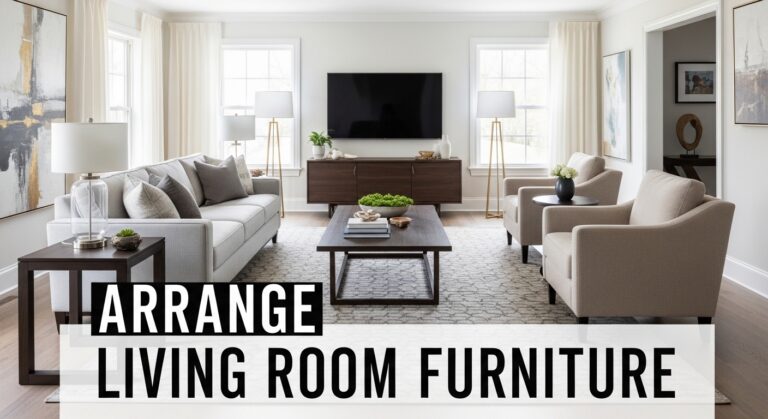
Also Read: How to Arrange Living Room Furniture
1. The Golden Rule of Rug Sizing: Don’t Be a “Postage Stamp”
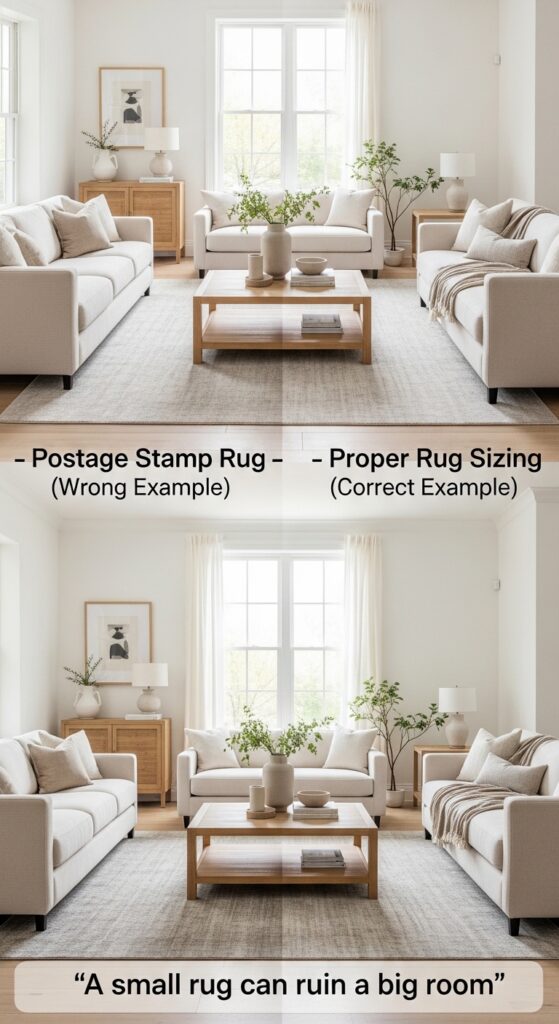
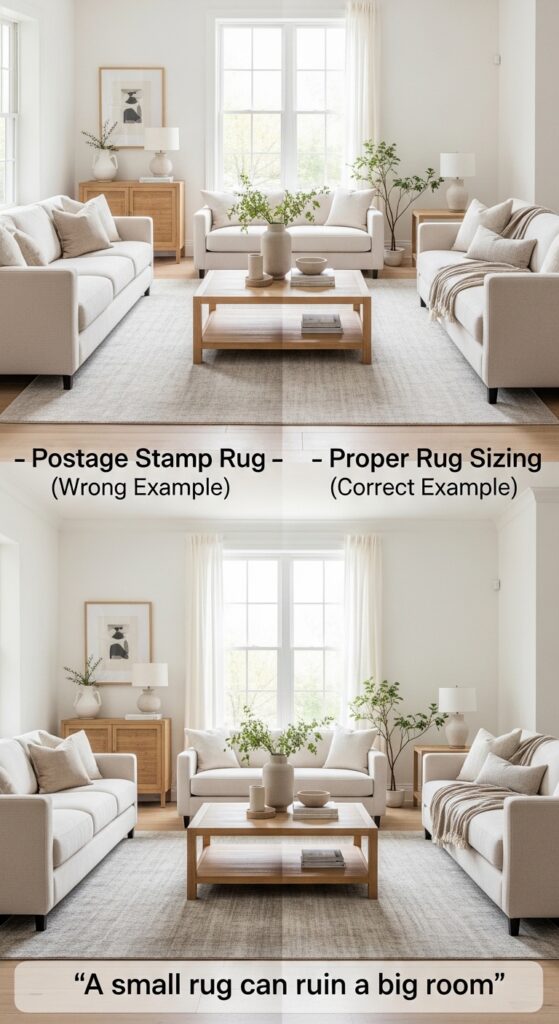
The number one mistake people make is buying a rug that is too small. In home styling, size matters more than pattern. If the rug is too small, the furniture looks like it’s floating in space, and the room feels cheap.
The Standard Rule: In a standard living room, at least the front legs of all seating furniture (sofa, chairs) should sit on the rug. This creates a cohesive “island” for conversation. If you have a large room, all furniture legs can sit on the rug to anchor the space.
- Small Rooms (10×10): Use a 5×8 or 6×9 rug.
- Medium Rooms (12×12): Use an 8×10 rug (this is the most common size in American homes).
- Large Rooms (14×18+): Use a 9×12 or 10×14 rug, or even layer two rugs.
If you have a sectional sofa, ensure the rug is large enough that the entire seating area sits on it, or at least the coffee table and front legs of the main pieces.
Product Suggestion:
- Budget: Amazon Brand – Stone & Beam offers great 8×10 rugs for under $200. Walmart has a huge selection of 5×7 rugs for small spaces.
- Premium: Pottery Barn or West Elm for high-quality wool rugs that last decades.
How-To Tip: Before buying, use painter’s tape on your floor to outline the rug size. See how it feels under the furniture.
Pro Designer Secret: If you can’t find the exact size, buy a slightly larger rug. A rug that is too big is rarely a problem, but one that is too small always looks wrong.
2. Material Matters: Durability vs. Luxury
The material you choose dictates how the rug feels underfoot and how long it lasts. This is crucial for high-traffic areas where kids and pets play.
- Wool: The gold standard. It’s soft, naturally stain-resistant, and biodegradable. However, it’s expensive and can shed initially.
- Jute/Sisal: These are natural materials that add texture. They are great for farmhouse or boho styles. However, they are rough underfoot (not great for bare feet) and can stain easily if not sealed.
- Synthetic (Polypropylene/Nylon): These are the workhorses. They are stain-resistant, cheap, and come in every color imaginable. Modern synthetics mimic wool very well.
- Cotton: Soft and washable, but wears out quickly in high-traffic areas. Best for low-traffic bedrooms or under a dining table.
Product Suggestion:
- Budget: IKEA has excellent flatwoven polypropylene rugs (like the LOHALS jute look-alike) that are easy to clean.
- Premium: Hand-knotted wool rugs from Rugs USA or Pottery Barn. Look for “New Zealand Wool” for the softest feel.
How-To Tip: If you have pets or kids, avoid high-pile shag rugs. Opt for flatweaves or tight loops that don’t trap hair and dirt.
Pro Designer Secret: Always buy a rug pad! It adds cushioning, prevents slipping, and extends the life of your rug by 50%. For hard floors, use felt and rubber; for carpet, use a thinner felt pad.
3. Color Theory: Finding the Right Palette
Color is where most people get stuck. Do you go bold or neutral? The answer lies in your wall color and furniture.
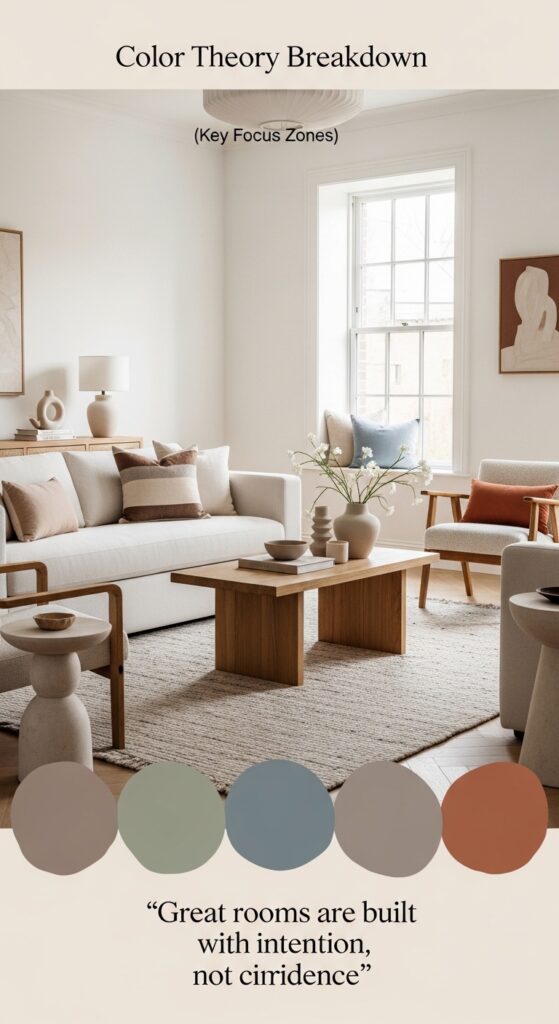
The Neutral Safe Zone: If your walls are a bold color (like navy or terracotta) or you have a patterned sofa, choose a neutral rug. Look for greige (grey-beige), warm white, or oatmeal. These colors have “undertones” that must match your walls.
- Cool undertone (blue/pink): Pair with gray walls or cool lighting.
- Warm undertone (yellow/gold): Pair with beige, cream, or sage green walls.
The Statement Piece: If your room is neutral (beige walls, white sofa), you can go bold! A vintage Persian rug with reds and blues, or a modern geometric rug in dusty blue, becomes the focal point.
Product Suggestion:
- Budget: Target’s Opalhouse line for trendy, affordable colors. HomeGoods is a treasure hunt for discounted colorful rugs.
- Premium: Anthropologie for overdyed vintage-style rugs in rich jewel tones.
How-To Tip: Order 3-4 rug swatches online. Look at them in your room at different times of day (morning light vs. evening lamp light). Colors change dramatically!
Pro Designer Secret: If you’re scared of color, try a “tone-on-tone” rug—a textured rug in the same color family as your walls but slightly darker. It adds depth without being loud.
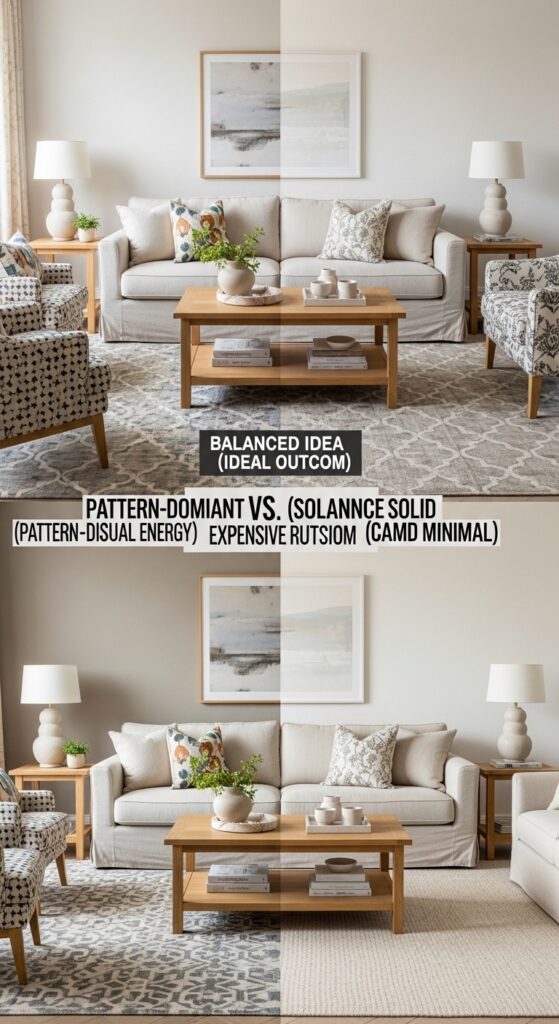
4. Pattern vs. Solid: Balancing Visual Weight
Patterns add personality, but they can also make a room feel busy. Solids are calming but can look boring if not textured.
- Small Rooms: Stick to solids or very small, subtle patterns (like a tiny herringbone). Large patterns overwhelm small spaces.
- Large Rooms: You can handle large, bold patterns (large florals, abstract shapes) without making the room feel cluttered.
- Stripes: A striped rug can visually widen a narrow room or lengthen a short one.
Texture is Key: If you choose a solid rug, make sure it has texture (like a Moroccan trellis or a chunky weave). This prevents it from looking like a blank canvas.
Product Suggestion:
- Budget: Wayfair has thousands of geometric patterned rugs in the $50–$100 range. Look for “distressed” finishes that hide dirt.
- Premium: Restoration Hardware for classic, subtle patterns that never go out of style.
How-To Tip: If you have a patterned sofa, pair it with a solid rug. If you have a solid sofa, you can use a patterned rug. Never compete—pick one to be the star.
Pro Designer Secret: “Abstract” patterns are the most forgiving for hiding stains and wear. Specific motifs (like a specific flower) can look dated faster.
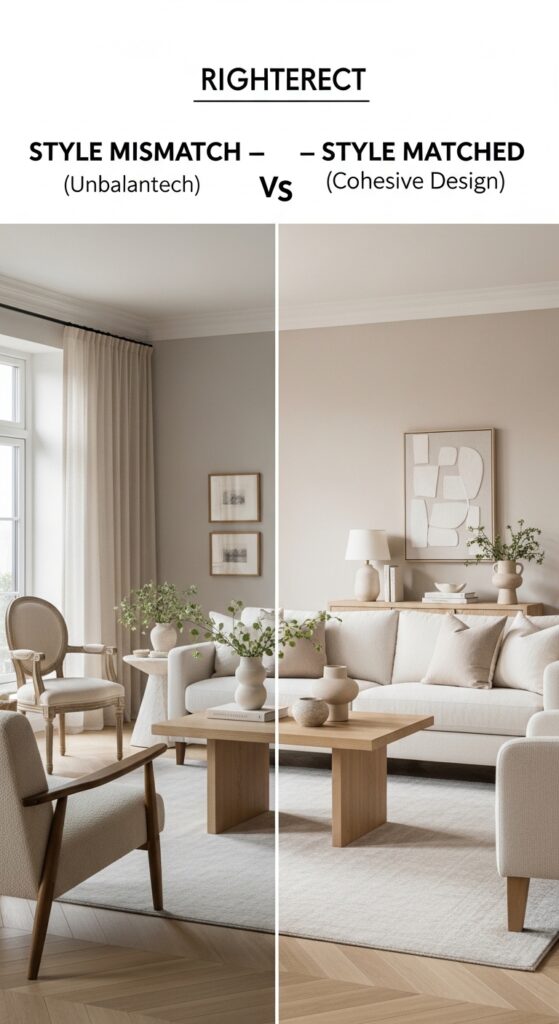
5. Style Matching: Aligning with Your Decor
Your rug should speak the same language as your furniture. Here is a quick cheat sheet for popular styles in American homes:
- Farmhouse: Look for distressed Persian rugs, jute, or buffalo check patterns. Magnolia Home by Joanna Gaines is a great source.
- Mid-Century Modern: Geometric shapes, shag rugs in mustard or teal, or teak-colored wool rugs.
- Boho/Eclectic: Layered vintage rugs, kilims, Moroccan rugs, and mixed textures.
- Modern/Minimalist: Solid colors, hide rugs (leather), or subtle geometric lines in monochrome.
- Coastal: Sisal, seagrass, or faded blue/white stripes.
Product Suggestion:
- Budget: Amazon and Overstock are great for filtering by style (e.g., “Bohemian” or “Transitional”).
- Premium: CB2 for sleek modern rugs. Etsy for handmade vintage finds.
How-To Tip: If you are mixing styles (e.g., a modern sofa with a vintage coffee table), choose a “transitional” rug that bridges the gap—something with a classic shape but a modern color.
Pro Designer Secret: Don’t match everything perfectly. A slightly mismatched vintage rug often looks more “collected” and personal than a showroom set.
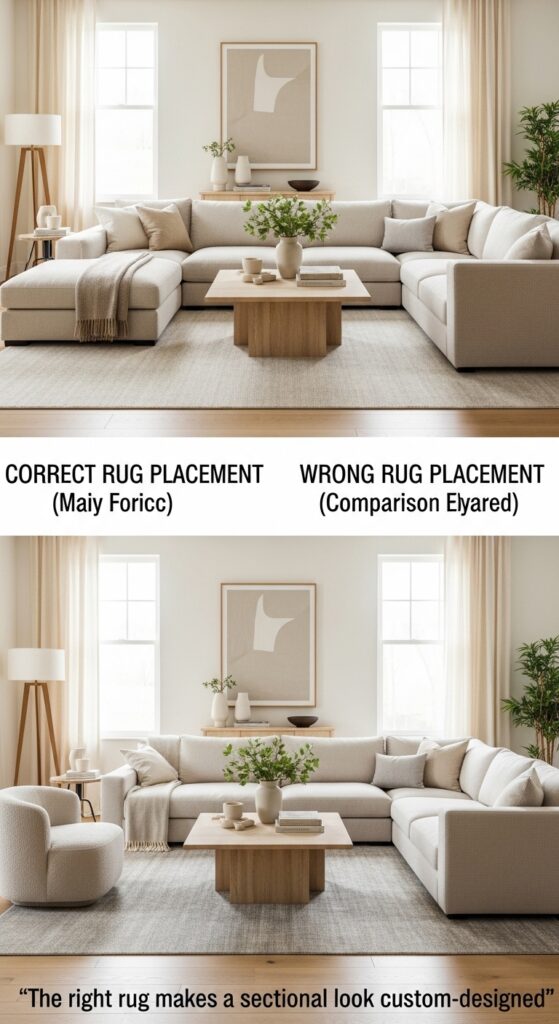
6. How to Pick a Rug for a Sectional Sofa
Sectionals are the kings of American homes, but they are tricky to rug. Because they are large, they can dominate the room.
The Rule: The rug should be large enough to accommodate the entire sectional, or at least the main seating area. If the sectional is L-shaped, the rug should fill the “L” or be large enough that the front legs of all sections touch the rug.
Avoid placing the rug only in the center; it will look like an island. The rug should extend 12–18 inches beyond the sofa on all sides if possible.
Product Suggestion:
- Budget: IKEA’s large flatwoven rugs work well here as they are affordable in 9×12 sizes.
- Premium: Custom-size rugs from Pottery Barn or West Elm.
How-To Tip: If your sectional is modular, try arranging it first, then measure the footprint. Add 12 inches to each side for the rug dimensions.
Pro Designer Secret: If you can’t afford a massive rug, try a “split” layout where a large rug anchors the main sofa, and a smaller accent rug (like a cowhide or round jute rug) defines the chaise lounge area.
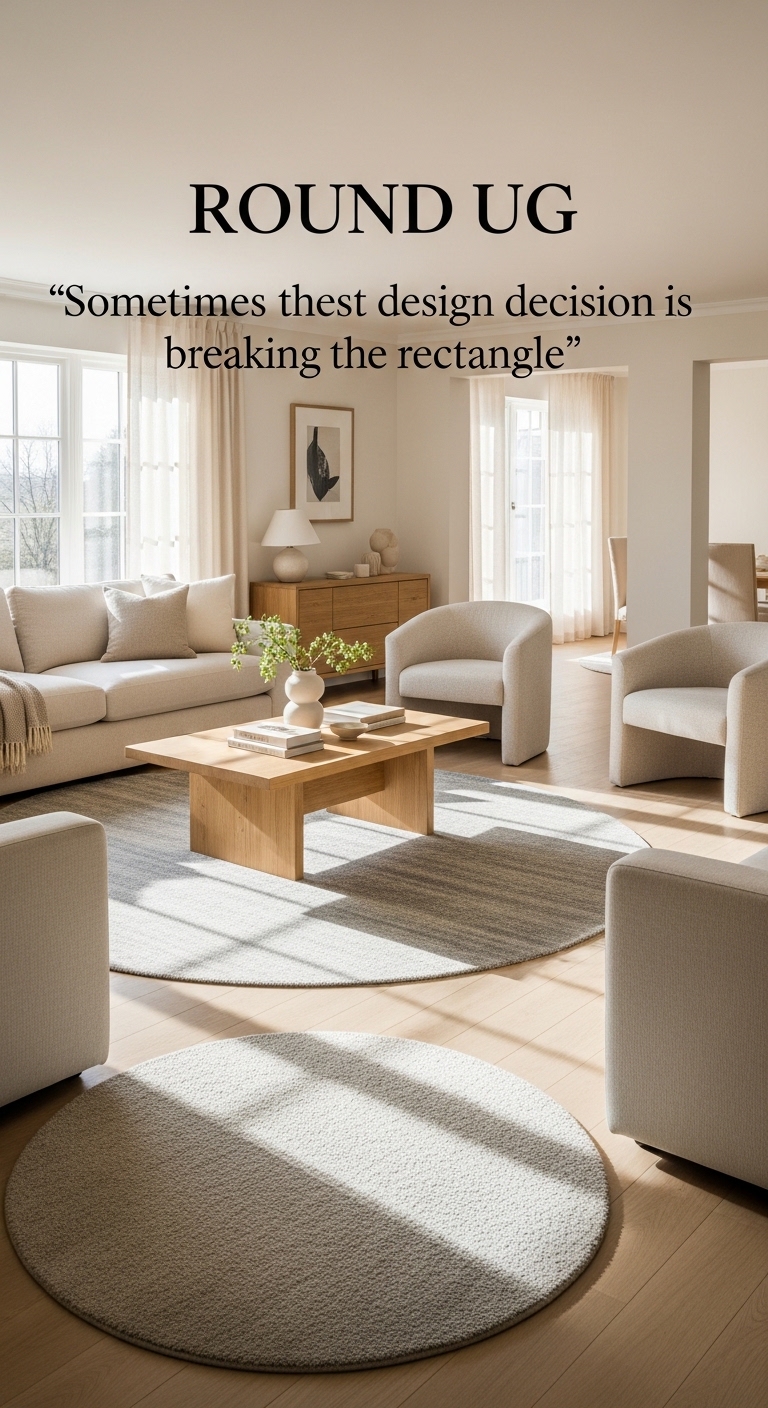
7. Round Rugs: Breaking the Box
Square rooms and rectangular furniture often make a space feel rigid. A round rug introduces curves, which softens the look and improves flow.
Round rugs are excellent for defining zones in open floor plan homes. They work great under a round dining table or in a conversation circle with two armchairs and a small table.
Sizing: In a living room, a round rug should be large enough (usually 8 feet in diameter) that the furniture sits on it, not just touching the edges.
Product Suggestion:
- Budget: Target and Amazon have great affordable round jute or polypropylene options.
- Premium: Hand-tufted wool rounds from Williams Sonoma Home or Pottery Barn.
How-To Tip: Place a round rug in front of a fireplace to frame the hearth beautifully.
Pro Designer Secret: Use a round rug to “break up” a long, narrow rectangular room. It tricks the eye into seeing a square space, making the room feel more balanced.
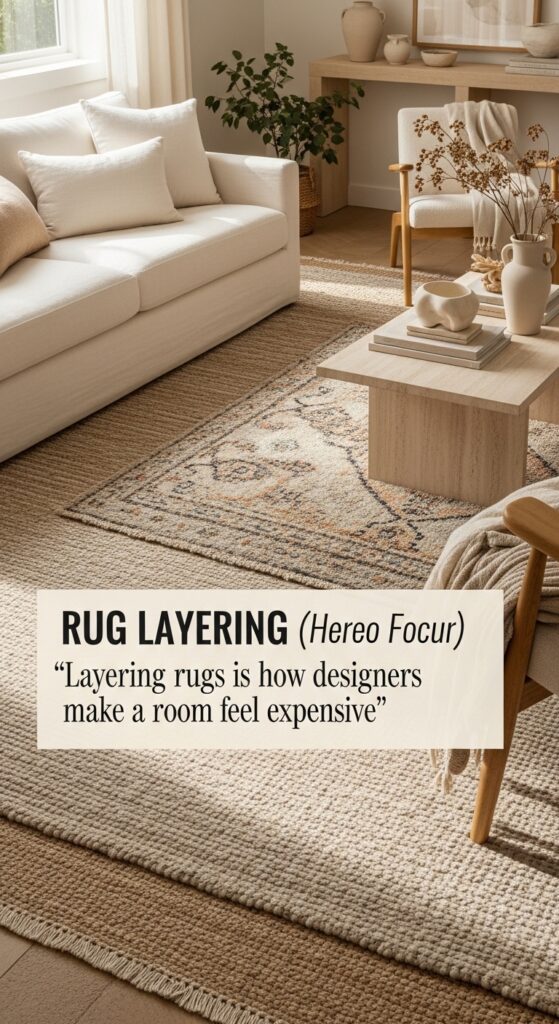
8. Layering Rugs: The Pro Stylist Trick
Layering is a fantastic way to add depth and texture. It’s also a great way to use a smaller, expensive vintage rug over a larger, cheaper neutral base.
The Formula: Start with a large, neutral, low-pile rug (like a sisal or plain jute) as the base. Then, layer a smaller, patterned, or colorful rug on top at an angle or centered.
Ensure the top rug is smaller than the bottom rug by at least 12–18 inches on all sides so the base peeks out. This creates a border that frames the top rug.
Product Suggestion:
- Budget: Layer a Home Depot indoor/outdoor flatweave (base) with a vintage find from a thrift store (top).
- Premium: Layer a Restoration Hardware sisal with a Turkish Oushak rug.
How-To Tip: Use a rug pad between both layers to prevent slipping. The total height shouldn’t exceed 0.5 inches, or doors might get stuck.
Pro Designer Secret: When layering, stick to a color palette. If the bottom rug is beige, the top rug should have beige in its pattern to tie them together visually.
9. Texture and Pile Height: The Feel Factor
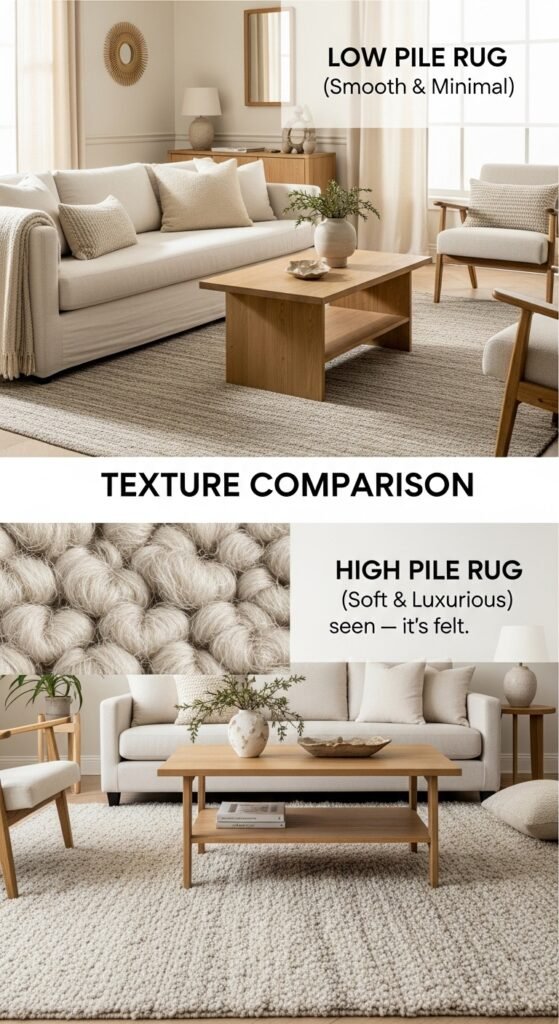
Pile height (the thickness of the rug) changes the vibe of the room.
- Low Pile (0.25 inches): Easy to clean, vacuum-friendly, great for high-traffic areas. Looks modern and clean.
- Medium Pile (0.5 inches): The sweet spot. Soft underfoot but still durable.
- High Pile/Shag (1 inch+): Very cozy and luxurious, but hard to clean. Not recommended for living rooms with pets or heavy use. Best for bedrooms or formal sitting rooms.
Material Impact: A chunky wool rug feels rustic and warm. A flatwoven cotton rug feels casual and airy. A high-gloss viscose rug feels glamorous but shows every footprint.
Product Suggestion:
- Budget: Walmart has many low-pile polyester rugs that mimic wool.
- Premium: Rugs USA offers a “High/Low” pile construction that is textured but easier to clean than true shag.
How-To Tip: Run your hand over the rug in the store. If it feels scratchy, it will feel scratchy in your home. If you can’t tell, read reviews about “hand” or softness.
Pro Designer Secret: In rooms with 9-foot ceilings or higher, a plush, high-pile rug helps fill the vertical space and makes the room feel cozier. In rooms with 8-foot ceilings, stick to low-pile to avoid making the ceiling feel lower.
Common Mistakes to Avoid
Even with a plan, it’s easy to slip up. Here are 5 specific mistakes Americans make and how to fix them:
- Pushing the Rug Against the Wall: This creates a “border” effect that shrinks the room. Fix: Pull the rug 12–18 inches away from the walls to create a floating conversation area.
- Buying a Rug That’s Too Small: It makes the furniture look oversized. Fix: Get an 8×10 rug minimum for standard rooms; ensure front legs of sofas touch it.
- Ignoring the Room’s Function: Buying a delicate silk rug for a family room with kids. Fix: Match the material to the traffic. High traffic = synthetic or wool; low traffic = delicate fabrics.
- Skipping the Rug Pad: The rug slides and wears out faster. Fix: Always buy a felt and rubber pad. It costs little but adds years to the rug’s life.
- Clashing Patterns: Putting a striped rug with a floral sofa and plaid chair. Fix: Use the “Rule of Three”—only one large pattern, one medium, and one solid. Or keep the rug solid if the furniture is patterned.
Budget Breakdown Section
You don’t need a fortune to refresh your living space. Here is a realistic cost breakdown for a standard 12×12 living room rug:
| Tier | Budget | What You Get | Where to Shop |
|---|---|---|---|
| Budget | Under $100 | 5×8 Synthetic Rug, Small Jute Rug, or Runner. | Amazon, Walmart, IKEA, Target Dollar Spot. |
| Mid-Range | $100 – $400 | 8×10 Wool Blend, High-Quality Synthetic, or Vintage Find. | HomeGoods, Wayfair, CB2, West Elm (sale section), Rugs USA. |
| High-End | $400+ | Hand-Knotted Wool, Silk Blend, or Custom Size. | Pottery Barn, Anthropologie, Etsy (handmade), Local Boutiques. |
Note: Prices exclude rug pads. Always budget $50–$100 extra for a quality pad.
Seasonal / Trend Tips
How to pick the perfect living room rug changes with the seasons to maximize comfort.
- Spring/Summer: Swap heavy wool for jute, sisal, or cotton. These materials are cooler underfoot and breathe better. Lighten the color palette to linen whites or pastels.
- Fall/Winter: Bring in the warmth. Switch to plush wool, vintage Persian rugs (they trap heat), or faux fur accents. Deepen colors to terracotta, navy, or forest green.
2025 Trends:
- Biophilic Design: Rugs that look like grass, moss, or leaves. Natural fibers are huge.
- Wabi-Sabi: Imperfect, distressed, vintage rugs that show age. The “worn” look is intentional and chic.
- Curved Edges: Softening the sharp angles of modern furniture with organic-shaped rugs.
Upcoming Trend: “Quiet Luxury” rugs—solid colors in rich natural materials like alpaca or mohair blends, with no logos, just pure texture.
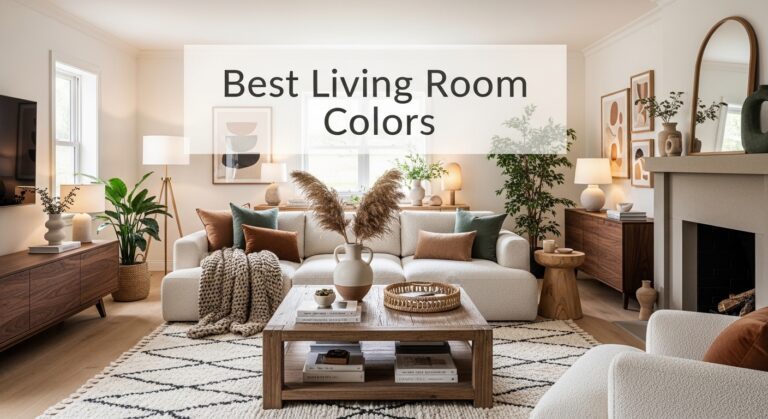
Also Read: Best Living Room Colors for American Homes
FAQs
1. What size rug should I get for a 12×12 living room?
For a 12×12 room, an 8×10 rug is the gold standard. It allows enough space around the edges (about 2 feet) to show the floor, which makes the room look bigger. If you have a large sectional, you might need a 9×12 rug. Always measure your furniture first! Use painter’s tape to map it out on the floor before buying.
2. Can I put a rug on top of carpet?
Yes! This is a great way to define a zone in an open floor plan or add color to a rental without replacing the carpet. Use a thin rug pad (felt) to prevent slipping. Keep the pile height low to medium so the transition isn’t too jarring. A natural fiber rug like sisal works beautifully over low-pile wall-to-wall carpet.
3. How do I clean a wool rug?
For spills, blot immediately with a white cloth—never rub! Use a mixture of mild dish soap and water. For deep cleaning, vacuum regularly (beater bar off) and have it professionally cleaned once a year. Wool is naturally stain-resistant because of its lanolin coating, so it repels dirt better than synthetics if maintained properly.
4. Should all furniture legs be on the rug?
It depends on the room size. In large rooms, all furniture legs can be on the rug to create a defined “island.” In smaller rooms, just the front legs (or even just the sofa) can be on the rug to save space. The key is visual connection—the rug should touch every piece of seating furniture in the conversation area.
5. Is a jute rug good for a living room?
Jute is beautiful and affordable, but it’s rough underfoot and not stain-resistant. It’s best for low-traffic living rooms or formal sitting areas. If you have pets or kids, jute might fray quickly. However, it adds amazing texture to boho or farmhouse styles. Consider a jute-wool blend for a softer feel and better durability.
6. How do I stop my rug from sliding on hardwood?
You need a high-quality rug pad with a rubber backing. Felt-only pads are for carpet; for hardwood, you need rubber-felt combination pads. The rubber grips the wood, and the felt protects the floor and the rug backing. For extra grip on very slippery floors, you can also use double-sided rug tape under the corners.
Conclusion
How to pick the perfect living room rug doesn’t have to be a source of stress. By focusing on the right size for your furniture, choosing a material that fits your lifestyle, and selecting a color that complements your walls, you can transform your home into a cohesive, aesthetic haven. Remember the golden rule: bigger is usually better, and a rug pad is non-negotiable.
Start small today try rearranging just one corner or swapping out a lamp. You’ll be amazed at how much a new rug can elevate the entire vibe. You have the power to refresh your living space and create a home that reflects your personality.
If you found these decorating ideas helpful, please save this pin to your Pinterest board and share it with a friend who is redecorating. Happy styling!