How to Arrange Living Room Furniture in Any Size American Home
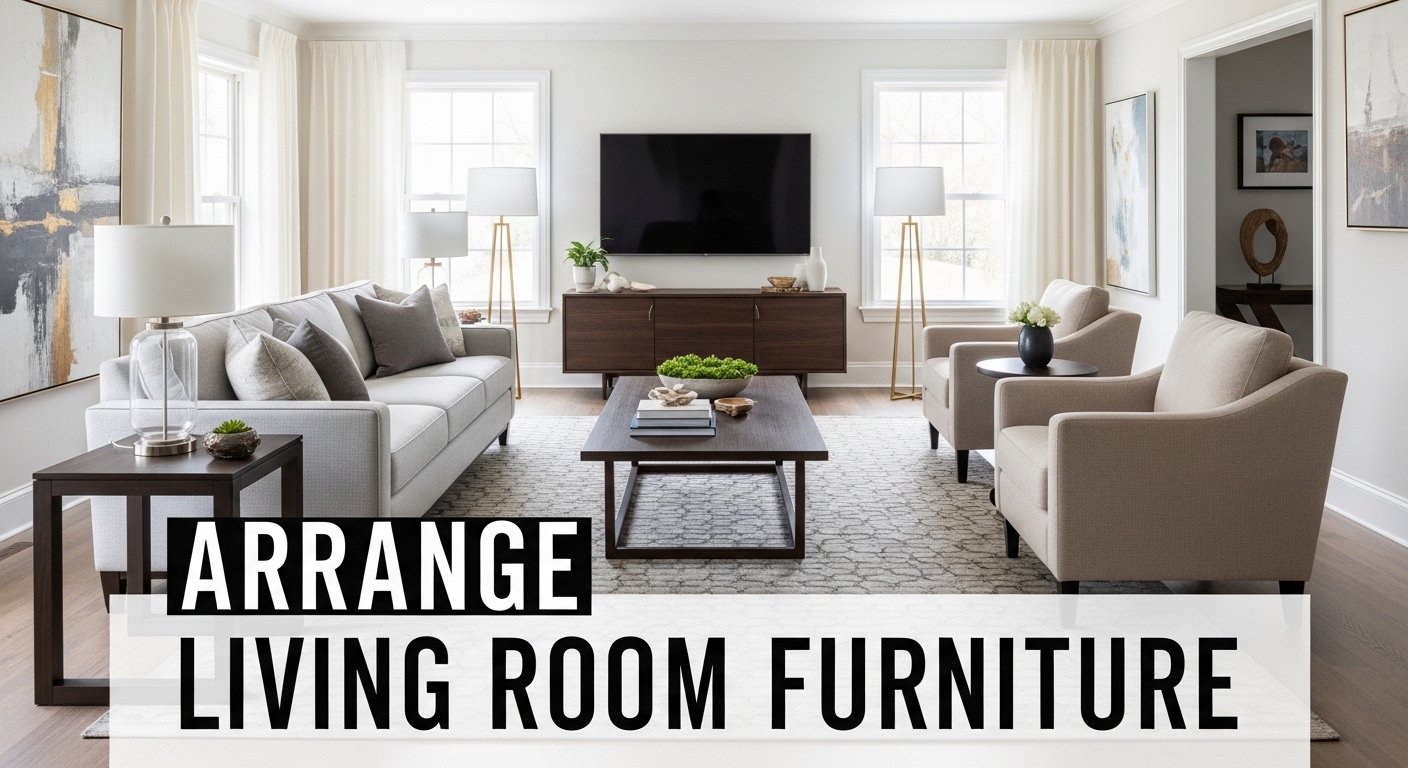
You just bought a gorgeous new sofa from Wayfair, but when you get it into your living room, it either blocks the TV, floats awkwardly in the middle of the room, or makes the space feel cramped and claustrophobic. Sound familiar? How to arrange living room furniture is the number one search term for homeowners because a bad layout can ruin even the most expensive interior design.
Whether you live in a tiny NYC apartment, a sprawling suburban home with an open floor plan, or a cozy farmhouse bungalow, the principles of flow and balance remain the same. This guide isn’t just about pushing furniture against walls; it’s about creating a functional living space that invites conversation, looks aesthetic on Pinterest, and actually works for your daily life. By the end of this article, you will master home styling tricks to transform your room into a welcoming haven.
Why This Topic Matters
In American homes, the living room is the command center. It’s where we binge-watch Netflix, host Super Bowl parties, help kids with homework, and Zoom for work. According to a recent Houzz & Home survey, 65% of homeowners renovating in 2024 cited “improving flow and layout” as their top priority, even over aesthetic upgrades.
American homes often feature open floor plans that combine the kitchen and living area, making furniture arrangement tricky. If you don’t define zones correctly, the space feels messy. Mastering how to arrange living room furniture isn’t just about looks; it’s about organizing your life. A well-arranged room boosts mental clarity and makes your home feel larger and more cozy. It is the foundation of a successful home makeover.
Also Read: Best Living Room Colors
1. Measure Twice, Arrange Once: The Golden Rules of Dimensions
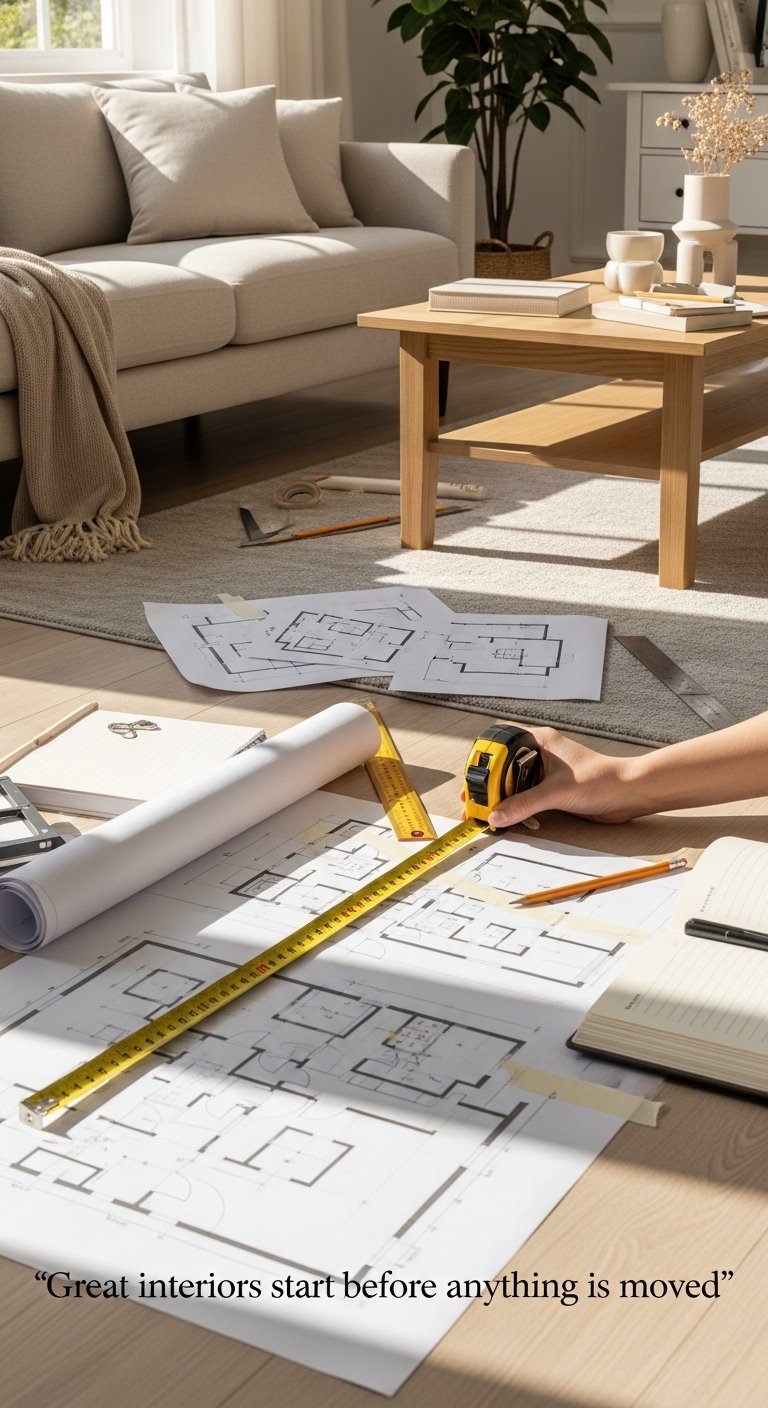
Before you lift a single finger, you need to understand the dimensions of your room. This is the most boring but most critical step in home styling. Grab a tape measure and note the length and width of the room, but also measure the doorways and hallways. You need to ensure the furniture can actually get into the room.
Create a floor plan using graph paper or free apps like Modsy or Roomstyler. Draw the room to scale (e.g., 1 square = 1 foot). Cut out paper shapes representing your furniture to scale and move them around. This prevents the back-breaking work of moving a heavy oak wood sofa only to realize it blocks the radiator.
Product Suggestion: For measuring, a laser measure like the Bosch Blaze (available at Home Depot) is a pro tool worth the investment. For budget options, a simple 25-foot tape measure from Walmart works fine.
How-To Tip: Mark the “traffic flow” lines on your floor plan with painter’s tape. Ensure there is at least 30–36 inches of clearance for walking paths.
Pro Designer Secret: Never block a doorway. Even if it feels like you lose seating, keeping the entry point clear makes the living space feel airy and welcoming.
2. Finding Your Focal Point: The Anchor of the Room
Every great interior design needs a focal point. This is the visual anchor that draws the eye in. In American homes, the focal point is often the fireplace, a large window with a view, or the TV. If you have a fireplace, arrange furniture to face it. If you don’t have one, you can create a “fake” focal point with a large piece of art or a built-in bookshelf.
Once you identify the focal point, arrange your largest piece of furniture (usually the sofa) to face it. Angling the sofa slightly (10–15 degrees) can create a more intimate conversation area than a straight-on approach.
Product Suggestion:
- Budget: A large canvas print from Amazon or a mirrored wall decor from Target.
- Premium: A custom mantel or built-in shelving from Restoration Hardware or local carpentry.
How-To Tip: Use painter’s tape on the wall to outline where your art or TV will hang before you put up nails. This helps visualize the scale.
Pro Designer Secret: If your focal point is a TV, hide the black box with a media console or a decorative screen. A messy tangle of wires ruins the aesthetic instantly.
3. Sofa Placement: Floating vs. Wall-Hugging
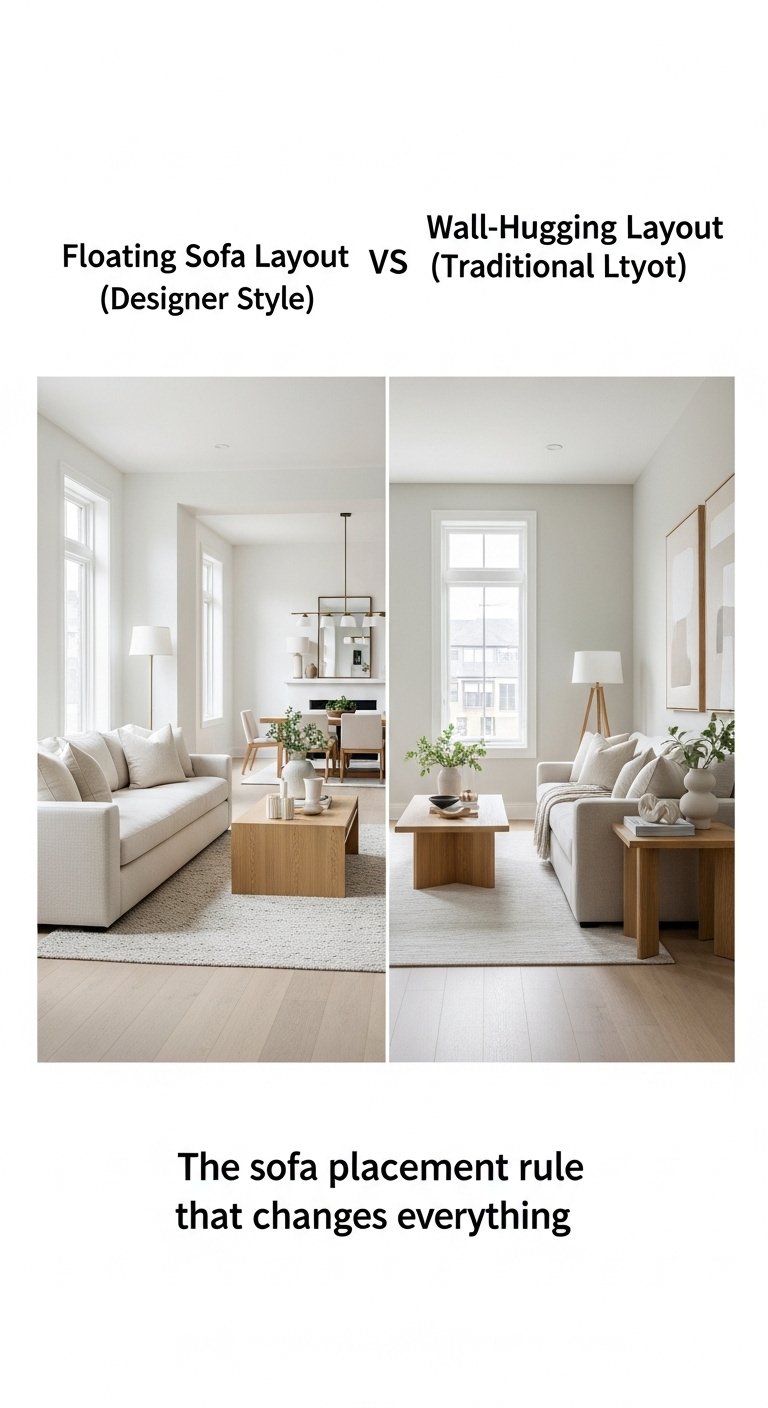
One of the biggest myths in decorating ideas is that all furniture must touch the walls. In modern home styling, “floating” furniture away from walls creates a much cozier vibe.
If you have a large room, pull the sofa 3–12 inches off the wall. This creates a breathing room and makes the space feel curated. In small apartments, placing the sofa against the wall might be necessary to maximize floor space, but add a console table behind it so it doesn’t look like a dorm room.
Product Suggestion:
- Budget: The IKEA Söderhamn sofa is great for floating because it looks finished on the back.
- Premium: A West Elm “Andes” sofa with a low back allows light to pass through, making the room feel bigger.
How-To Tip: If you float the sofa, place a slim console table behind it for lamps and drinks. It acts as a visual anchor.
Pro Designer Secret: Use an area rug to “glue” the floating furniture group together. The front legs of the sofa should sit on the rug.
4. The Rug Rule: Sizing Matters More Than Pattern
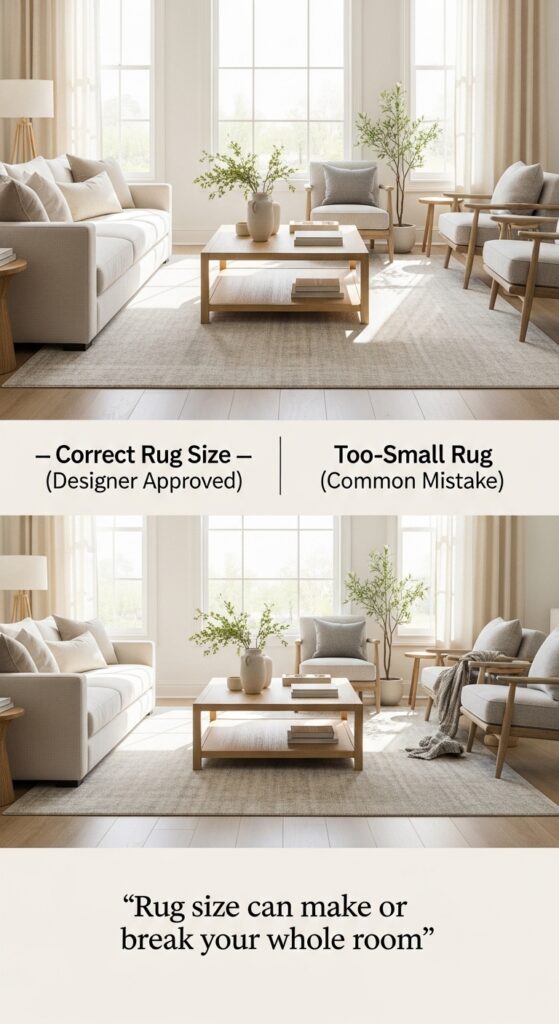
Nothing screams “amateur” louder than a rug that is too small. How to arrange living room furniture relies heavily on rug size. A common mistake is buying a tiny 5×8 rug for a 12×15 room.
Follow this rule: At least the front legs of all seating furniture should sit on the rug. If you have a large room, the rug should be big enough that the furniture sits entirely on it (at least 8×10 or 9×12). This defines the seating zone in open floor plan homes.
Material & Texture: For high-traffic American homes, durability is key. Jute or sisal are great for a boho or coastal look and hide dirt well. Linen or wool adds softness but requires more care.
Product Suggestion:
- Budget: HomeGoods or TJ Maxx often have huge 9×12 rugs for under $300. Amazon also has great affordable jute options.
- Premium: Pottery Barn rugs or vintage Persian rugs from 1stDibs or Chairish.
How-To Tip: If you have layered rugs (a cowhide over a sisal), ensure the smaller rug is centered on the larger one, or offset intentionally in a corner.
Pro Designer Secret: If you can’t afford a huge rug, layer two smaller rugs to create the size you need. It adds texture and personality!
5. Coffee Tables & Side Tables: Function Meets Form
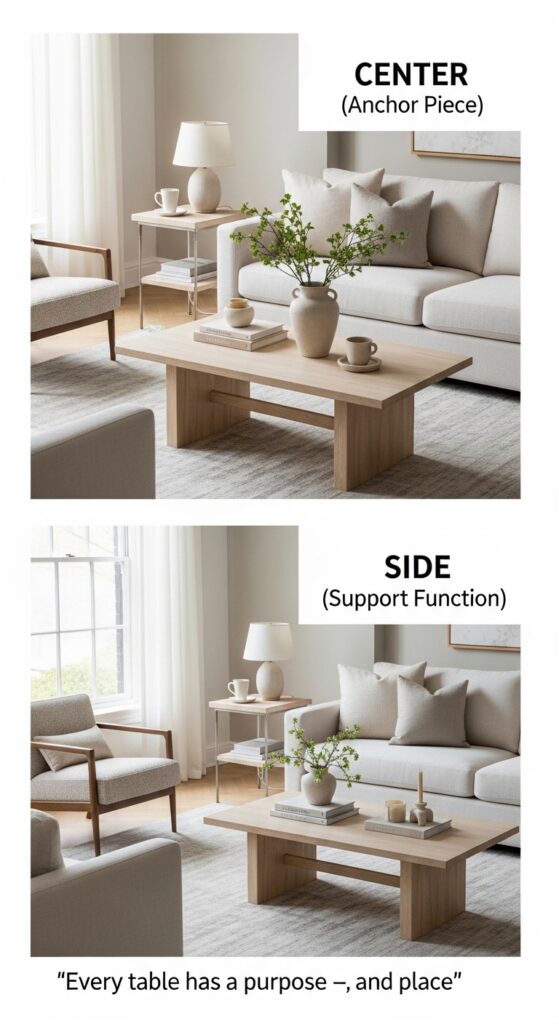
The coffee table is the practical center of the room. It needs to be the right height and scale. The standard height is 16–18 inches (same as sofa cushion height). If it’s too low, it looks awkward; too high, and you can’t reach your drink.
In small spaces, consider a nesting set of two or three tables. You can pull them out when guests arrive and tuck them away to save space. For modern or minimalist homes, a round coffee table softens the sharp lines of a sectional sofa.
Material: Wood brings warmth; glass or acrylic keeps the visual weight light in small rooms; marble adds luxury.
Product Suggestion:
- Budget: The IKEA Lack series or round nesting tables from Target’s Project 62.
- Premium: A CB2 marble-top coffee table or a reclaimed wood table from Etsy.
How-To Tip: Keep the coffee table surface 70% clear. Use a tray to corral remotes and coasters.
Pro Designer Secret: Don’t just rely on the coffee table. Ensure every seat has a side table within arm’s reach (24 inches away) for a coffee cup or lamp.
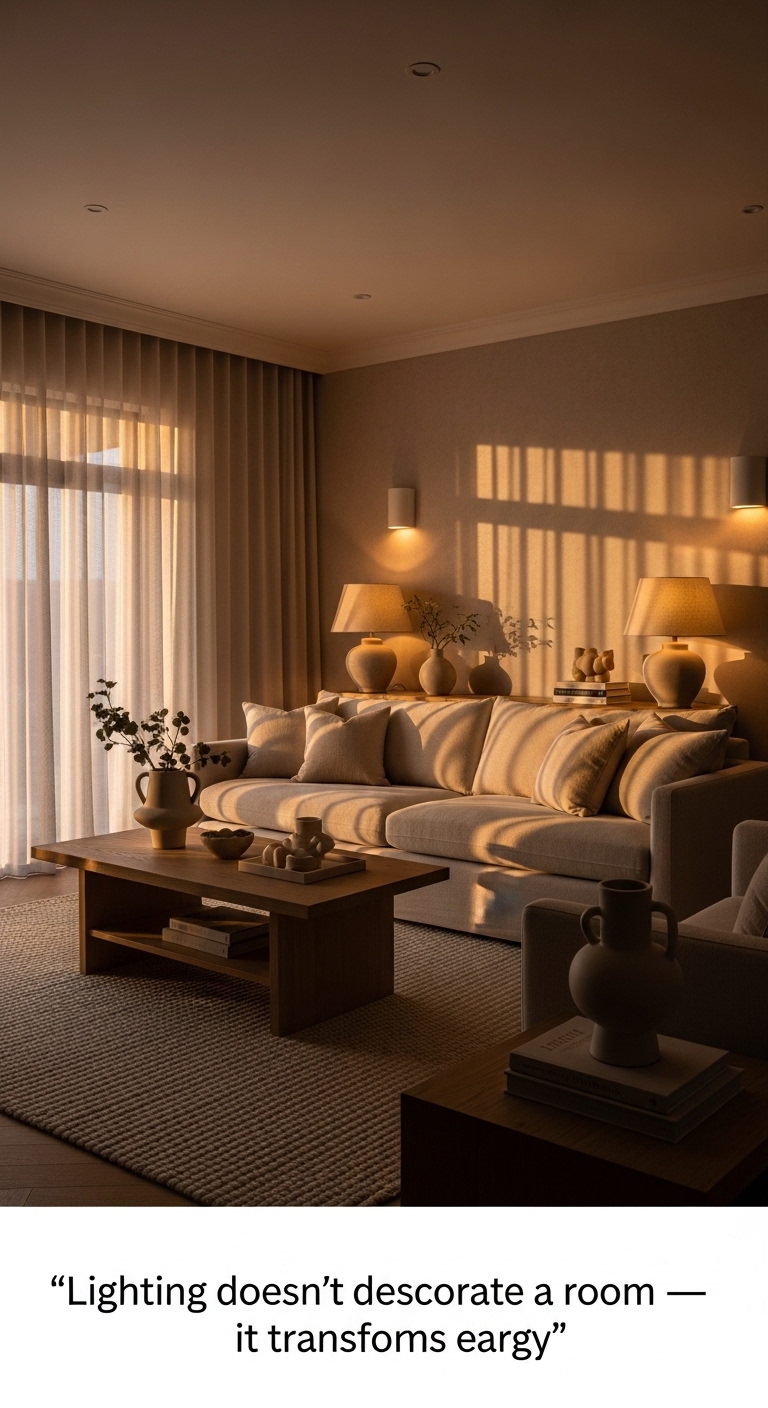
6. Lighting: The Mood Maker
Overhead lighting (recessed cans or a ceiling fan) is rarely enough for a cozy living room. You need layered lighting: Ambient (overhead), Task (reading lamps), and Accent (decorative).
In American homes, ceilings are often 8–9 feet high. Floor lamps should be roughly 60 inches tall so the light hits eye level when seated. Table lamps should be 24–27 inches tall (base + shade).
Product Suggestion:
- Budget: Floor lamps from Walmart or Target (look for the Threshold brand). Arc lamps are great for reaching over sofas.
- Premium: Restoration Hardware glass globes or Schoolhouse Electric for a timeless, farmhouse feel.
How-To Tip: Use “warm white” bulbs (2700K temperature) instead of “daylight” (5000K). Warm light makes skin tones look better and feels more inviting.
Pro Designer Secret: Hang a pendant light low (even 30 inches above the table) over a side table or in a corner to create an intimate reading nook vibe.
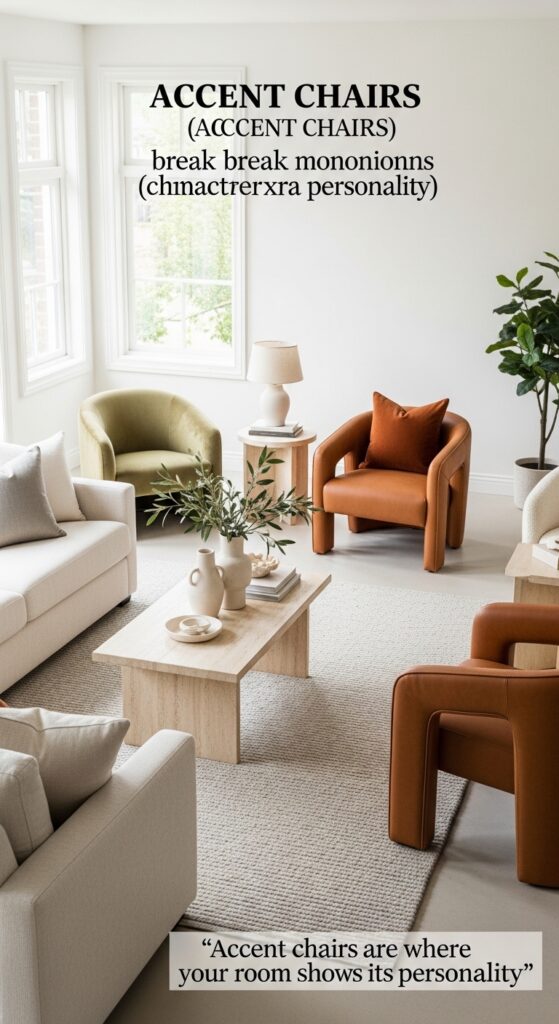
7. Accent Chairs: Adding Personality and Extra Seating
A sofa alone is boring. You need an accent chair (or two) to complete the “U” shape of a conversation area. This is where you can inject color or a different texture.
If your sofa is linen or velvet in a neutral color, try a leather club chair or a rattan armchair for contrast. In boho or Japandi styles, a woven cane chair adds texture without visual bulk.
Product Suggestion:
- Budget: The IKEA Poäng chair is a classic, or check Amazon for velvet tub chairs under $150.
- Premium: Anthropologie often has unique, sculptural chairs, or a West Elm “Roar + Rabbit” leather chair.
How-To Tip: Position the accent chair perpendicular to the sofa, facing the focal point, with a small side table next to it.
Pro Designer Secret: If you only have space for one chair, choose a “slipper” chair (armless) so it can be pulled under the coffee table or moved easily.
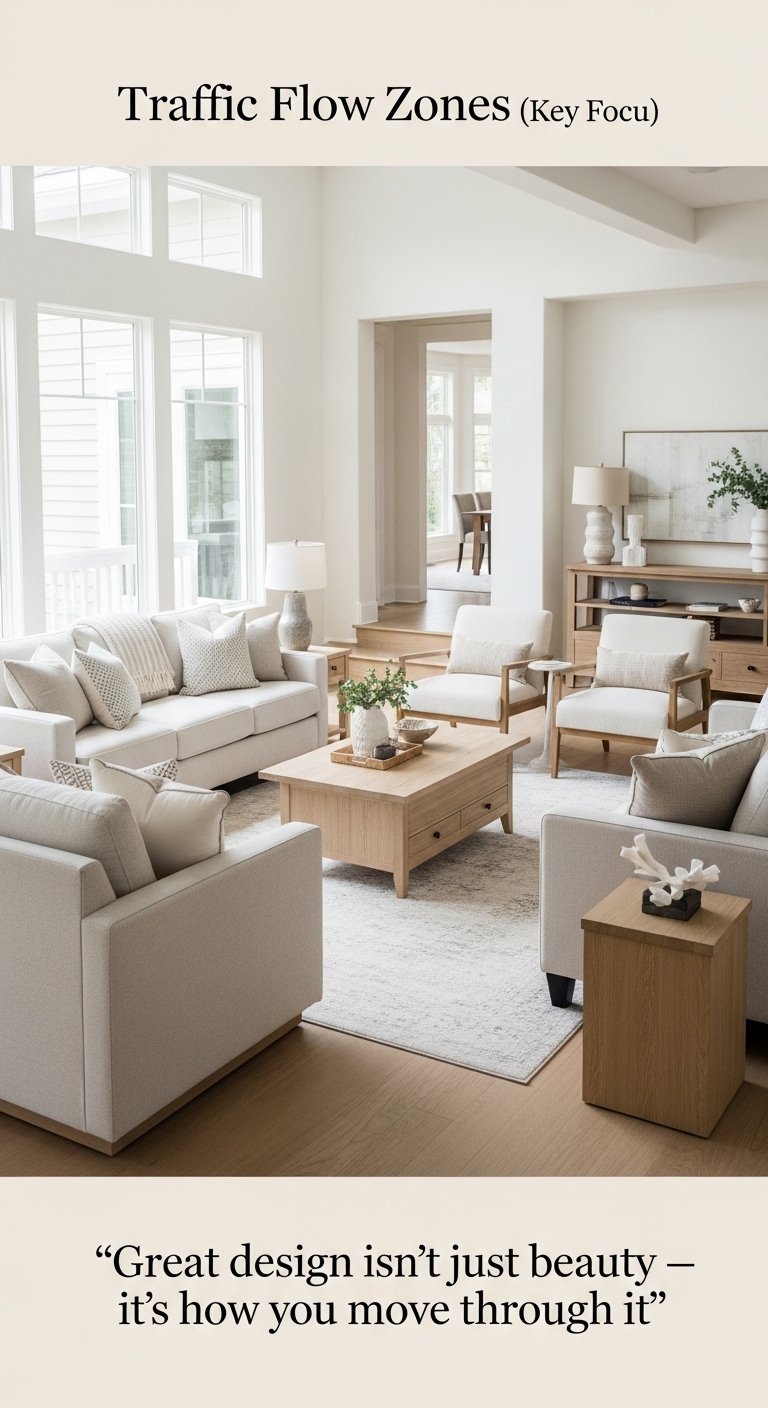
8. Traffic Flow & Clearance: Don’t Trip Over Your Decor
Home styling fails if you can’t walk through the room. You need clear pathways. In the main living area, leave 3–4 feet between furniture groupings. Between the coffee table and sofa, leave 14–18 inches for legroom.
In small apartments, this is harder. Use “multifunctional” furniture like an ottoman with a tray top instead of a coffee table, or a storage bench that doubles as seating. Avoid “dead ends” where a chair blocks a path to the balcony or hallway.
How-To Tip: Do the “arm test.” Can you walk around the room with your arms outstretched without hitting anything? If not, the layout is too tight.
Pro Designer Secret: If you have a narrow suburban home hallway leading to the living room, use a narrow console table (10–12 inches deep) so it doesn’t eat into the walking space.
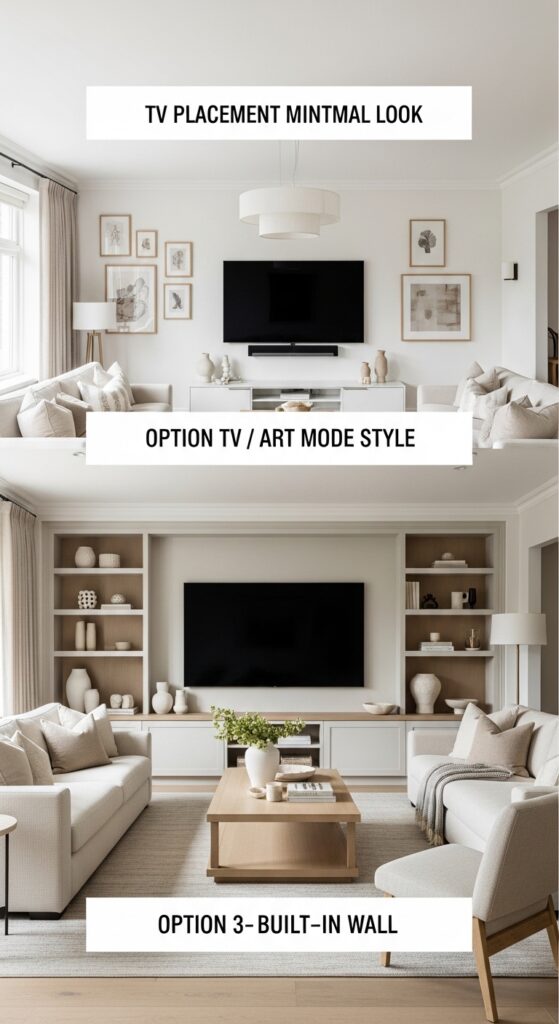
9. TV Placement: The Modern Dilemma
In many American homes, the TV is the center of life. But a giant black rectangle ruins the aesthetic. If you have a fireplace, mounting the TV above it is common, but it can be too high for comfortable viewing. The center of the screen should be at eye level when seated (about 42 inches from the floor).
If you have a dedicated media wall, build shelves around the TV to fill the negative space with books and plants. This integrates the electronics into the interior design rather than letting it dominate.
Product Suggestion:
- Budget: A simple wall mount from Monoprice or AmazonBasics.
- Premium: A Samsung The Frame TV that looks like art when off, or a custom built-in using IKEA Besta cabinets.
How-To Tip: Hide cords inside a cord cover that matches your wall color, or cut a hole in the wall to run wires inside (hire a handyman from TaskRabbit for this).
Pro Designer Secret: Bias lighting behind the TV (LED strips on the back of the TV) reduces eye strain and makes the picture look better.
10. Styling Surfaces: The “Vignette” Technique
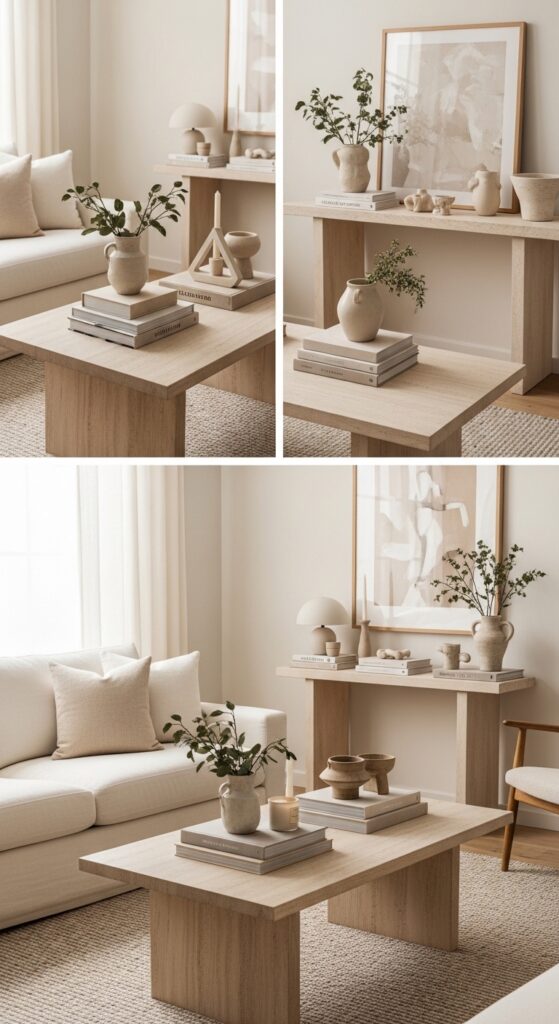
Once the furniture is placed, you need to style the surfaces. Don’t just clutter them! Use the “Rule of Three” for decorating ideas: group items in odd numbers (1, 3, 5).
On a coffee table, combine:
- A tray (to anchor)
- A stack of books or a bowl
- A living element (plant or flowers)
- A small sculptural object
Vary the heights. Don’t put three tall vases together; mix a tall vase with a low bowl and a medium book stack.
Material Mix: Mix ceramic, wood, metal, and glass. If you have a modern room, use geometric shapes. For farmhouse, use woven baskets and greenery.
Product Suggestion:
- Budget: Faux greenery from Trader Joe’s or Michael’s (use a 40% off coupon). Ceramic vases from HomeGoods.
- Premium: Fresh flowers from a local florist, hand-thrown pottery from Etsy, or West Elm ceramic jugs.
How-To Tip: Edit ruthlessly. If you aren’t sure if something belongs, remove it. The surface should be 60% empty space to look high-end.
Pro Designer Secret: Add a personal touch like a framed family photo or a souvenir from a trip. It makes the home makeover feel authentic, not like a showroom.
Common Mistakes to Avoid
Even with a plan, it’s easy to slip up. Here are 5 mistakes Americans make and how to fix them:
- Pushing All Furniture Against Walls: This creates a “bowling alley” effect. Fix: Pull furniture 3–6 inches off walls to create intimacy.
- Buying a Rug That’s Too Small: It makes the room look disjointed. Fix: Get an 8×10 rug minimum for standard rooms; ensure front legs of sofas touch it.
- Ignoring Scale: A massive sectional in a tiny room overwhelms the space. Fix: Use a loveseat and two chairs in small rooms to maintain visual lightness.
- Bad Lighting: Relying only on one overhead light. Fix: Layer floor lamps, table lamps, and sconces.
- Mismatched Styles: Buying random pieces from different eras without a unifying element. Fix: Stick to one style (e.g., Mid-Century Modern) or use color/texture to tie different styles together.
Budget Breakdown Section
You don’t need a fortune to refresh your living space. Here is a realistic cost breakdown for arranging a standard 12×12 living room:
| Tier | Budget | What You Get | Where to Shop |
|---|---|---|---|
| Budget | Under $50 | Rug (5×7), Throw Pillows (2), Throw Blanket, Small Plant, Candle. | Amazon, Walmart, IKEA, Target Dollar Spot, Thrift Stores. |
| Mid-Range | $50 – $200 | Area Rug (8×10), Floor Lamp, Coffee Table Tray, Wall Art Set, Curtains. | HomeGoods, Wayfair, CB2, West Elm (sale section), Pottery Barn Teen. |
| High-End | $200+ | Statement Sofa, Custom Drapes, Designer Coffee Table, Accent Chair, Gallery Wall. | Restoration Hardware, Anthropologie, Etsy (handmade), Local Boutiques. |
Note: Prices exclude major furniture like sofas. This is for accessories and layout enhancers.
Seasonal / Trend Tips
How to arrange living room furniture changes with the seasons to maximize comfort.
- Spring/Summer: Move furniture away from heavy drapes to let light in. Swap velvet pillows for linen or cotton. Add indoor plants for a biophilic look.
- Fall/Winter: Pull furniture closer together for warmth (“hygge” style). Add wool throws, candles, and layer rugs.
2025 Trends:
- Curved Furniture: Curved sofas and round coffee tables are trending to soften the sharp lines of modern homes.
- Biophilic Design: Incorporating natural materials like rattan, bamboo, and live-edge wood.
- Dark Academia/Moody Colors: Moving away from all-white rooms to rich terracotta, navy, and forest green walls.
Upcoming Trend: “Quiet Luxury” — high-quality, neutral textures (boucle, chenille) without logos or clutter.
FAQ Section
1. How do I arrange furniture in a small living room with a TV?
Focus on the TV as the focal point but hide it when not in use. Use a slim media console. Choose a loveseat instead of a full sofa, or two armless chairs. Use a round coffee table to improve flow since it has no sharp corners. Keep colors light (greige or white) to make the space feel larger. Ensure the TV is mounted at the correct height (center of screen at 42 inches).
2. What is the best furniture layout for an open concept living room?
Use the rug to define zones. Place the rug under the sofa and chairs to create the “living” zone. If the room is very large, float the sofa in the middle of the room with a console table behind it to separate the living area from the dining or kitchen area without building walls. Use lighting to distinguish zones (pendant over dining table, floor lamp by sofa).
3. Should my sofa face the door or the fireplace?
Ideally, face the fireplace. If there is no fireplace, face the best architectural feature or the TV. If the sofa must face the door (for security or view), place a console table behind it to act as a buffer. This prevents the “back of the head” feeling and creates a landing strip for keys and decor.
4. How can I make my living room look expensive on a budget?
Focus on texture and lighting. Paint the walls a warm white or greige. Hang curtains high and wide (floor to ceiling) to make ceilings look taller. Buy one high-quality statement piece (like a velvet sofa or marble lamp) and mix it with budget finds. Declutter completely—empty space looks expensive.
5. How far should a coffee table be from the sofa?
The standard distance is 14–18 inches. This allows enough room to put your feet up while sitting but is close enough to reach a drink. In tight spaces, you can go as low as 10–12 inches, but it might feel cramped. If you have a large ottoman instead of a table, the distance can be more flexible.
6. What do I put behind a floating sofa?
Since the sofa isn’t against the wall, you need to fill that negative space. A slim console table (10–12 inches deep) is perfect for lamps and decor. Alternatively, place a tall bookshelf or a plant stand with a large potted tree (like a Fiddle Leaf Fig) in the corner behind the sofa to add height and life.
Conclusion
How to arrange living room furniture doesn’t have to be a source of stress. By focusing on the focal point, respecting traffic flow, and layering textures, you can transform any American home into a functional, beautiful sanctuary. Remember to measure your space first, invest in a proper rug size, and don’t be afraid to float your sofa away from the walls.
Start small today—try rearranging just one corner or swapping out a lamp. You’ll be amazed at how much a small change can elevate the entire vibe. You have the power to refresh your living space and create a home that reflects your personality.
If you found these decorating ideas helpful, please save this pin to your Pinterest board and share it with a friend who is redecorating. Happy styling!